Month: March 2026

  • Preparing SHSM Students for Co-op

    Preparing SHSM Students for Co-op

    A student can be doing everything right in the classroom—engaged, capable, meeting expectations—and still feel completely unsure when they step into their co-op placement. It’s not because they lack ability. It’s because the environment has changed.

    School is structured. Expectations are clear. There’s always a next step.

    Workplaces don’t work that way.

    At the same time, employers are forming impressions almost immediately. They’re noticing things that don’t show up on report cards. A student might come across as polite, but quiet. Capable, but hesitant. Willing, but waiting.

    This disconnect shows up again and again, and it’s easy to misinterpret. It’s not that students aren’t prepared. It’s that they haven’t been shown what preparation actually looks like in a workplace.

    What Employers Are Really Assessing

    When students think about co-op, they tend to focus on the obvious things—technical skills, certifications, completing hours. Those things matter, but they’re not what employers are paying attention to first.

    What employers are really trying to figure out is simple: can this student function in a workplace?

    That question gets answered quickly, and usually through small, everyday behaviour. Not through what a student knows, but how they act when they don’t know something. Whether they speak up. Whether they stay engaged when no one is directing them. Whether they follow through on simple tasks.

    These are not complex skills, but they’re also not obvious. Especially for students who are used to being told exactly what to do and when to do it.

    Why Strong Students Sometimes Struggle

    This is why strong students sometimes struggle the most in co-op. In school, success comes from following clear expectations. In a workplace, expectations are often implied.

    A supervisor might say, “Let me know if you need anything,” expecting the student to check in regularly. The student hears that as a signal to stay quiet unless there’s a problem. Nothing goes wrong, but nothing really happens either.

    From the employer’s perspective, that silence can look like disengagement. From the student’s perspective, they’re doing exactly what they think is expected.

    This gap isn’t about effort. It’s about interpretation.
    Making Workplace Expectations Visible

    One of the most important things teachers can do is make these unspoken expectations visible. Students need to understand how their behaviour is read in a workplace. That waiting can look like a lack of initiative. That not asking questions can be seen as a lack of interest. That staying quiet doesn’t come across as respectful—it can come across as disconnected.

    Even small shifts make a difference. Showing students how to check in with a supervisor, how to ask for clarification, how to signal that they’re ready for more—these are simple things, but they change how a student is perceived almost immediately.

    Building Communication Confidence

    A big part of this comes down to communication. Not because students can’t communicate, but because they’re unsure what “professional” communication actually sounds like.

    When they have language they can rely on—how to ask a question, how to explain what they’re working on, how to say they don’t understand something—their confidence changes quickly. They don’t hesitate as much, and that changes everything.

    What Initiative Actually Looks Like

    The same is true with initiative. It’s one of the most common pieces of feedback students receive, and one of the least clear. For many students, it sounds like something big or risky. In reality, it’s much smaller than that.

    It’s finishing a task and checking in. It’s asking what else needs to be done. It’s paying attention and stepping in when it makes sense.

    When initiative is framed this way, it becomes something students can actually do, not something abstract they’re trying to guess at.

    Helping Students Recognize Their Own Skills

    Another challenge is that students often don’t recognize the skills they already have. They don’t see that group work is teamwork, or that presentations are communication, or that meeting deadlines is accountability.

    Without those connections, they walk into placements feeling like they’re starting from zero.

    Once they begin to see that they already have a foundation, their approach shifts. They participate more. They take more risks. They don’t hold back in the same way.

    Preparing Students for Uncertainty

    One of the biggest adjustments in co-op is learning to deal with uncertainty. In school, uncertainty is usually resolved quickly. In a workplace, it’s part of the experience.

    Students need to understand that not knowing is normal, that asking is expected, and that mistakes are part of how they learn.

    When that mindset shifts, students stop waiting for clarity and start engaging to find it.

    What Changes When This Is Done Well

    The impact of all of this is noticeable. Students ask more questions. They stay more engaged. They communicate more clearly. They start taking small steps on their own.

    Employers respond to that. They offer more opportunities, more feedback, and more trust.

    The placement becomes something more than observation. It becomes real learning.
    Final Thought

    Preparing students for co-op isn’t just about getting them placed or making sure they have the right technical background. It’s about helping them understand how to operate in an environment where expectations aren’t always stated out loud.

    Those skills aren’t complicated, but they are easy to miss if no one names them.

    When they are named, modeled, and practiced, students don’t just perform better. They start to see themselves differently. Not as students trying to get through a placement, but as people who belong there. 

    By Carmen Reis, CPA, MA

    Carmen Reis is the CEO of Flashpoint Training.
  • Supporting SHSM Students Who Aren’t “Career-Ready”: Practical Ways to Keep Learning Meaningful

    Supporting SHSM Students Who Aren’t “Career-Ready”: Practical Ways to Keep Learning Meaningful

    We like to think SHSM students are “career-focused” — that they’ve chosen a sector, have a direction, and are ready to move toward it with confidence. But if you’ve taught in the program for any length of time, you know that’s not always true.

    Some students sign up because it sounded interesting. Others were encouraged by a teacher or guidance counsellor. Many are still figuring things out — not just what they want to do, but who they are.

    And that raises a real question for educators:

    What does SHSM look like when students aren’t actually career-ready yet?

    The answer isn’t to push them toward certainty. It’s to recognize that SHSM, at its best, is not about confirming decisions — it’s about helping students build the confidence and awareness to make them.

    The Problem with “Career Readiness” as a Starting Point

    The phrase “career-ready” suggests a level of clarity most teenagers simply don’t have. It implies direction, commitment, and confidence — all things that are still developing.

    When we assume students already have that clarity, two things tend to happen. Some students disengage because they feel out of place. Others go through the motions, trying to meet expectations without really connecting to the experience.

    But if we step back, there’s a more useful way to think about SHSM.

    Instead of asking, “Is this student ready for a career?”, the better question is:
    “How can this program help this student become more ready than they were before?”

    Reframing What Success Looks Like

    Not every SHSM student will pursue their sector after graduation — and that’s not a failure of the program.

    In fact, some of the most valuable outcomes happen when students:

    • realize a pathway isn’t right for them
    • discover strengths they didn’t know they had
    • gain confidence in professional settings
    • learn how to communicate, collaborate, and take responsibility

    Those are not secondary outcomes. They are the foundation of any future success.

    When we define success too narrowly — as direct alignment between SHSM sector and postsecondary pathway — we miss the broader impact the program is having.

    Where the Real Work Happens: In Skills, Not Decisions

    For students who are unsure of their future, the most meaningful part of SHSM is rarely the technical content. It’s the development of skills they can carry anywhere.

    Students who begin to see themselves as someone who can:

    • speak clearly in a professional setting
    • handle responsibility
    • contribute to a team
    • solve problems independently

    …are students who are becoming ready — regardless of the sector they ultimately choose.

    The role of the teacher, then, is not just to deliver sector-specific content, but to help students recognize and build these transferable capabilities.

    Using Co-op as a Space for Discovery

    Co-op is often treated as the culmination of SHSM — the moment where everything comes together. But for students who are still figuring things out, it’s something else entirely.

    It’s a testing ground.

    Students learn as much from what doesn’t fit as from what does. A placement that feels repetitive, overwhelming, or misaligned can still be incredibly valuable — if students are guided to reflect on it.

    The conversations that matter most are not:

    • “Did you do a good job?”

    But rather:

    • “What did you notice?”
    • “What surprised you?”
    • “What would you want more or less of in the future?”

    This is where co-op becomes more than experience — it becomes insight.

    Normalizing Uncertainty (Without Lowering Expectations)

    Students are often more anxious about the future than they let on. They feel pressure to “figure it out,” and SHSM can sometimes intensify that pressure if it’s framed as a commitment rather than an exploration.

    One of the most powerful things a teacher can say is:

    “You don’t need to have your future figured out to benefit from this program.”

    That doesn’t lower expectations — it opens the door for engagement.

    Students who feel safe not knowing are more willing to try, speak up, and take risks. And those are the conditions where real growth happens.

    What Teachers Start to Notice Over Time

    When SHSM is approached this way, something shifts.

    Students who began unsure often:

    • participate more actively
    • become more confident in professional situations
    • start articulating their strengths more clearly
    • engage more deeply with co-op and experiential learning

    They may not leave with a perfectly defined pathway — but they leave with something more important: a stronger sense of capability.

    Final Thought

    SHSM is often described as a pathway program, but for many students, it’s not a straight path — it’s a starting point.

    When teachers focus less on where students are going and more on who they are becoming, the program becomes more accessible, more meaningful, and ultimately more effective.

    Students don’t need certainty to benefit from SHSM.
    They need space to explore, support to reflect, and opportunities to grow.

    That’s where the real impact is.

  • How SHSM Supports Student Success

    How SHSM Supports Student Success

    SHSM Helps Students See the “Why” In Career Preparation…

    From a teacher’s perspective, SHSM is one of the most effective tools we have for increasing student engagement. Not because it makes school easier—but because it makes school feel meaningful.

    A lot of students struggle with motivation in high school for a simple reason: they don’t see the point. They show up, complete assignments, earn credits, and move on, but they don’t understand how any of it connects to the real world. For some students, school starts to feel like something they have to survive rather than something that’s helping them build a future.

    SHSM changes that.

    When students join a Specialist High Skills Major program, they’re no longer just earning credits—they’re building a pathway. They’re gaining certifications, participating in hands-on experiences, meeting professionals, and learning about real careers. That shift helps students connect learning to real outcomes, and once that connection is made, the change in student mindset can be dramatic.

    SHSM gives students a reason to care. And when students care, everything improves.

    SHSM Improves Attendance Because Students Want to Be There

    One of the first changes many teachers notice in SHSM students is improved attendance.

    It’s not that SHSM magically fixes every barrier students face. But it does something powerful: it creates days students don’t want to miss.

    When a student knows they have a workshop, a sector event, a trip, or a guest speaker coming up, school stops feeling repetitive. It becomes something they’re actively participating in. It is a day away from the ordinary. For students who have struggled with consistency, that matters.

    Even students who aren’t “school people” often show up for SHSM experiences because they feel different. They feel real. They feel like opportunities.

    Over time, those moments of engagement can strengthen routines and improve overall attendance—not just on event days, but in regular classes too.

    SHSM Builds Motivation Through Real-World Purpose

    Motivation isn’t something we can force. Students don’t become motivated because we tell them to. They become motivated when they feel a connection to a speaker, a career panelist or a campus visit.

    SHSM builds that value by connecting learning to careers and future goals.

    Instead of asking students to complete work “because it’s on the test,” SHSM allows teachers to frame learning in a more meaningful way:

    “This is the kind of skill employers expect.”
    “This is what people in this field actually do.”
    “This certification can help you get hired.”
    “This experience can help you choose the right program after graduation.”

    When students understand that what they’re doing matters, they’re more willing to try. They ask better questions. They participate more. They care about the quality of their work because they see it as practice for their future—not just schoolwork for marks.

    That’s one of the biggest reasons SHSM supports student success: it turns learning into something students can use.

    SHSM Strengthens Communication Skills

    SHSM naturally builds communication skills because students are placed into situations where communication is required.

    When students attend a workplace tour, participate in a workshop, or listen to a guest speaker, they have to practice skills that many students struggle with at first, such as:

    • introducing themselves professionally
    • making eye contact and listening actively
    • asking thoughtful questions
    • speaking respectfully to adults they don’t know
    • working with peers in a structured environment
    • reflecting on what they learned

    These are employability skills, but they’re also life skills.

    In many classrooms, students can stay quiet and still “get through” the course. In SHSM experiences, students are gently pushed to show up differently. They’re not just passive learners—they’re participants.

    And what’s interesting is that students often become more confident communicators in SHSM before they become more confident academically. Once they can speak up in a real-world setting, it becomes easier for them to speak up in class too.

    SHSM Helps Students Create Clearer Post-Secondary Plans

    A major challenge for many students is that they don’t know what comes next after high school.

    Some students feel pressure to choose a pathway too early. Others avoid thinking about it because it feels overwhelming. Some students think they only have one option, when in reality they have many.

    SHSM helps students plan because it provides structured exposure to pathways like:

    • apprenticeship
    • college
    • university
    • workplace

    Through reach-ahead experiences, sector exploration, and discussions with professionals, students start to understand what different pathways look like and what they require.

    Instead of making decisions based on guesses or social media opinions, students begin making decisions based on real information.

    They learn things like:

    • what prerequisites they need
    • what programs exist beyond the ones they’ve heard of
    • what training paths are available in their sector
    • what the daily reality of certain careers looks like

    This is one of the most valuable outcomes of SHSM. Even if students change their minds later, they are making decisions with more clarity and less anxiety.

    SHSM Builds Confidence Through Small Wins and Real Experiences

    Confidence is one of the most important predictors of student success—and SHSM builds it in a way that many students genuinely need.

    Some students have spent years feeling like they’re “not good at school.” They may have struggled with grades, focus, behaviour, or motivation. Over time, they can start to believe they aren’t capable of success.

    SHSM gives students a different way to succeed.

    When students earn certifications, complete hands-on tasks, or participate in sector experiences, they start collecting proof that they can do hard things. They see themselves learning skills that adults value. They experience success outside of tests and essays.

    For many students, SHSM provides their first real “I can do this” moment in high school.

    And once students believe they can succeed, they begin acting like it. They take more risks. They try harder. They set goals. They take themselves seriously.

    That’s what SHSM does best—it helps students see themselves differently.

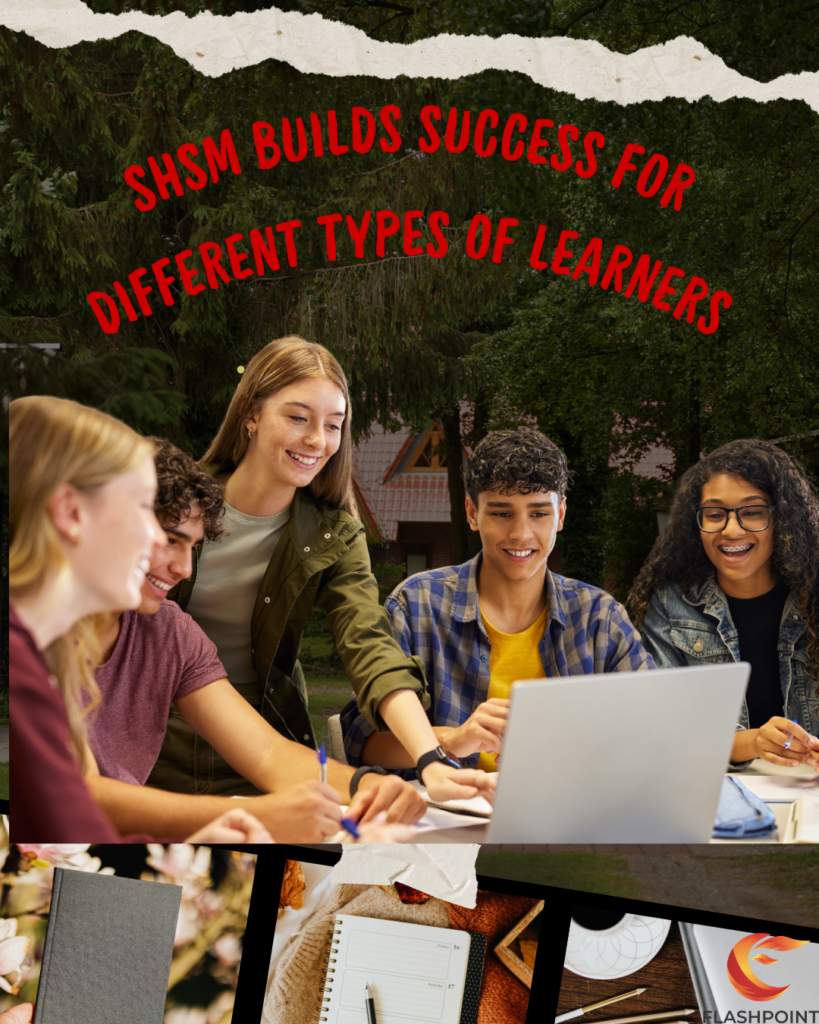
    SHSM Supports Success for Different Types of Learners

    One of the reasons SHSM works so well is that it supports students who learn in different ways.

    Some students thrive in academic settings. Others thrive when learning is hands-on, interactive, and connected to real outcomes. SHSM creates space for students who may not shine in traditional classrooms to show their strengths.

    It also supports students who need structure and clarity. SHSM has clear components and completion goals, which can help students stay focused.

    For many learners, SHSM is where school finally starts to make sense.

    Final Thoughts: SHSM Doesn’t Just Support Student Success — It Changes Student Direction

    SHSM is not just a program. It’s a turning point for many students.

    From a teacher’s perspective, SHSM supports student success because it makes learning real. It improves attendance because students want to be there. It increases motivation because students understand the purpose. It strengthens communication skills because students practice them in authentic settings. It supports clearer post-secondary plans because students gain real exposure. And it builds confidence because students collect real evidence of growth.

    Most importantly, SHSM helps students feel like they have a future they can step into.

    And when students believe that, they start showing up differently—not just in SHSM, but in school and in life.

    By Carmen Reis, CPA

    CEO, Flashpoint Training, Inc.

    Reach out to Carmen with your comments, questions or feedback by email at Carmen@flashpointtraining.com

  • SHSM Tracking Made Simple — 5 Systems That Reduce Teacher Workload (Ontario)

    SHSM Tracking Made Simple — 5 Systems That Reduce Teacher Workload (Ontario)

    SHSM Documentation Doesn’t Have to Drain Teachers

    If SHSM documentation feels like a second job, you’re not alone. Most SHSM teachers don’t just teach — they track. And that tracking can quietly become one of the most stressful parts of running the program.

    The good news is that SHSM tracking can become manageable, and it doesn’t require fancy tools, complicated spreadsheets, or extra meetings. What it requires is a system that is simple enough to use consistently and easy enough for multiple staff members to follow.

    The goal is not to build a perfect tracker that no one touches after September. The goal is to build a tracking routine that makes SHSM easier as the year goes on, especially during the busiest times of the school year. Here are five strategies that work in real schools and reduce the pressure on SHSM leads.

    1) Create One Master SHSM Tracker

    This is the number one fix for SHSM tracking stress because it eliminates confusion immediately. A “single source of truth” means one place where SHSM completion is tracked. One tracker. One official record. One version.

    It could be:

    • one shared Google Sheet
    • one spreadsheet stored in a shared drive
    • one LMS-based tracker
    • one board-approved tracking tool

    The format matters less than the consistency. What matters is that every staff member involved in SHSM knows: this is the official tracker.

    When you establish one master tracker, you reduce the risk of missing students, duplicating records, or scrambling at the end of the year to figure out who has done what. It also makes it easier to support students who are behind, because you can see gaps early instead of discovering them in June.

    A master tracker also protects your SHSM program long-term. If a staff member changes roles, goes on leave, or transfers, the program doesn’t lose its structure because the system is shared and visible.

    2) Track in Real Time (Not at the End)

    SHSM tracking becomes overwhelming when it is delayed. Most of the “tracking panic” teachers feel comes from having to reconstruct what happened months ago.

    When teachers try to document everything at the end of the semester, it turns into:

    • guessing who attended what
    • searching for proof
    • chasing students for reflections
    • rebuilding records from memory

    Instead, strong SHSM programs update tracking immediately after each event. This doesn’t need to be a big task. Even five minutes after an experience can prevent hours of work later.

    Real-time tracking also helps you catch problems early. If a student missed something, you can plan a make-up option right away while there is still time. You can also communicate sooner with students who are falling behind, rather than waiting until it becomes a crisis.

    A helpful habit is to build tracking into the event routine. For example, the day after a trip or guest speaker, the SHSM lead updates attendance and uploads any evidence. When you do this consistently, tracking becomes routine instead of stressful.


    3) Make Evidence Collection Automatic

    One of the best ways to reduce teacher workload is to stop treating evidence like something you collect later. If evidence collection depends on memory, it becomes inconsistent and frustrating.

    Instead, build evidence into the experience itself so proof is created automatically while students are still engaged.

    Here are simple methods that work well:

    QR Code Sign-Ins

    Students scan a QR code when they arrive. Attendance is instantly recorded and stored digitally, which is faster and more reliable than paper sheets that can go missing.

    Simple Exit Tickets

    A one-question exit ticket can be enough:
    “What did you learn today that connects to your SHSM sector?”
    It’s quick, it’s easy, and it creates documentation immediately.

    Photo Proof (Where Allowed)

    If your board or school policy allows it, photos can provide evidence. Even photos of student work, equipment, or learning stations (without faces) can support documentation and show the learning that took place.

    Digital Reflections

    Google Forms or Microsoft Forms make reflection evidence easy because they:

    • collect responses automatically
    • timestamp submissions
    • store everything in one place
    • reduce missing paperwork

    When evidence is automatic, tracking becomes simpler and less stressful. It also makes the learning more meaningful because reflection becomes part of the experience, not something tacked on later.


    4) Build Student Responsibility Into the System

    SHSM works best when students understand that completion is a shared responsibility. Teachers should not be the only ones tracking progress, especially when students are capable of managing simple checklists and expectations.

    Students should not find out in June that they’re missing requirements. They should know where they stand throughout the year, and they should be able to see what they still need to complete.

    A simple solution is giving students a visible checklist or progress tracker. It can be:

    • a one-page checklist
    • a shared digital tracker
    • a monthly “completion check-in” form

    When students can see their progress, they become more accountable. They also become more motivated because completion feels real and achievable instead of vague.

    Student responsibility reduces teacher workload because it decreases follow-up. When students understand what they need, they are more likely to submit reflections on time and show up prepared for experiences.

    5) Schedule SHSM Completion Checkpoints

    Many programs treat tracking as something you do at the end. That’s what creates the June panic. When tracking is delayed, missing requirements pile up and teachers are forced into last-minute problem solving.

    Instead, schedule checkpoints throughout the year so you can solve small issues early. For example:

    • November check-in
    • February check-in
    • April check-in
    • May final audit

    Checkpoints make tracking manageable because you’re reviewing progress in smaller pieces rather than trying to fix everything at once. They also improve student success because students who fall behind can be supported while there’s still time to catch up.

    These checkpoints don’t need to be long meetings. They can be quick tracker reviews, short student check-ins, or simple reminders sent to students who need make-up opportunities. The key is consistency.


    Final Thoughts: SHSM Tracking Can Be Simple, Consistent, and Sustainable

    SHSM documentation can feel exhausting, but it doesn’t have to stay that way. Most tracking stress comes from systems that are unclear, inconsistent, or delayed until the end of the year.

    When SHSM teams commit to one tracker, real-time updates, automatic evidence collection, student accountability, and scheduled checkpoints, the workload becomes lighter and the program becomes smoother.

    And the biggest win is this: when tracking is organized, teachers get to focus on what SHSM is actually meant to be — meaningful experiences that help students build confidence, explore careers, and feel excited about their future.