
Month: April 2026

  • Why We Redesigned Our Courses this Year — And What It Means for Students and Educators

    Why We Redesigned Our Courses this Year — And What It Means for Students and Educators

    This past September marked an important milestone for us at Flashpoint. After months of reflection, feedback, and redesign, we relaunched all of certifications to better align with SHSM (Specialist High Skills Major) requirements—and restructured each one to be more Experiential Learning and activity based–less talking by our Facilitators and more interaction for students.

    At first glance, that might sound like a simple operational update. In reality, it represents a deeper shift in how we think about learning, accessibility, and student success.

    So why did we do it?

    Let’s start with a question:

    What should the focus of training be?

    Flashpoint’s in-school activities are intentionally designed to be hands-on and activity-based, rooted in the principles of experiential learning that are central to SHSM programming. We believe students learn best by doing—by engaging directly with real-world scenarios, problem-solving in teams, and applying skills in meaningful contexts rather than passively receiving information. These interactive experiences not only deepen understanding, but also help students build confidence, develop critical thinking skills, and see clear connections between what they’re learning and future career pathways. By creating opportunities for active participation, we ensure that every student can engage in a way that is practical, inclusive, and impactful.We believe that training needs to be hands on. It needs to create

    Aligning with SHSM—But Going Beyond It

    SHSM programs are designed to give students focused, real-world experience in specific sectors while they’re still in high school. They’re practical, career-connected, and increasingly important in helping students make informed decisions about their futures.

    Aligning our certifications with SHSM requirements was a natural step—but we didn’t want to stop at simply “checking the boxes.”

    We asked ourselves:

    • Are these certifications meaningful for all learners?
    • Do they reflect diverse pathways and experiences?
    • Are we making it easier—or harder—for students to succeed?

    That lens led us to redesign not just the structure, but also the content itself.

    The Focus Shift Away from Facilitators to Student Led Learning

    We focused on:

    • Delivering essential, high-impact knowledge
    • Removing unnecessary repetition
    • Creating clearer learning outcomes
    • Building in moments for reflection and interaction

    What does that look like in practice?

    • Shorter, more engaging modules
    • Real-world scenarios instead of abstract theory
    • Interactive elements that invite students to think, respond, and apply
    • Flexible pacing to support different learning styles

    Making Students Uncomfortable…

    At a session last week, one of the teachers present, chuckled and said, “you guys sure make them uncomfortable” and it is true. We do. We believe, where possible, students need to get out of their routines and comfort zones. We believe growth is only possible, when students are uncomfortable. We ask them to participate. We ask them to think critically. We ask them to present–often in a time constrained and competitive manner.

    Why?

    First of all, who does not like a little friendly competition?

    Second, in world, where these students spend a large part of their day online, interacting with other students, whom they may not know well, is guaranteed to be uncomfortable, but enriching if done properly.

    Third, we took steps to ensure that all along the way, there are “wins”. First small, then bigger. These students are able to feel like they accomplished something. They worked in groups together. They achieved a goal. They got to know someone better. Those are all “wins” in our book.

    Supporting in School Learning

    This shift wasn’t just about students—it was also about supporting the work educators are already doing.

    The themes we teach are not new. Teachers teach these day in and day out, but sometimes hearing them from someone “new” helps the message to absorb. In the same way, our own children may not always listen to everything we tell them, but if they hear the same message from someone else, it may “land” more effectively, we believe, that if we support in school learning with activities and lessons that mirror key takeaways, we are working toward the same goals as our educators.

    Looking Ahead

    This redesign is not the end—it’s the beginning of an ongoing process. We plan to add another 10-15 courses in the coming year.

    We’re continuing to listen, learn, and evolve based on feedback from educators, students, and partners. Education is not static, and neither are we.

    So we’ll leave you with one final question:

    What should modern learning feel like?

    At Flashpoint, we believe it should be:

    • Purposeful
    • Inclusive
    • Engaging

    And most importantly—something students feel empowered to do.

    If you’re an educator, SHSM coordinator, or partner interested in bringing these updated certifications into your program, we’d love to connect and hear how we can support your students.

    By Carmen Reis, CPA, MA

    Carmen is the CEO of Flashpoint Training, Inc. and looks forward to your feedback, comments and questions. She can be reached at hello@flashpointtraining.com or salut@flashpointtraining.com
  • From Experiential Learning to Real-World Readiness: What Actually Works for Students ( in our opinion)

    From Experiential Learning to Real-World Readiness: What Actually Works for Students ( in our opinion)

    I was at one of our events this past week, and a teacher expressed some concern about how “honest” our facilitators were being with the students. In this instance, a facilitator was talking about how competitive the labour market is becoming—especially for young people—and how important it is to stand out, go the extra mile, and care about their futures.

    I chuckled. In this particular group, most of the students were in Grade 12. Within months, they will be graduating and entering the labour market or post-secondary education. In some parts of Ontario, youth unemployment is well over 20%—in some areas, it’s closer to 30%. Let that sink in. This means that 1 in 5 (or even 1 in 3) young people looking for work will not find it.

    If our facilitator was being tough, how do you think students will feel when they enter the labour market and can’t get a job?

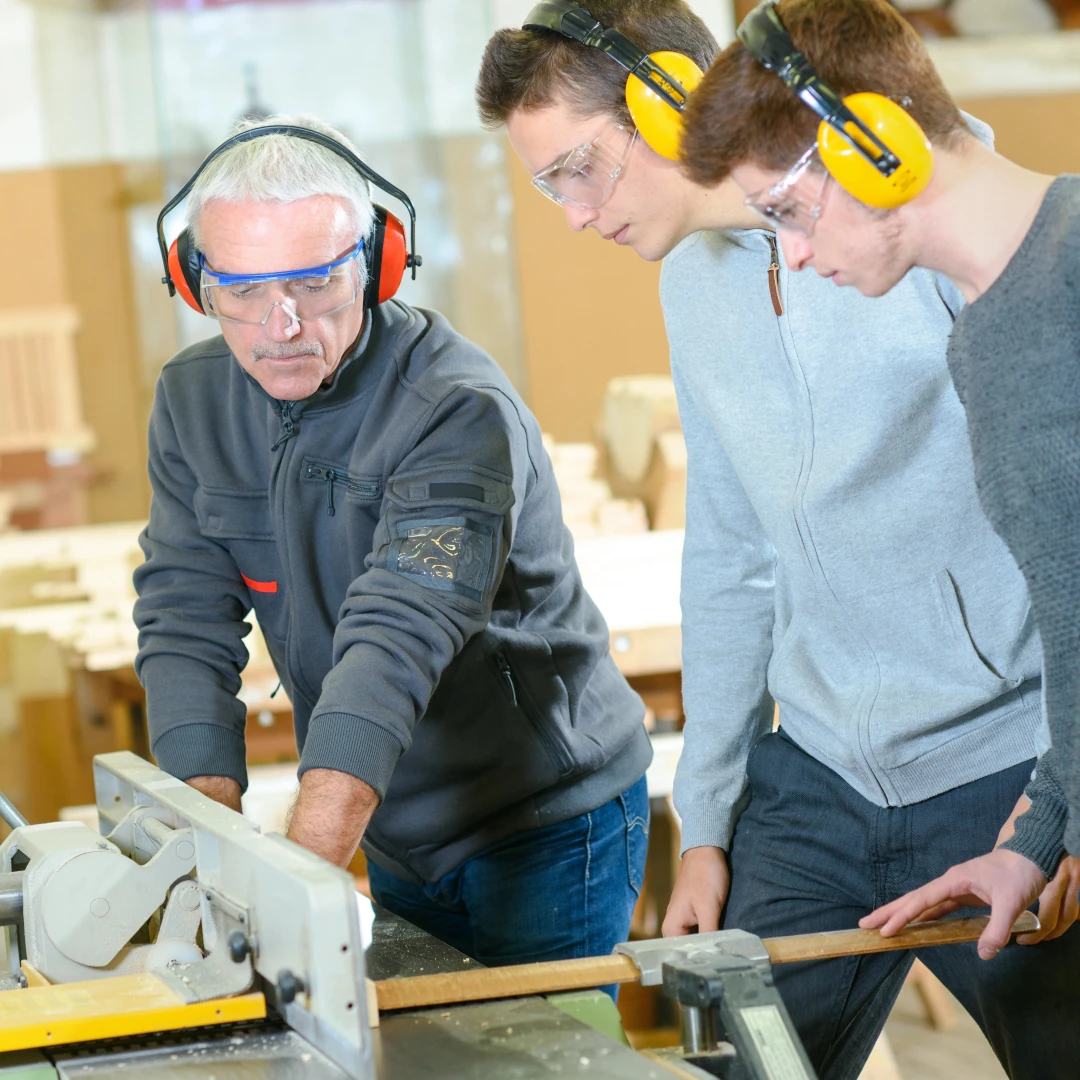
    Over the last year, we’ve redesigned all of our certifications and workshops to be hands-on, experiential, and rooted in real-life situations.

    We have a philosophy at Flashpoint: certifications and experiences should be engaging, but they also need to provide lessons students can use beyond a single afternoon.

    In SHSM and co-op, it’s often assumed that if a student is “out of the classroom,” then meaningful learning is happening. A placement is secured, a workshop is delivered, a certification is completed—and the experience is considered successful.

    But it’s not that simple.

    Some experiences stay with students long after they’re over. Others—even well-organized ones—seem to pass without much impact at all. The difference isn’t always obvious on paper, but it’s clear in how students respond.

    They might have fun for an afternoon—but will it actually help them as they transition into life after high school?

    These days, students are afraid of being “cringe” (did I get that right?). Our goal is to help them see past that and realize that caring about their future, being engaged, making connections, and creating opportunities for growth are some of the best things they can do for themselves.

    Students need to be doing more than just participating. They need to be thinking, noticing, questioning, and connecting what they’re experiencing to something beyond the moment.

    Without that, even the most “authentic” experience can become surface-level.

    Engagement is the real metric.

    Students engage more deeply when they understand why they are there.

    Too often, experiential learning is presented as an opportunity without context. Students are told where to go and what to do, but not what they should be paying attention to. We often have students come to us with no clear understanding of why they’re there or what the session is about.

    When that happens, they default to simply completing tasks.

    But when we take the time to frame the experience—to make the purpose visible—students approach it differently.

    They begin to ask:

    • What am I supposed to learn here?
    • What should I be noticing?
    • How does this connect to what I’ve been doing in class?

    That shift turns the experience from something they attend into something they actively process.

    The Role of Discomfort

    One of our favourite things to do at Flashpoint is to put students into unfamiliar situations.

    Some of the most impactful experiences include moments where students feel unsure—where they don’t immediately know what to do, what to say, or how to respond.

    These moments are often where the most growth happens. They do something for the first time, like talk to a student they don’t know or present in front of a crowd. They may take on a leadership role, when they previously shrank from taking charge.

    In our Experiential Learning Field Trips we create opportunities for students to grow, force them into new situations and push them out of their comfort zone.

    We are happiest when students who walked in shy into an experience, come up to us afterwards and say “Wow! I never did that before” or “I never thought of myself as good at public speaking”. Those are the days we pat ourselves on the back.

    When It Doesn’t Work — and Why That Still Matters

    Some experiences resonate with certain students but not others. That’s why we offer a range of opportunities—from visiting an aircraft hangar to engaging with senior staff at major companies, to hands-on builds, tech experiences, and creative sessions.

    We have groups that are kinestethic learners. We have others that are more plan-oriented or academic in their approaches to problem solving. We bridge these gaps by introducing Lego and other tools into our challenges and solutions,.

    The goal is not to ensure every experience is perfect. It’s to ensure every experience is meaningful in some way to each student.

    Final Thought

    Experiential learning is often described as “learning by doing,” but that definition is incomplete.

    Students are always doing something. The question is whether they are learning from it.

    A strong experiential learning experience is not defined by where it takes place or what activity is involved. It’s defined by how students engage, how they are supported, and how they make sense of it afterward.

    When those elements are in place, even simple experiences can have a lasting impact. And when they’re not, even the most impressive opportunities can pass without leaving much behind.

    That’s the difference worth paying attention to.

    By Carmen Reis, CPA, MA

    Carmen is the CEO of Flashpoint Training , Inc and Flashpoint Ignite.You can reach Carmen at Carmen@flashpointtraining.com.


  • What Kind of SHSM Teacher Are You?

    What Kind of SHSM Teacher Are You?

    You may be wondering, what the heck we are getting at, but as partners who work alongside educators in creating SHSM program content, we wanted to make this blog, a bit more fun. So here is our question to you:

    What kind of SHSM teacher are you?

    Not in terms of qualifications or years of experience, but in how you actually operate in the role. Because anyone who has worked in SHSM knows this quickly becomes more than a teaching assignment. It’s coordination, problem-solving, relationship management, mentorship, and compliance — often all at once.

    And since there’s no single way to do the job, most teachers develop a way of working that reflects their strengths. Over time, that approach becomes instinctive. It’s how you run your program, how you respond to challenges, and how others come to rely on you.

    The issue is not that these approaches are wrong. The issue is that they tend to become fixed — even as the demands of the program change.


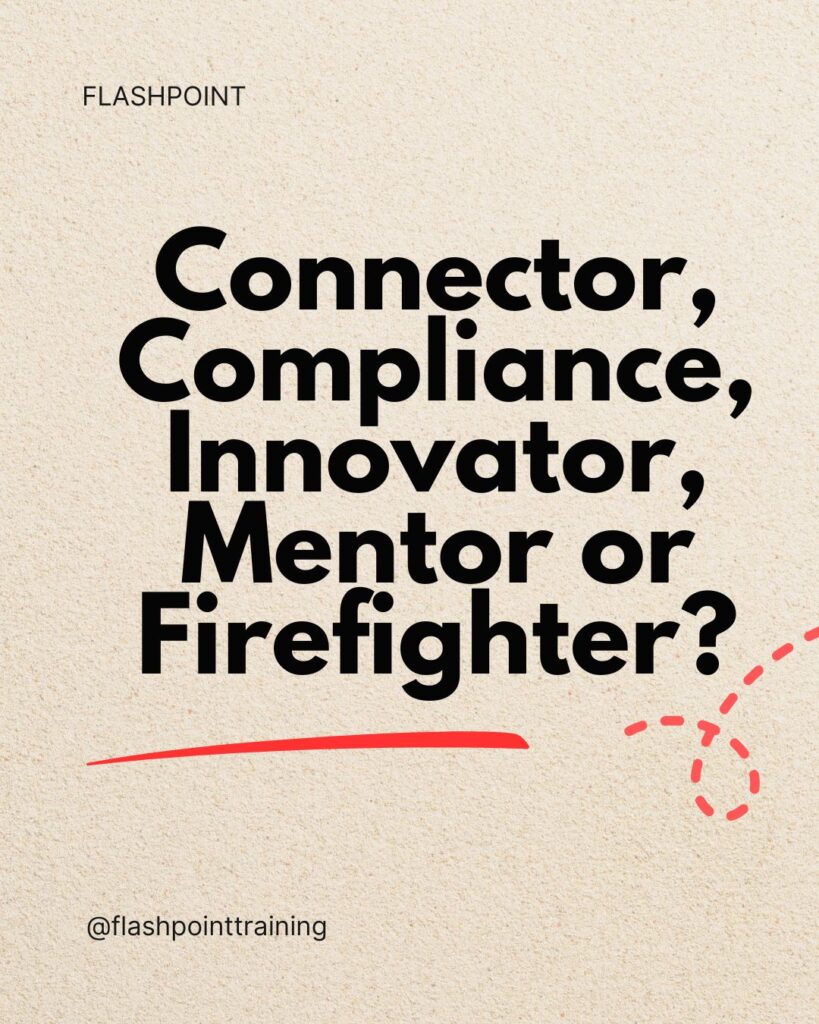
    The Four Different Kinds of SHSM Teachers-Which Are You?

    Most SHSM teachers can recognize themselves in one of a few common patterns. Here are the ones our team identified:

    The Connector

    You have a person for everything.

    Need a last-minute placement? You’re texting someone before the email is even drafted.
    Guest speaker cancels? You already have two backups lined up.
    Student needs a niche opportunity? Somehow, you know someone who knows someone.

    Your phone contacts list could run a small economy.

    You don’t just “run a program” — you run a network.

    Your strength: Opportunities. Your students get experiences others don’t.
    Your risk: The program quietly starts depending entirely on you.

    Take a vacation and suddenly everyone realizes… they don’t actually know how anything works without you.

    The Compliance Queen (or King )

    Your paperwork? Impeccable.
    Your tracking? Flawless.
    Your audit readiness? Immediate.

    You know exactly where every form is, what’s missing, and who needs to submit what — probably before they even realize it themselves.

    If SHSM had a control centre, you’d be running it.

    Your strength: Stability. Nothing falls through the cracks.
    Your risk: When everything becomes about completion, the experience can start to feel… transactional.

    Students finish. But do they grow?

    The Mentor

    You know your students.

    Not just their marks — their personalities, their anxieties, their strengths, the things they don’t say out loud.

    You’re the one having the real conversations:

    • “This placement isn’t working, let’s talk about why.”
    • “You’re better at this than you think.”
    • “Let’s figure out what actually fits you.”

    Students trust you. A lot.

    Your strength: Impact. You change how students see themselves.
    Your risk: You carry more than your share.

    Because when you care this much, it’s hard to switch it off.

    The Firefighter

    Every day is… dynamic.

    A placement falls through. A student doesn’t show up. An employer calls. A schedule changes. Something is always happening — and you are always responding.

    You solve problems quickly. You keep things moving. You make it work.

    Somehow, the program survives. Often because of you.

    Your strength: Resilience. You can handle anything.
    Your risk: You never get ahead of anything.

    Everything is urgent. Nothing is intentional. And you’re tired.

    The Innovator

    You’re always thinking:

    • “We could do this differently.”
    • “Why are we still doing it this way?”
    • “What if we tried…?”

    You bring in new ideas, new partnerships, new ways of thinking about SHSM.

    Your program doesn’t just run — it evolves.

    Your strength: Energy. Your program feels current and engaging.
    Your risk: Not everything sticks. And not everyone loves change as much as you do.

    So… Which One Are You?

    Here’s the twist:

    You’re probably not just one.

    Most SHSM teachers are a mix:

    • a little Connector
    • a bit of Compliance
    • some Mentor energy
    • occasional Firefighter mode

    And depending on the week? That mix can shift fast.

    In reality, most teachers are not just one of these. They move between them depending on the moment. But over time, one approach tends to dominate.

    The Risk of Staying in One Mode

    When teachers stay in the same role while the program evolves, a gap can form.

    It might look like:

    • a program that runs efficiently but feels disconnected from student experience
    • strong relationships but inconsistent structure
    • deep student support but limited capacity to manage growth
    • constant problem-solving with little long-term improvement

    These are not failures. They are signals.

    They suggest that the role needs to adjust — not completely change, but expand.

    Moving From Running to Designing

    There’s an important shift that happens in strong SHSM programs. Teachers move from simply running the program to actively designing it.

    Running the program is necessary. It’s the day-to-day work — placements, paperwork, communication, troubleshooting.

    Designing the program is different. It requires stepping back and asking:

    • What is actually working for students right now?
    • Where are we relying too heavily on one approach?
    • What would happen if I wasn’t here tomorrow — would this still function?
    • What needs to change, even if it’s uncomfortable?

    This shift doesn’t happen all at once. It starts with awareness.

    A Question Worth Revisiting

    There isn’t a single “right” way to be an SHSM teacher. The role is too complex for that.

    But there is value in asking, from time to time:

    What kind of SHSM teacher have I become — and does that still match what my program needs?

    For some, the answer will feel affirming. For others, it may highlight areas that have quietly drifted.

    The goal isn’t to replace what works. It’s to recognize when what works needs to evolve.

    Final Thought

    SHSM is one of the few areas in a school where teaching extends beyond the classroom in a visible and immediate way. That makes the role both impactful and demanding.

    The programs that sustain themselves over time are not just well-organized or well-connected. They are led by teachers who are willing to reflect on their role and adjust as the program changes around them.

    Because in the end, SHSM doesn’t just shape student pathways.

    It also shapes the teachers who lead it — whether they realize it or not.

    By Carmen Reis, CPA, MA

    Carmen is the CEO of Flashpoint Training and you can reach her at carmen@flashpointtraining.com