
Month: September 2026

  • Top 10 Reasons Teachers Should Recommend SHSM to University-Bound Students

    Top 10 Reasons Teachers Should Recommend SHSM to University-Bound Students

    Why the Specialist High Skills Major Program Is More Than a Pathway to the Skilled Trades

    One of the most common misconceptions about Ontario’s Specialist High Skills Major (SHSM) program is that it is primarily intended for students pursuing apprenticeships or careers in the skilled trades. As a result, some university-bound students—and even some parents—dismiss the program before fully understanding its value.

    As educators, we know the reality is much different.

    Every year, SHSM students across Ontario successfully transition into competitive university programs in engineering, nursing, health sciences, business, computer science, education, and countless other disciplines. While university admission is still based primarily on academic achievement and prerequisite courses, SHSM helps students develop many of the transferable skills, workplace experiences, and career awareness that contribute to long-term success.

    For teachers, guidance counsellors, and SHSM Leads, the question is no longer whether university-bound students can benefit from SHSM. The better question is how SHSM can help students become more informed, engaged, and prepared before they begin their post-secondary journey.

    Here are ten reasons educators should consider recommending SHSM to students who plan to attend university.

    1. SHSM Helps Students Make Better Postsecondary Decisions

    One of the greatest challenges educators face is helping students choose university programs with limited exposure to the careers those programs lead toward.

    Many students know they want to “work in healthcare” or “become an engineer,” but they have never visited a workplace, spoken with professionals, or observed those careers firsthand.

    SHSM addresses this challenge through career exploration, workplace visits, employer engagement, co-op education, and experiential learning.

    Students often discover new career possibilities within their chosen sector—or, just as importantly, realize that a particular career may not be the right fit before investing years in post-secondary education.

    Helping students make informed decisions before graduation is one of SHSM’s greatest strengths.

    2. Teachers Frequently See Increased Student Engagement

    One of the most rewarding outcomes educators report is increased engagement.

    Students who struggle to understand the relevance of classroom learning often become more motivated once they see how mathematics, science, English, technology, or business studies connect to real careers.

    Experiential learning provides context.

    Classroom concepts become practical.

    Career goals become tangible.

    For many students, SHSM transforms education from something they complete into something they understand.

    3. SHSM Develops Transferable Skills Universities Value

    While universities continue to place significant emphasis on grades, academic success depends on far more than marks alone.

    Students must communicate effectively, collaborate with peers, manage competing priorities, solve unfamiliar problems, and adapt to increasingly independent learning environments.

    According to the World Economic Forum’s Future of Jobs Report 2025, analytical thinking, communication, resilience, leadership, collaboration, and adaptability remain among the most important workforce skills.

    These are precisely the types of competencies students develop through SHSM certifications, co-op placements, employer interactions, and experiential learning activities.

    4. Career Exploration Reduces Uncertainty

    Every educator has encountered students who arrive in Grade 12 unsure about what comes next.

    SHSM provides opportunities to explore industries before post-secondary applications are submitted.

    Students may observe professionals, complete workplace experiences, participate in sector-specific training, and engage with employers.

    This exposure often results in greater confidence when selecting university programs.

    Even when students decide to change direction, that decision represents progress because it is based on experience rather than assumption.

    5. Industry Certifications Build Professional Confidence

    Industry-recognized certifications are often viewed simply as resume builders.

    However, educators recognize another benefit.

    Completing certifications such as First Aid, CPR, WHMIS, Customer Service, or sector-specific safety training helps students develop confidence in professional environments.

    Students begin to see themselves as future professionals rather than simply high school learners.

    That shift in mindset frequently carries into university and beyond.

    Schools often partner with organizations such as Flashpoint SHSM Solutions to deliver certifications that support Ministry requirements while engaging students through practical, hands-on learning.

    6. SHSM Encourages Meaningful Community Partnerships

    Strong SHSM programs build relationships between schools and their local communities.

    Students interact with employers, community organizations, post-secondary institutions, and industry professionals throughout the program.

    These partnerships enrich learning while helping students understand how classroom education connects to future careers.

    For educators, these connections also strengthen school-community relationships and expand opportunities for experiential learning.

    7. Co-op Education Supports Student Growth

    Co-op remains one of the most impactful components of SHSM.

    Students develop workplace habits, improve communication skills, and gain first-hand experience in professional settings.

    Teachers frequently observe increased maturity following successful co-op placements.

    Students often return to the classroom with improved confidence, stronger time-management skills, and a clearer understanding of workplace expectations.

    These experiences help prepare students not only for employment but also for the greater independence expected in university.

    8. SHSM Supports Every Postsecondary Pathway

    One misconception that still exists is that recommending SHSM may discourage students from pursuing university.

    In reality, SHSM was designed to support all four post-secondary pathways:

    • University
    • College
    • Apprenticeship
    • Workplace

    Health and Wellness students frequently continue into nursing, medicine, kinesiology, physiotherapy, or public health.

    Business SHSM students often pursue commerce, finance, accounting, or entrepreneurship.

    Construction SHSM students may become engineers, architects, or project managers.

    The program expands opportunities rather than limiting them.

    9. Ontario’s Labour Market Supports Career Exploration

    Ontario’s labour market continues to evolve rapidly.

    According to BuildForce Canada’s Construction and Maintenance Looking Forward: Ontario 2025–2034, the province’s construction sector alone could face a shortage of approximately 52,000 workers by 2034, while roughly 95,000 experienced workers are expected to retire during that period.

    Meanwhile, technological advances, artificial intelligence, healthcare expansion, and clean energy initiatives are reshaping workforce needs across multiple sectors.

    Students who understand labour market trends before choosing university programs are better positioned to make informed decisions about future careers.

    SHSM provides valuable opportunities to begin those conversations in secondary school.

    10. SHSM Helps Students Graduate With Purpose

    Perhaps the greatest benefit educators observe is clarity.

    Students who actively participate in SHSM often leave secondary school with a stronger understanding of:

    • Their interests
    • Their strengths
    • Workplace expectations
    • Postsecondary options
    • Career possibilities

    Rather than viewing graduation as the end of high school, they begin to see it as the next step in a well-informed career journey.

    That sense of purpose can have a lasting impact on motivation, confidence, and long-term success.

    Final Thoughts

    Teachers play a critical role in helping students navigate an increasingly complex world of work.

    While SHSM is not the right fit for every learner, it remains one of Ontario’s strongest opportunities for connecting curriculum with authentic career exploration.

    For university-bound students, SHSM should not be viewed as an alternative to academic achievement. Instead, it should be viewed as a complement to it—providing practical experiences, transferable skills, industry certifications, and workplace exposure that help students make more informed decisions before beginning post-secondary education.

    When educators recommend SHSM thoughtfully and match students with sectors aligned to their interests, the program becomes far more than a collection of certifications. It becomes a bridge between classroom learning, career awareness, and future success.

    Sources & Labour Market Data

    Ontario Ministry of Education

    • Specialist High Skills Major (SHSM) program overview and pathway information.

    World Economic Forum – Future of Jobs Report 2025

    • Identifies analytical thinking, communication, resilience, leadership, collaboration, and adaptability as among the most important future workforce skills.

    BuildForce Canada – Construction and Maintenance Looking Forward: Ontario 2025–2034

    • Ontario construction sector could face a shortage of approximately 52,000 workers by 2034.
    • Approximately 95,000 workers are expected to retire during the forecast period.
    • The industry will require approximately 104,000 new workers over the next decade.

    Government of Canada Job Bank

    • Positive employment outlooks continue across many healthcare, technology, business, and skilled trades occupations in Ontario.

  • Helping Students Understand Why They Should Pursue a SHSM Specialization…

    Helping Students Understand Why They Should Pursue a SHSM Specialization…

    Every school year, teachers, guidance counsellors, and SHSM Leads hear the same question from students and parents:

    “Is SHSM worth it?”

    It’s a fair question.

    Today’s students are balancing demanding academic schedules, extracurricular activities, part-time jobs, volunteer commitments, and post-secondary planning. Parents want reassurance that the programs their children choose will genuinely prepare them for future success rather than simply adding more to an already full timetable.

    As educators, we’re often in the best position to answer that question.

    The reality is that SHSM is not simply another high school program. When implemented well, it provides students with authentic career exploration, industry-recognized certifications, experiential learning, and meaningful workplace connections that are difficult to replicate in a traditional classroom.

    That said, SHSM is not necessarily the right choice for every student.

    The role of educators is not to encourage every student to enroll. Rather, it is to help students determine whether SHSM aligns with their interests, learning style, post-secondary pathway, and career goals.

    Understanding What SHSM Really Offers

    The Specialist High Skills Major (SHSM) is a Ministry of Education program that allows Ontario students to customize part of their Grade 11 and 12 education around a specific economic sector while still completing the requirements for their Ontario Secondary School Diploma.

    Students complete a bundle of sector-related courses combined with:

    • Industry-recognized certifications
    • Cooperative education
    • Experiential learning opportunities
    • Reach-ahead experiences
    • Career exploration activities
    • Sector partnerships

    Successful students graduate with an SHSM designation on their diploma.

    However, many educators would argue that the designation itself is not the greatest benefit.

    The real value lies in the experiences students gain throughout the program.

    SHSM Helps Students Connect Learning to Real Careers

    One challenge educators frequently encounter is helping students understand why their classroom learning matters.

    Students often ask questions such as:

    “When will I ever use this?”

    SHSM helps answer that question.

    By exposing students to real workplaces, industry professionals, and sector-specific experiences, the program creates authentic connections between curriculum and careers.

    A mathematics lesson becomes more meaningful when a student sees how electricians use calculations daily.

    Communication skills take on new importance after participating in a workplace placement.

    Health and safety lessons become more relevant when students complete industry certifications before entering a co-op placement.

    Many teachers report that students become more engaged once they can clearly see how classroom learning connects to future employment.

    Career Exploration Before Graduation Matters

    One of SHSM’s greatest strengths is that it allows students to explore careers before making expensive post-secondary decisions.

    Every year, students apply to university or college programs based largely on assumptions about careers.

    Some have never visited a workplace in their chosen field.

    Others have never spoken with professionals working in the occupations they hope to pursue.

    SHSM helps address this gap.

    Through workplace experiences, employer panels, certifications, and experiential learning, students begin to understand not only what careers look like but also whether those careers align with their own interests and strengths.

    From an educator’s perspective, helping a student discover that a career is—or is not—the right fit before graduation is a meaningful success.

    SHSM Supports Every Postsecondary Pathway

    One misconception that still surfaces in schools is that SHSM is designed primarily for students pursuing apprenticeships or the skilled trades.

    That is no longer an accurate representation of the program.

    SHSM supports students pursuing:

    • University
    • College
    • Apprenticeships
    • Direct entry into the workplace

    For example, students enrolled in a Health and Wellness SHSM may continue into nursing, medicine, kinesiology, physiotherapy, public health, or medical research.

    Business SHSM students frequently pursue commerce, accounting, finance, marketing, or entrepreneurship.

    Construction SHSM students may eventually become engineers, architects, construction managers, or licensed tradespeople.

    The strength of SHSM lies in helping students explore careers—not limiting their options.

    Industry Certifications Build More Than Resumes

    Industry-recognized certifications are often viewed simply as credentials students can add to a resume.

    While that is certainly valuable, educators recognize another important benefit.

    Certifications introduce students to professional expectations.

    Whether students are completing First Aid, CPR, WHMIS, customer service, or sector-specific safety training, they begin learning workplace standards that extend beyond technical knowledge.

    Students develop confidence.

    They become more comfortable in professional environments.

    They begin viewing themselves as future members of their chosen industry.

    These experiences often help students mature both personally and professionally.

    Experiential Learning Develops Transferable Skills

    Employers consistently emphasize that technical knowledge alone is no longer enough.

    The World Economic Forum’s Future of Jobs Report 2025 identifies analytical thinking, resilience, leadership, communication, collaboration, and adaptability among the most important skills for the future workforce.

    These are precisely the kinds of skills students develop through high-quality SHSM experiences.

    Co-op placements require students to communicate professionally.

    Experiential learning activities encourage problem-solving.

    Industry projects develop teamwork and leadership.

    These transferable skills benefit students regardless of the pathway they ultimately choose.

    Educators Should Also Discuss the Commitment Required

    While SHSM offers significant benefits, educators also have a responsibility to present a balanced picture.

    Students should understand that SHSM requires commitment.

    Completing the required certifications, sector courses, co-op placements, and experiential learning activities requires planning and organization.

    For students with demanding athletic schedules, extensive extracurricular involvement, or highly specialized academic programs, timetable planning becomes particularly important.

    Guidance counsellors and SHSM Leads play an important role in helping students determine whether the program fits comfortably within their graduation plan.

    Not Every Student Needs SHSM

    It is also important to recognize that SHSM is not intended for every student.

    Some students may have little interest in the available sectors offered by their school.

    Others may have timetable constraints that make participation difficult.

    Choosing not to participate in SHSM should never be viewed as a failure.

    Rather, the goal should be ensuring that every student chooses the pathway that best supports their interests, strengths, and future aspirations.

    Sometimes SHSM is the right answer.

    Sometimes another pathway better serves the student.

    Good educational advising recognizes both possibilities.

    The Labour Market Continues to Reinforce SHSM’s Value

    Ontario’s labour market continues to evolve rapidly.

    According to BuildForce Canada’s 2025–2034 Construction and Maintenance Looking Forward report, Ontario’s construction sector alone could face a shortage of approximately 52,000 workers by 2034, while approximately 95,000 experienced workers are expected to retire over the same period.

    At the same time, emerging technologies such as artificial intelligence are changing how organizations recruit, train, and develop employees.

    Increasingly, employers are seeking graduates who possess not only academic knowledge but also workplace experience, communication skills, adaptability, and professional confidence.

    These are qualities that SHSM is specifically designed to help students develop.

    Final Thoughts: The Question Isn’t Whether SHSM Is Worth It

    Perhaps the better question is:

    Which students will benefit most from SHSM?

    From an educator’s perspective, SHSM is most valuable when students actively engage with the opportunities it provides.

    For students who are curious about careers, enjoy experiential learning, and want to connect classroom learning with the real world, SHSM can become one of the most meaningful parts of their secondary school experience.

    It allows students to explore industries, develop workplace-ready skills, earn valuable certifications, and make more informed post-secondary decisions.

    As educators, our role is not simply to promote SHSM.

    Our role is to ensure that students understand the opportunities available to them and choose the pathway that best prepares them for success beyond graduation.

    When approached thoughtfully, SHSM remains one of Ontario’s strongest tools for helping students bridge the gap between education and the world of work.

    Sources & Labour Market Data

    Ontario Ministry of Education

    • Specialist High Skills Major (SHSM) program overview and program requirements.
    • SHSM supports university, college, apprenticeship, and workplace pathways.

    World Economic Forum – Future of Jobs Report 2025

    • Analytical thinking, resilience, leadership, communication, collaboration, and adaptability identified as among the most important future workforce skills.

    BuildForce Canada – Construction and Maintenance Looking Forward: Ontario 2025–2034

    • Ontario construction sector could face a shortage of approximately 52,000 workers by 2034.
    • Approximately 95,000 construction workers are expected to retire during the forecast period.
    • The industry is expected to require approximately 104,000 new workers over the next decade.

    Government of Canada Job Bank

    • Positive employment outlooks continue across many healthcare, technology, skilled trades, and technical occupations in Ontario.

    Statistics Canada

    • Ongoing labour market trends emphasize the growing importance of transferable skills, experiential learning, and workforce adaptability.
  • What is SHSM? The Complete Guide 

    What is SHSM? The Complete Guide 

    Understanding Ontario’s Specialist High Skills Major (SHSM) Program

    If you’re a student, parent, teacher, or guidance counselor searching for information about SHSM in Ontario, you’re not alone. One of the most common questions asked by high school students is: “What is SHSM, and is it worth it?”

    The Specialist High Skills Major (SHSM) program is one of Ontario’s most valuable education pathways, helping students gain industry-recognized certifications, real-world experience, and career-focused learning while earning their Ontario Secondary School Diploma (OSSD).

    Whether you’re considering a future in the skilled trades, healthcare, business, technology, hospitality, construction, or another sector, SHSM can help you explore career opportunities and build valuable skills before graduation.

    In this guide, we’ll explain what SHSM is, how it works, its benefits, and why more Ontario students are choosing SHSM to prepare for their future.

    What is SHSM?

    The Specialist High Skills Major (SHSM) is a Ministry of Education-approved program available in Ontario secondary schools. It allows students to focus their learning on a specific economic sector while completing the requirements for their high school diploma.

    Students who successfully complete all SHSM requirements receive a special designation on their Ontario Secondary School Diploma.

    The program combines:

    • Sector-specific courses
    • Industry-recognized certifications
    • Experiential learning opportunities
    • Career exploration activities
    • Reach-ahead experiences
    • Co-op education placements

    The goal is simple: help students connect classroom learning to real-world careers and post-secondary opportunities.

    Who Can Participate in SHSM?

    Students typically begin SHSM in Grade 11 and complete the program during Grades 11 and 12.

    SHSM is designed for students pursuing a variety of pathways, including:

    • University
    • College
    • Apprenticeship
    • Workplace

    One of the biggest misconceptions about SHSM is that it’s only for students entering the trades. In reality, many university-bound students participate in SHSM to strengthen their skills, gain experience, and stand out during admissions and scholarship applications.

    What Sectors Are Available Through SHSM?

    Ontario schools offer SHSM programs across a wide range of sectors.

    Some of the most popular SHSM sectors include:

    Construction

    Students explore careers such as:

    • Electrician
    • Carpenter
    • Project Manager
    • Construction Technician

    Health and Wellness

    Potential careers include:

    • Nurse
    • Physiotherapist
    • Personal Support Worker
    • Medical Researcher

    Information and Communications Technology (ICT)

    Students gain exposure to:

    • Software Development
    • Cybersecurity
    • IT Support
    • Data Analytics

    Business

    Career pathways may include:

    • Marketing
    • Entrepreneurship
    • Accounting
    • Human Resources

    Hospitality and Tourism

    Students learn about:

    • Culinary Arts
    • Event Planning
    • Hotel Management
    • Tourism Operations

    Many schools also offer SHSM programs in sectors such as manufacturing, transportation, arts and culture, agriculture, environment, sports, and aviation.

    What Certifications Do SHSM Students Earn?

    One of the most valuable components of SHSM is the opportunity to earn industry-recognized certifications.

    Depending on the sector, students may complete certifications such as:

    • First Aid
    • CPR
    • WHMIS
    • Working at Heights Awareness
    • Customer Service Training
    • Safe Food Handling
    • Infection Control
    • Health and Safety Awareness

    These certifications help students build workplace readiness skills and strengthen resumes before entering post-secondary education or employment.

    Organizations like Flashpoint SHSM Solutions support schools by delivering many of these certification programs both in-person and virtually, helping educators meet Ministry requirements while creating engaging learning experiences for students.

    What Is Experiential Learning in SHSM?

    Experiential learning is a cornerstone of the SHSM program.

    Rather than learning exclusively in a classroom, students participate in real-world experiences that help them understand careers and workplaces.

    Examples include:

    • Workplace tours
    • Industry guest speakers
    • Job shadowing
    • Mentorship opportunities
    • Sector-specific workshops
    • Co-op placements

    Research consistently shows that students learn more effectively when they can connect theory to practical experience. Experiential learning helps students build confidence, explore career interests, and make more informed decisions about their future.

    How Does Co-op Education Fit Into SHSM?

    Co-op education is a required component of SHSM.

    Students complete placements with employers related to their chosen sector, allowing them to gain firsthand experience in professional environments.

    Benefits of SHSM co-op placements include:

    • Building workplace skills
    • Developing professional networks
    • Exploring career interests
    • Improving communication and teamwork skills
    • Strengthening resumes and post-secondary applications

    Many students discover their future career path through a co-op experience.

    What Are the Benefits of SHSM?

    Students who complete SHSM gain significant advantages that extend beyond high school.

    Career Exploration

    SHSM helps students discover careers they may never have considered.

    Industry Certifications

    Students graduate with credentials that employers recognize and value.

    Improved Employability Skills

    Communication, teamwork, problem-solving, leadership, and professionalism are developed throughout the program.

    Postsecondary Readiness

    Whether pursuing university, college, apprenticeship, or work, SHSM helps students build confidence and preparedness.

    Networking Opportunities

    Students connect with employers, industry professionals, post-secondary institutions, and mentors.

    Enhanced Learning Engagement

    Students often report feeling more motivated because they can see how classroom learning connects to their future goals.

    Is SHSM Worth It?

    For most students, the answer is yes.

    The SHSM program provides unique opportunities that traditional classroom learning alone cannot offer. Students gain certifications, workplace experience, career exploration opportunities, and valuable transferable skills while still earning their Ontario Secondary School Diploma.

    Parents appreciate that SHSM helps students make informed decisions about their future, while educators recognize its role in increasing engagement and supporting student success.

    Most importantly, SHSM allows students to explore potential career paths before making significant post-secondary commitments.

    Final Thoughts: Why SHSM Continues to Grow in Ontario

    As employers increasingly seek candidates with practical experience, workplace skills, and industry knowledge, programs like SHSM have become more important than ever.

    The Specialist High Skills Major (SHSM) provides students with a unique opportunity to gain hands-on experience, earn industry-recognized certifications, and explore careers while still in high school.

    Whether a student plans to attend university, college, pursue an apprenticeship, or enter the workforce, SHSM offers valuable experiences that can help shape future success.

  • What is the Best Way to Organize My SHSM Calendar?

    What is the Best Way to Organize My SHSM Calendar?

    As SHSM service providers, we often get this question from new SHSM teachers. What is the best way to organize my SHSM calendar? When should I do my certs? When should the field trips happen?

    As a SHSM teacher or Lead, September should be a fresh start. Students arrive eager to learn about SHSM, others to earn their certifications, participate in field trips, meet industry professionals, and explore careers. Teachers are excited to launch another year of Specialist High Skills Major (SHSM) programming, and guidance counsellors begin helping students map out pathways that align with their interests and post-secondary goals.

    However, without a plan, it can become increasingly difficult to coordinate SHSM activities.

    Certification dates become difficult to schedule. Employers are unavailable when students are ready for co-op. Experiential learning opportunities compete with school events. Reach-ahead activities get pushed later into the semester, and suddenly June arrives with students still trying to complete outstanding requirements.

    If you’re an SHSM Lead, none of this is unfamiliar.

    The difference between a good SHSM program and a great one often comes down to planning.

    Schools that create a year-long calendar before students even arrive are generally able to offer richer experiences, stronger employer partnerships, and a much smoother experience for both students and staff.

    While every school board has its own calendar and priorities, there are some common planning practices that consistently lead to successful SHSM programs in our experience.

    Planning Starts Before the School Year Begins

    One of the biggest mistakes schools make is waiting until September to begin organizing SHSM activities.

    By August, many employers have already booked school visits. Certification providers have filled popular dates. Colleges and universities have begun scheduling campus events. Community partners are receiving requests from dozens of schools.

    The summer months are an opportunity to build the foundation for the year ahead.

    This is an excellent time to confirm certification providers, contact employer partners, schedule major experiential learning opportunities, book transportation for field trips, and review the previous year’s successes and challenges.

    Schools that complete this work before Labour Day often spend less time reacting throughout the year and more time supporting students.

    September Is About Building Excitement

    The first month of school should focus on helping students understand what SHSM is and why they are participating.

    This is the ideal time for orientation activities, goal setting, parent communication, and introducing students to the opportunities available throughout the year.

    Many students begin SHSM with only a limited understanding of what lies ahead.

    Take time to discuss certifications, co-op, sector experiences, career exploration, and post-secondary pathways.

    Students who understand the “why” behind the program tend to stay engaged throughout the year.

    This is also an excellent month to begin Individual Pathway Plan discussions and identify students who may benefit from additional guidance or support.

    October Is the Perfect Time to Build Workplace Readiness

    Before students step into workplaces, they should feel confident in professional expectations.

    October is an ideal time to focus on employability skills.

    Resume writing, interview preparation, workplace communication, email etiquette, professionalism, and time management all help prepare students for co-op and employer interactions.

    Many schools also begin delivering industry-recognized certifications during the fall.

    Completing certifications such as First Aid, CPR, WHMIS, Health and Safety Awareness, Customer Service, or sector-specific safety training early in the year helps students feel more prepared before workplace experiences begin.

    Rather than treating certifications as individual events, connect them to the workplace situations where students will actually use those skills.

    November Is About Connecting Students With Employers

    One of the greatest strengths of SHSM is bringing the workplace into education.

    November is an excellent time to introduce students to employers, industry professionals, post-secondary partners, and recent graduates.

    Career panels, guest speakers, workplace tours, mock interviews, and networking opportunities all help students better understand what careers actually look like beyond high school.

    These experiences also help students begin thinking more seriously about co-op placements and post-secondary planning.

    The earlier students interact with employers, the more confident they become.

    December Is the Time to Reflect

    The weeks leading into the holiday break offer an opportunity many schools overlook.

    Reflection.

    Students have completed certifications, attended events, and begun exploring industries.

    Now is the time to ask questions.

    What surprised them?

    Which careers interested them most?

    Have their goals changed?

    What skills have they developed?

    Reflection helps students connect experiences to future planning while giving teachers valuable insight into what is resonating most with learners.

    January Brings a Fresh Start

    A new semester often means new SHSM students, new co-op placements, and new opportunities.

    January is an excellent time to revisit workplace expectations, refresh interview skills, update resumes, and reconnect with employer partners.

    It is also an opportunity to identify any students who may need additional support completing SHSM requirements before graduation.

    Starting the semester with clear expectations helps everyone stay organized.

    February and March Are Ideal for Experiential Learning

    Once students have developed workplace readiness skills, larger experiential learning opportunities tend to have greater impact.

    Industry conferences, college visits, university reach-ahead activities, workplace simulations, sector-specific events, and career fairs all help students expand their understanding of potential pathways.

    This is also an excellent time to expose students to careers they may never have considered.

    Many students enter SHSM believing there are only a handful of occupations within their chosen sector.

    Experiential learning often demonstrates just how many possibilities exist.

    Spring Is About Looking Forward

    As students begin accepting post-secondary offers and thinking about graduation, conversations naturally shift toward the future.

    Teachers and guidance counsellors can help students connect everything they have experienced throughout SHSM to the decisions they are now making.

    How did co-op influence their pathway?

    Which certifications will continue to benefit them?

    What skills have they developed?

    Which employers or mentors made the greatest impact?

    These discussions help students recognize how much they have grown over the course of the year.

    Celebrate Success Before the Year Ends

    One of the most overlooked aspects of SHSM programming is celebration.

    Students invest significant time completing certifications, participating in co-op, attending experiential learning activities, and building workplace skills.

    Those accomplishments deserve recognition.

    Many schools host SHSM showcases, employer appreciation breakfasts, student presentations, signing days for apprenticeships, portfolio celebrations, or recognition ceremonies.

    These events not only celebrate student achievement but also strengthen relationships with employers, families, and community partners.

    Great SHSM Programs Don’t Happen by Accident

    The most successful SHSM programs are rarely the ones with the largest budgets.

    They are the ones with intentional planning.

    When certifications, co-op, experiential learning, employer engagement, and post-secondary exploration are connected through a year-long strategy, students experience SHSM as a journey rather than a checklist.

    That journey builds confidence.

    It develops workplace skills.

    It helps students make informed decisions about university, college, apprenticeships, and employment.

    Most importantly, it allows students to graduate with a clearer understanding of who they are and where they want to go next.

    For SHSM Leads, teachers, guidance counsellors, and administrators, that is ultimately the goal.

    Final Thoughts

    Every SHSM program will look slightly different depending on the school, sector, and community partnerships available.

    However, the strongest programs all have one thing in common: they are planned with intention.

    By thinking about the school year as a progression—from awareness and workplace readiness to experiential learning, career exploration, and post-secondary planning—educators create richer experiences for students while reducing stress for staff.

    Schools that build a thoughtful SHSM calendar are not simply organizing events.

    They are creating opportunities that help students discover careers, develop confidence, and prepare for successful futures.

    Many schools also choose to work with experienced partners such as Flashpoint SHSM Solutions to schedule certifications, career workshops, experiential learning, and sector-specific programming throughout the year, allowing staff to focus more of their time on supporting students and building meaningful community partnerships.

    Sources & Best Practice References

    Ontario Ministry of Education

    • Specialist High Skills Major (SHSM): Policy and Implementation Guide.
    • Cooperative Education curriculum and policy documents.

    Government of Canada – Skills for Success Framework

    • Foundational workplace competencies and career readiness.

    Conference Board of Canada

    • Employer expectations for employability and transferable skills.

    SEO Keywords: SHSM calendar, SHSM teacher guide, SHSM planning, SHSM lead resources, Specialist High Skills Major Ontario, SHSM best practices, SHSM experiential learning, SHSM certifications, Ontario SHSM program, SHSM school planning, SHSM guidance counsellor resources.

  • Getting Back Into SHSM After Summer Break: A Teacher’s Guide to Starting the School Year Strong

    Getting Back Into SHSM After Summer Break: A Teacher’s Guide to Starting the School Year Strong

    How SHSM Leads Can Set the Tone for a Successful Year

    For many educators, September feels like a fresh start.

    For SHSM Leads, however, it often feels like jumping onto a moving train.

    Students are returning from summer jobs, vacations, camps, and time away from school. Guidance departments are finalizing timetables. Teachers are learning new class lists. School calendars are filling quickly, and before long the first certification, employer visit, or experiential learning activity is only weeks away.

    It can be tempting to focus immediately on logistics.

    Which certifications need to be booked?

    Have co-op placements been finalized?

    Do all students meet the SHSM requirements?

    While those questions are important, the first few weeks of the school year are about much more than paperwork.

    They are about rebuilding momentum.

    Students need to reconnect with the program, understand what lies ahead, and begin seeing themselves not simply as high school students, but as future professionals exploring careers.

    A thoughtful start to the school year sets the tone for everything that follows.

    Remember That Students Are Starting Fresh Too

    Although SHSM Leads may have spent part of the summer planning the year ahead, students are returning from a very different mindset.

    Some worked summer jobs.

    Some travelled.

    Some spent two months thinking very little about school.

    Expecting students to immediately jump into career planning can sometimes create unnecessary stress.

    Instead, begin by reconnecting them with why they joined SHSM in the first place.

    Ask questions that encourage reflection.

    Has anything changed since June?

    Did a summer job introduce them to a new career interest?

    Did volunteering or travelling spark new ideas?

    Are they more confident about their future, or more uncertain?

    These conversations often reveal that students have grown considerably over the summer.

    Revisit Career Goals

    Students’ interests evolve quickly.

    A student who entered Health and Wellness SHSM because they wanted to become a nurse may now be interested in physiotherapy after working at a summer camp.

    Another student who planned to study engineering may have discovered a passion for skilled trades after working in construction over the summer.

    September is an ideal time to revisit Individual Pathway Plans and career goals.

    Rather than assuming students remain on the same pathway they selected the previous year, create opportunities for them to reflect and adjust.

    Helping students refine their goals is part of good career education.

    Build Excitement Before Talking About Requirements

    Every SHSM Lead knows there are Ministry requirements that must be completed.

    Certifications.

    Experiential learning.

    Reach-ahead activities.

    Co-op.

    Sector-recognized experiences.

    However, students rarely become excited because of a checklist.

    They become excited when they understand the opportunities ahead.

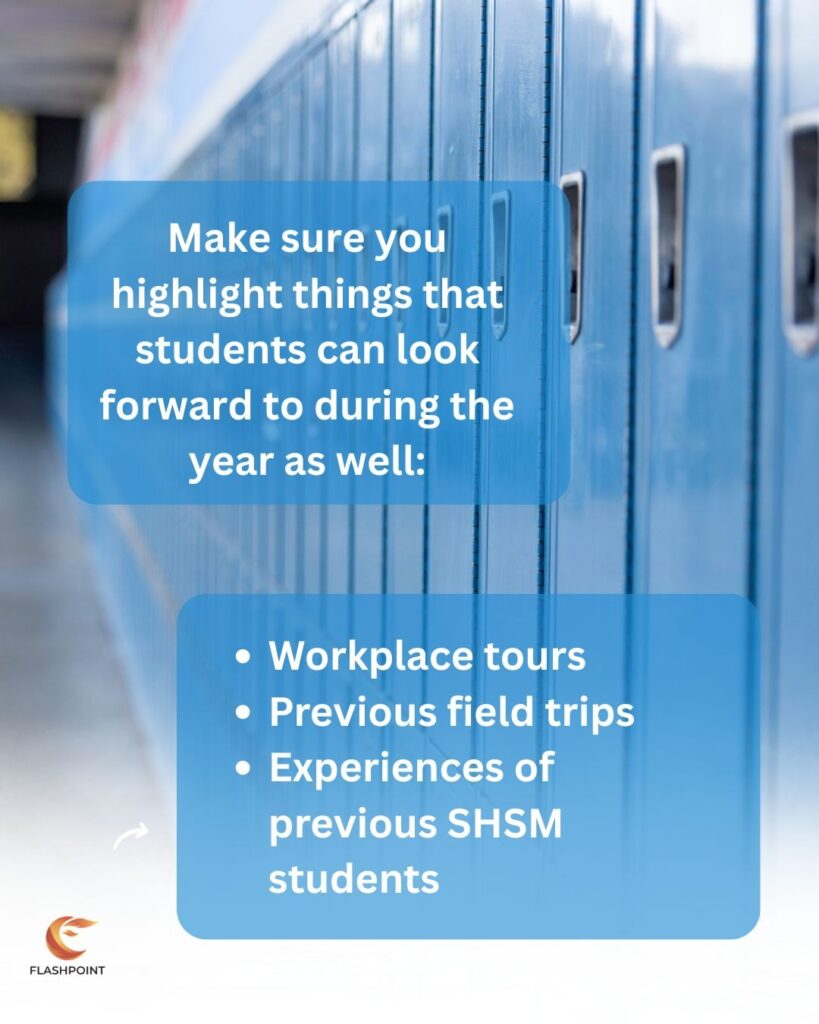
    Before reviewing program requirements, spend time highlighting what students can look forward to during the year.

    Talk about upcoming workplace tours.

    Share photos from previous field trips.

    Invite former SHSM students to speak about their experiences.

    Highlight certifications that employers value.

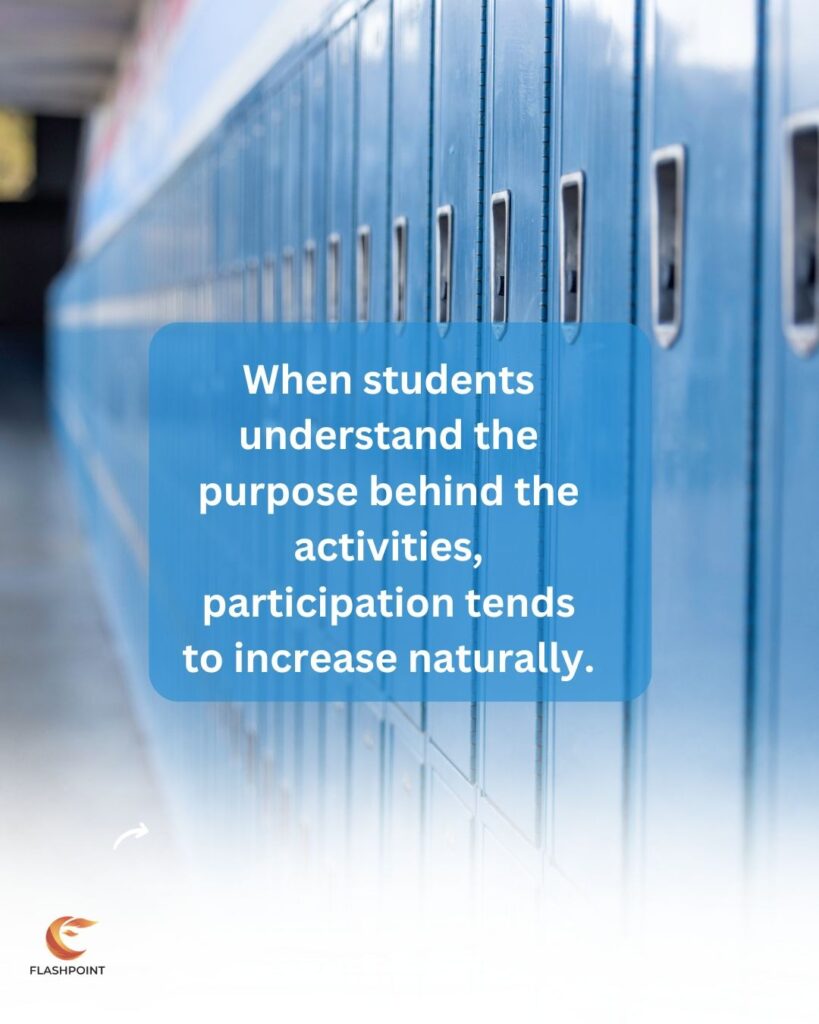
    When students understand the purpose behind the activities, participation tends to increase naturally.

    Reconnect With Employer Partners Early

    September is also an important time to reconnect with employers, community organizations, colleges, universities, and sector partners.

    Even if major events have already been scheduled, a quick conversation helps strengthen relationships and confirms expectations.

    Employers appreciate communication.

    They also appreciate knowing what students have already learned before arriving at the workplace.

    Strong partnerships are built through ongoing communication rather than last-minute requests.

    Review Workplace Expectations Before Students Need Them

    Many SHSM students will participate in workplace experiences within the first few months of school.

    Rather than waiting until immediately before co-op begins, review workplace expectations early.

    Topics such as professional communication, attendance, workplace etiquette, confidentiality, appropriate dress, and respectful behaviour should become part of classroom conversations from the beginning of the year.

    Students who understand these expectations early often approach employer interactions with greater confidence.

    Look Beyond Certifications

    One of the easiest traps for SHSM programs is measuring success by the number of certifications completed.

    Certifications are important.

    But they are only one component of a successful program.

    The real goal is helping students develop confidence, workplace readiness, career awareness, and transferable skills.

    As you plan the year, ask yourself whether every activity answers one simple question:

    How will this help students better prepare for life after high school?

    If the answer is clear, the activity likely has value.

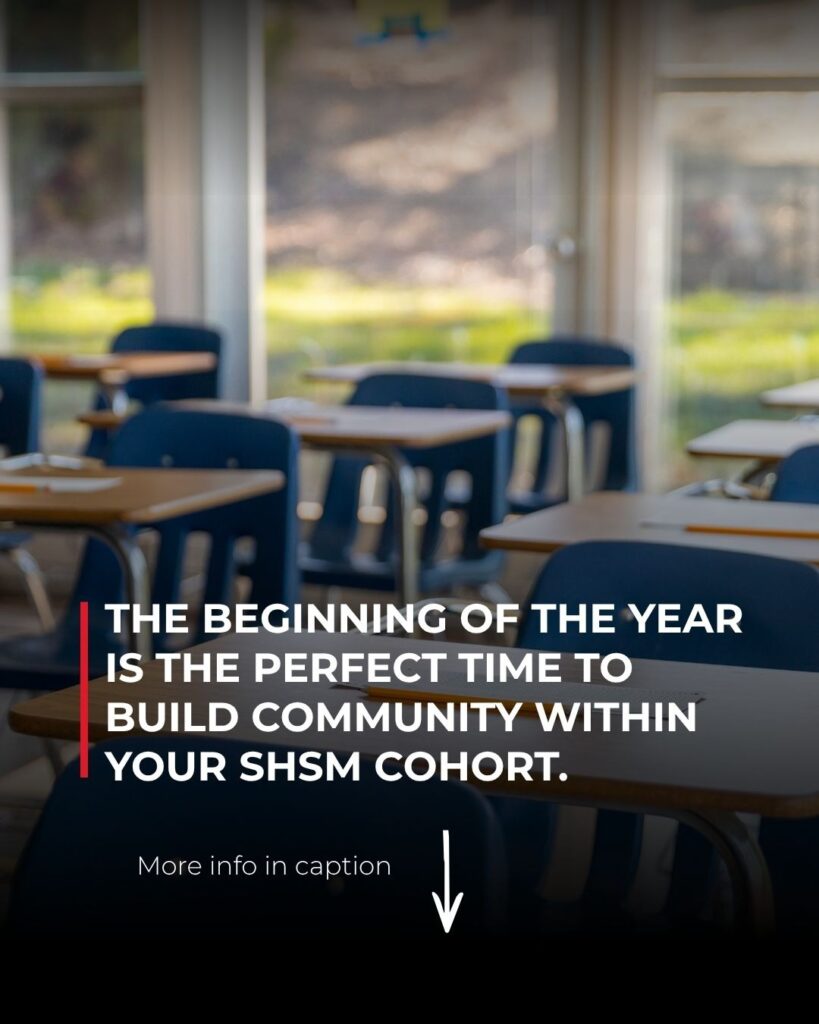
    Build Community Within Your SHSM Cohort

    Students are more likely to stay engaged when they feel connected to one another.

    The beginning of the year is an excellent time to build relationships within the SHSM cohort.

    Simple activities that encourage students to share career interests, workplace experiences, or future goals help create a stronger learning community.

    Students often become valuable resources for one another throughout the year, sharing placement experiences, scholarship opportunities, and post-secondary advice.

    Set Expectations for Reflection

    SHSM is designed around experience.

    Experience alone, however, does not always produce learning.

    Reflection transforms experiences into meaningful career development.

    Introduce reflection early.

    Encourage students to think about what they hope to learn this year, the skills they want to develop, and the questions they still have about future careers.

    Returning to these reflections throughout the year helps students recognize their own growth.

    Remember Why SHSM Exists

    September can quickly become consumed by scheduling, emails, forms, transportation, and deadlines.

    Those administrative tasks are necessary.

    But they are not the purpose of SHSM.

    SHSM exists to help students make informed decisions about their futures.

    It helps young people connect classroom learning with careers.

    It introduces them to employers, workplaces, post-secondary pathways, and industries they may never have considered.

    Keeping that purpose at the centre of planning helps educators prioritize the experiences that matter most.

    Start Small, Then Build Momentum

    Not every exciting opportunity needs to happen during the first month of school.

    In fact, spacing experiences throughout the year often creates greater anticipation and engagement.

    Focus first on helping students reconnect with the program.

    Then gradually build toward certifications, employer engagement, experiential learning, co-op placements, and post-secondary planning.

    Students who understand the journey are much more likely to stay invested throughout the year.

    Final Thoughts

    The beginning of the school year offers something every SHSM Lead values: a fresh opportunity.

    A new group of students.

    New employer partnerships.

    New career conversations.

    New possibilities.

    While paperwork and planning are essential, the most successful SHSM programs begin by reconnecting students with purpose.

    When students understand why they are participating—and when educators intentionally build excitement, confidence, and career awareness from the first few weeks of school—the rest of the year tends to unfold much more smoothly.

    Every September is an opportunity to inspire students to think differently about their futures.

    As SHSM educators, that may be the most important work we do.

    Schools that partner with organizations such as Flashpoint SHSM Solutions often find that scheduling certifications, experiential learning opportunities, and career-focused programming early in the year helps create momentum that carries throughout the entire SHSM experience.

    Sources & Best Practice References

    Ontario Ministry of Education

    • Specialist High Skills Major (SHSM): Policy and Implementation Guide.

    Government of Canada – Skills for Success Framework

    • Career readiness, communication, adaptability, and lifelong learning competencies.

    Conference Board of Canada

    • Research on employability skills, career readiness, and school-to-work transitions.

    SEO Keywords: SHSM September planning, SHSM teacher guide, back to school SHSM, SHSM Lead resources, Ontario SHSM planning, SHSM best practices, career education Ontario, SHSM experiential learning, SHSM school year planning, SHSM teacher resources.