
From designing the next generation of cars and aircraft to keeping people and products moving, transportation offers an extraordinary range of careers. With an aging workforce, advancing technology and new demands for skilled professionals, the industry is preparing for its next generation of talent.
When students think about careers in transportation, they often picture pilots, truck drivers, automotive mechanics or perhaps someone working at an airport. But long before an airplane takes flight or a vehicle reaches the road, an entire team of professionals has been involved in imagining, designing, engineering, manufacturing, testing and delivering it.
Transportation is one of Canada’s most diverse career ecosystems. It brings together creativity and technology, business and engineering, skilled trades and customer service. The person sketching the interior of a future electric vehicle, the technician maintaining an aircraft engine and the logistics specialist coordinating international shipments are all contributing to the same essential industry: moving people and goods safely and efficiently.
For Ontario students exploring their future careers, transportation offers opportunities that extend well beyond traditional roles.

An Industry Employing Hundreds of Thousands of Canadians
Transportation is a major contributor to Canada’s economy, and the employment numbers illustrate its scale.
According to the Government of Canada’s Job Bank, Ontario’s transportation and warehousing industry employed approximately 421,600 people in 2024, representing 5.2% of the province’s workforce. Employment increased by 4.9% that year, with an additional 41,000 jobs added between 2022 and 2024.
And that is only part of the picture.
Ontario’s motor vehicle, body, trailer and parts manufacturing industry employed another 148,300 people in 2024. Nationally, Canada’s aerospace industry supported approximately 218,700 jobs in 2025, according to the Aerospace Industries Association of Canada.

These figures reflect different segments and geographic areas and should not simply be added together. However, they demonstrate how transportation careers extend across multiple industries, from manufacturing and design to aviation, logistics and operations.
The Retirement Challenge: Who Will Replace the Current Workforce?
One of the most significant issues facing Canada’s transportation sector is its aging workforce.
In Ontario, approximately 27.2% of transportation and warehousing workers were aged 55 or older in 2024, compared with 21.2% across all industries. In automotive manufacturing, 25.4% of workers were in the same age category.
This matters because employers must prepare for experienced employees to retire while ensuring that the next generation develops the specialized skills required to replace them.
Aviation’s Workforce Challenge: Shortage of 55,000+ workers by 2035
Canada’s aviation industry is facing a significant workforce challenge, creating opportunities for a new generation of professionals.
According to estimates cited by Transport Canada, the country’s aviation sector could face a shortage of 42,000 to 55,000 workers between 2025 and 2035. The challenge extends far beyond pilots and flight attendants, encompassing aircraft maintenance engineers, avionics technicians, aerospace specialists, airport operations personnel and other essential aviation professionals.
One of the driving factors is retirement. As experienced aviation workers leave the industry, employers must recruit and train new professionals to maintain existing operations. At the same time, specialized technical skills, lengthy training requirements and changing technologies make some positions particularly difficult to fill.
The opportunities are remarkably diverse. Students interested in creativity and design might explore aircraft interiors or aerospace engineering. Those who enjoy hands-on technical work could consider aircraft maintenance or avionics. Students drawn to travel, communication and business might pursue careers in flight operations, airport management, passenger services or aviation logistics.
Canada also has a substantial aerospace manufacturing and services industry. In 2025, the sector supported approximately 218,700 jobs and contributed $33.1 billion to the Canadian economy, according to the Aerospace Industries Association of Canada.
For students considering their future, aviation offers much more than a career in the cockpit. From the professionals who design aircraft to those who manufacture, maintain, operate and manage them, the industry depends on an extraordinary range of skills and talents.These numbers reveal an important distinction for students: career opportunities do not arise only when industries expand. They also emerge when experienced professionals leave the workforce.
For young people considering technical careers, skilled trades or aviation, understanding retirement trends can be just as important as understanding industry growth.
From the Drafting Table: The Creative Side of Transportation

Before a vehicle can be manufactured, it must be designed.
Industrial designers play a critical role in developing the vehicles and transportation products of tomorrow. Their work combines creativity, technical knowledge, research and practical problem-solving. They consider how a product looks, how it functions, how it is manufactured and how people interact with it.
Imagine designing the interior of an aircraft to improve passenger comfort, creating a vehicle that is more accessible for older adults or developing a new dashboard that reduces driver distraction. These are examples of challenges that require industrial designers to balance aesthetics, functionality, safety, cost and consumer expectations.
Industrial design also intersects with mechanical engineering, computer-aided design (CAD), materials science, ergonomics and manufacturing. A single vehicle may involve specialists in everything from seating and lighting to battery placement, aerodynamics and digital interfaces.
For students who enjoy art, technology, mathematics or hands-on building, industrial design offers an opportunity to combine those interests in a practical career.
From the Factory Floor: Manufacturing the Future
Ontario has a long history of automotive manufacturing, and the industry continues to evolve.
In 2024, Ontario accounted for approximately 84.6% of Canada’s employment in motor vehicle, body, trailer and parts manufacturing. The province’s automotive ecosystem includes vehicle assembly plants, parts manufacturers, tooling specialists and advanced manufacturing operations.
The transition toward electric and hybrid vehicles is also changing the skills employers need. Battery technologies, electronics, software integration, automation and advanced materials are increasingly important parts of vehicle development.
However, this transition is not without challenges. Ontario’s automotive manufacturing employment declined slightly in 2024, and the federal Job Bank forecast weaker conditions for 2025–2027 as some manufacturers adjusted production and investment plans.
For students, the lesson is that transportation technology is changing, and the most valuable career preparation may involve developing adaptable skills that can be used across multiple industries.
Taking Flight: Careers in Aviation and Aerospace
Aviation is another area where students may be surprised by the diversity of available careers.
Pilots and flight attendants are among the most visible professionals, but aircraft also depend on aerospace engineers, aircraft maintenance technicians, avionics specialists, manufacturing workers, air traffic controllers, airport operations professionals and logistics teams.
Canada’s aerospace industry contributed approximately $33.1 billion to the national economy in 2025, supporting an estimated 218,700 jobs. The industry also invested more than $1.8 billion in research and development, reflecting the importance of innovation and advanced technical skills.
Aircraft maintenance is particularly important. Every commercial aircraft requires regular inspections, preventive maintenance and technical servicing. Behind every flight is a team responsible for ensuring that aircraft meet demanding safety and performance requirements.
For students who enjoy working with their hands, solving mechanical problems or understanding complex systems, aviation maintenance and related technical careers may be worth exploring.
Keeping Canada Moving: Logistics, Rail and Transportation Operations
Transportation careers are not limited to designing, building or maintaining vehicles. Someone must also organize how people and goods move from one place to another.
Logistics professionals coordinate shipments, manage warehouses, plan delivery routes and oversee supply chains. Transportation managers work to ensure that operations remain safe, reliable and efficient.
The growth of e-commerce has made these roles increasingly important. In Ontario, employment in couriers and messengers increased by 23.3% in 2024, while warehousing and storage employment increased by 7.2%.
Rail transportation also experienced substantial employment growth in Ontario in 2024, increasing by 19% from the previous year.
Trucking remains a major part of Canada’s transportation network. According to Trucking HR Canada, approximately 350,500 people were employed as transport truck drivers nationally in the third quarter of 2026. There were 13,780 vacant truck driver positions in the second quarter of the year.
While these figures do not guarantee employment for every applicant, they demonstrate the continuing importance of logistics and transportation operations to the Canadian economy.
Where Are the Growth Opportunities?
Several developments are shaping the future of transportation careers.
Electric and alternative-energy vehicles are creating demand for new technical knowledge involving batteries, electrical systems, charging infrastructure and energy efficiency. At the same time, automotive manufacturers must adapt to changing market conditions and production technologies.
Automation and digital technology are transforming how vehicles are designed, manufactured and operated. Computer-aided design, robotics, sensors, software and data analysis are becoming increasingly relevant across transportation.
Aviation and aerospace innovation continues to require professionals with specialized engineering, manufacturing and maintenance expertise. Canada’s strong aerospace research sector demonstrates the importance of technical innovation.
Logistics and supply-chain technology is changing how goods are tracked, stored and delivered. Employers need people who understand both physical transportation systems and the technology used to manage them.
Workforce replacement will remain another important source of opportunities. As experienced employees retire, industries will need to recruit, train and retain the next generation of workers.
Not every occupation will grow at the same rate, and some sectors will experience periods of restructuring. Nevertheless, transportation offers a broad range of career pathways that can adapt to changing economic and technological conditions.
Connecting SHSM Students to Transportation Careers
For Ontario students participating in the Specialist High Skills Major (SHSM) program, transportation offers opportunities to connect classroom learning with real-world industries.
Transportation SHSM students can explore careers in automotive technology, aviation, logistics, rail, manufacturing and vehicle design. But the connections extend to other SHSM sectors as well.
Arts & Culture students may discover careers in industrial design and product development. Manufacturing students can explore vehicle production and advanced fabrication. ICT students can investigate automotive software and digital design. Business students can learn about logistics, product commercialization and supply-chain management. Energy students can explore electric mobility and alternative transportation technologies.
Experiential learning is particularly valuable because many of these careers are difficult to understand from a classroom alone.
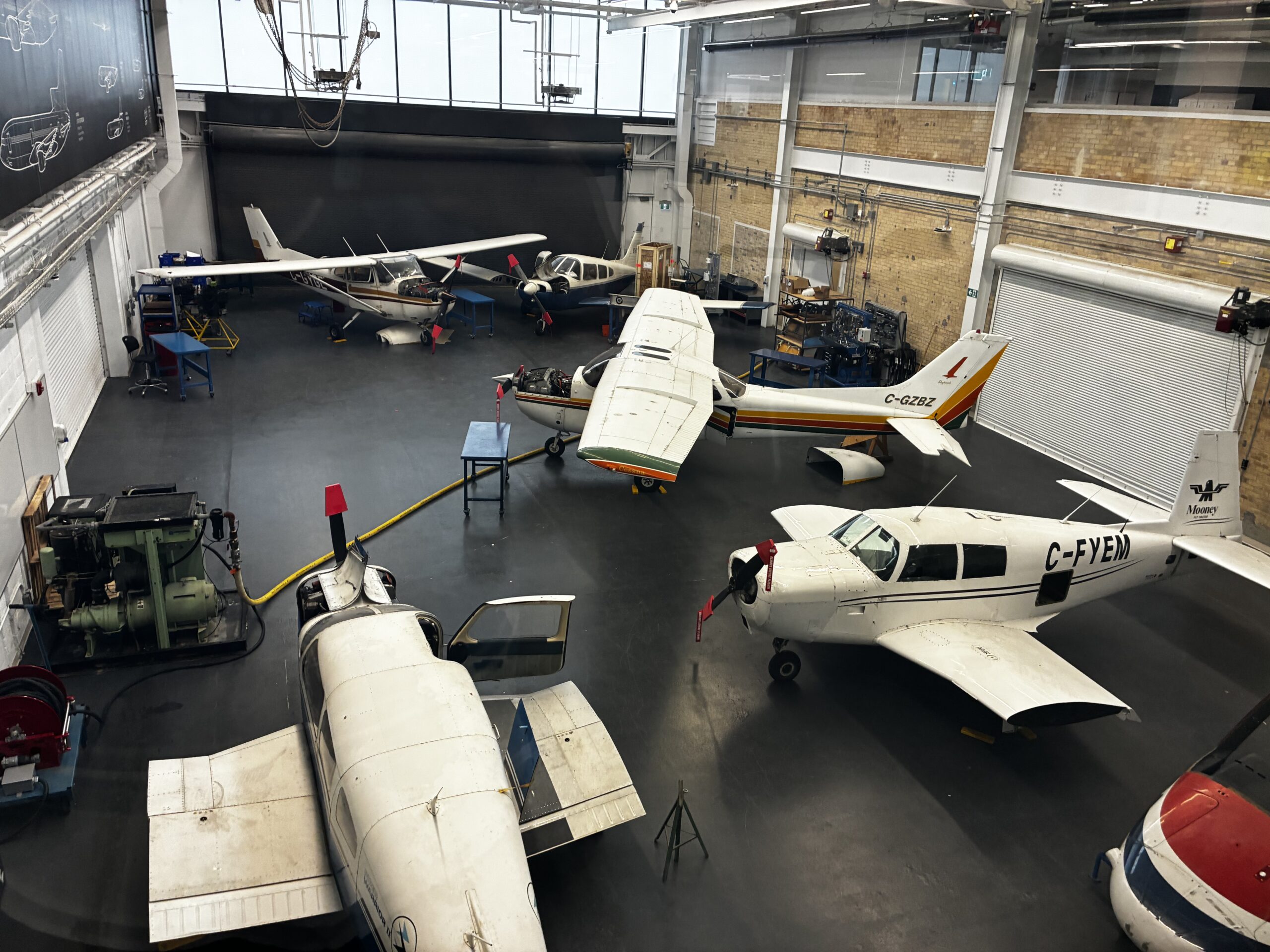
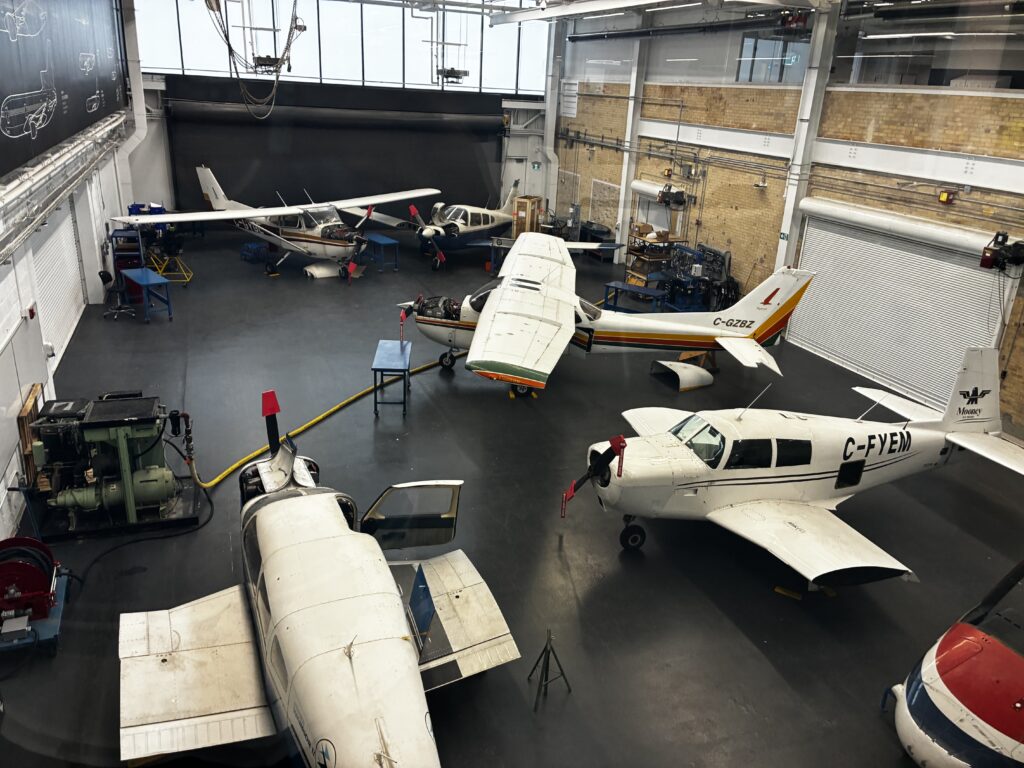
A visit to an industrial design lab, for example, allows students to see how professionals develop and test ideas. A visit to an aircraft maintenance hangar introduces them to technical careers that are rarely visible to airline passengers. An industry-led SPE-ICE challenge gives students the opportunity to tackle real-world problems, work collaboratively and receive feedback from professionals.
Through experiences like these, students begin to understand not only what transportation professionals do, but also which skills, interests and educational pathways might lead them into the industry.
The Road Ahead
The future of transportation will be shaped by people who can combine creativity with technical knowledge, adapt to new technologies and solve complex problems.
Some will design the vehicles of tomorrow. Others will build them, maintain them, operate them or develop the systems that keep them moving. Some careers will require university degrees, while others will begin through college programs, apprenticeships, technical training or industry certifications.
For students considering their future, the important question may not simply be whether they want to work in transportation. It may be which part of this enormous industry best matches their interests and abilities.
Because the journey from the drafting table to the road and skies involves far more careers than most students ever imagine.
This is why we focus on careers with great opportunities to excite students about jobs in high growth sectors.
From our Porter and AirTransat Hangar Trips, to flight simulation at the Waterloo airport and our Industrial Design Trip to Humber, we aim to create excitement about jobs that have great futures and exciting career opportunities for our students.
About Flashpoint Training
Flashpoint Training connects Ontario SHSM students with industry professionals through hands-on certifications, career exploration, field trips and Sector-Partnered Experiences (SPE). By bringing students into real workplaces and introducing them to the people behind different industries, Flashpoint helps young people explore career pathways and understand how classroom learning connects to the world of work.
Learn more:www.flashpointtraining.com