Category: SPE / ICE Certifications

  • Getting Back Into SHSM After Summer Break: A Teacher’s Guide to Starting the School Year Strong

    Getting Back Into SHSM After Summer Break: A Teacher’s Guide to Starting the School Year Strong

    How SHSM Leads Can Set the Tone for a Successful Year

    For many educators, September feels like a fresh start.

    For SHSM Leads, however, it often feels like jumping onto a moving train.

    Students are returning from summer jobs, vacations, camps, and time away from school. Guidance departments are finalizing timetables. Teachers are learning new class lists. School calendars are filling quickly, and before long the first certification, employer visit, or experiential learning activity is only weeks away.

    It can be tempting to focus immediately on logistics.

    Which certifications need to be booked?

    Have co-op placements been finalized?

    Do all students meet the SHSM requirements?

    While those questions are important, the first few weeks of the school year are about much more than paperwork.

    They are about rebuilding momentum.

    Students need to reconnect with the program, understand what lies ahead, and begin seeing themselves not simply as high school students, but as future professionals exploring careers.

    A thoughtful start to the school year sets the tone for everything that follows.

    Remember That Students Are Starting Fresh Too
    Although SHSM Leads may have spent part of the summer planning the year ahead, students are returning from a very different mindset.

    Some worked summer jobs.

    Some travelled.

    Some spent two months thinking very little about school.

    Expecting students to immediately jump into career planning can sometimes create unnecessary stress.

    Instead, begin by reconnecting them with why they joined SHSM in the first place.

    Ask questions that encourage reflection.

    Has anything changed since June?

    Did a summer job introduce them to a new career interest?

    Did volunteering or travelling spark new ideas?

    Are they more confident about their future, or more uncertain?

    These conversations often reveal that students have grown considerably over the summer.

    Revisit Career Goals
    Students’ interests evolve quickly.

    A student who entered Health and Wellness SHSM because they wanted to become a nurse may now be interested in physiotherapy after working at a summer camp.

    Another student who planned to study engineering may have discovered a passion for skilled trades after working in construction over the summer.

    September is an ideal time to revisit Individual Pathway Plans and career goals.

    Rather than assuming students remain on the same pathway they selected the previous year, create opportunities for them to reflect and adjust.

    Helping students refine their goals is part of good career education.

    Build Excitement Before Talking About Requirements

    Every SHSM Lead knows there are Ministry requirements that must be completed.

    Certifications.

    Experiential learning.

    Reach-ahead activities.

    Co-op.

    Sector-recognized experiences.

    However, students rarely become excited because of a checklist.

    They become excited when they understand the opportunities ahead.

    Before reviewing program requirements, spend time highlighting what students can look forward to during the year.

    Talk about upcoming workplace tours.

    Share photos from previous field trips.

    Invite former SHSM students to speak about their experiences.

    Highlight certifications that employers value.

    When students understand the purpose behind the activities, participation tends to increase naturally.

    Reconnect With Employer Partners Early

    September is also an important time to reconnect with employers, community organizations, colleges, universities, and sector partners.

    Even if major events have already been scheduled, a quick conversation helps strengthen relationships and confirms expectations.

    Employers appreciate communication.

    They also appreciate knowing what students have already learned before arriving at the workplace.

    Strong partnerships are built through ongoing communication rather than last-minute requests.

    Review Workplace Expectations Before Students Need Them
    Many SHSM students will participate in workplace experiences within the first few months of school.

    Rather than waiting until immediately before co-op begins, review workplace expectations early.

    Topics such as professional communication, attendance, workplace etiquette, confidentiality, appropriate dress, and respectful behaviour should become part of classroom conversations from the beginning of the year.

    Students who understand these expectations early often approach employer interactions with greater confidence.

    Look Beyond Certifications

    One of the easiest traps for SHSM programs is measuring success by the number of certifications completed.

    Certifications are important.

    But they are only one component of a successful program.

    The real goal is helping students develop confidence, workplace readiness, career awareness, and transferable skills.

    As you plan the year, ask yourself whether every activity answers one simple question:

    How will this help students better prepare for life after high school?

    If the answer is clear, the activity likely has value.

    Build Community Within Your SHSM Cohort

    Students are more likely to stay engaged when they feel connected to one another.

    The beginning of the year is an excellent time to build relationships within the SHSM cohort.

    Simple activities that encourage students to share career interests, workplace experiences, or future goals help create a stronger learning community.

    Students often become valuable resources for one another throughout the year, sharing placement experiences, scholarship opportunities, and post-secondary advice.

    Set Expectations for Reflection

    SHSM is designed around experience.

    Experience alone, however, does not always produce learning.

    Reflection transforms experiences into meaningful career development.

    Introduce reflection early.

    Encourage students to think about what they hope to learn this year, the skills they want to develop, and the questions they still have about future careers.

    Returning to these reflections throughout the year helps students recognize their own growth.

    Remember Why SHSM Exists

    September can quickly become consumed by scheduling, emails, forms, transportation, and deadlines.

    Those administrative tasks are necessary.

    But they are not the purpose of SHSM.

    SHSM exists to help students make informed decisions about their futures.

    It helps young people connect classroom learning with careers.

    It introduces them to employers, workplaces, post-secondary pathways, and industries they may never have considered.

    Keeping that purpose at the centre of planning helps educators prioritize the experiences that matter most.

    Start Small, Then Build Momentum

    Not every exciting opportunity needs to happen during the first month of school.

    In fact, spacing experiences throughout the year often creates greater anticipation and engagement.

    Focus first on helping students reconnect with the program.

    Then gradually build toward certifications, employer engagement, experiential learning, co-op placements, and post-secondary planning.

    Students who understand the journey are much more likely to stay invested throughout the year.

    Final Thoughts

    The beginning of the school year offers something every SHSM Lead values: a fresh opportunity.

    A new group of students.

    New employer partnerships.

    New career conversations.

    New possibilities.

    While paperwork and planning are essential, the most successful SHSM programs begin by reconnecting students with purpose.

    When students understand why they are participating—and when educators intentionally build excitement, confidence, and career awareness from the first few weeks of school—the rest of the year tends to unfold much more smoothly.

    Every September is an opportunity to inspire students to think differently about their futures.

    As SHSM educators, that may be the most important work we do.

    Schools that partner with organizations such as Flashpoint SHSM Solutions often find that scheduling certifications, experiential learning opportunities, and career-focused programming early in the year helps create momentum that carries throughout the entire SHSM experience.

    Sources & Best Practice References

    Ontario Ministry of Education

    • Specialist High Skills Major (SHSM): Policy and Implementation Guide.

    Government of Canada – Skills for Success Framework

    • Career readiness, communication, adaptability, and lifelong learning competencies.

    Conference Board of Canada

    • Research on employability skills, career readiness, and school-to-work transitions.

    SEO Keywords: SHSM September planning, SHSM teacher guide, back to school SHSM, SHSM Lead resources, Ontario SHSM planning, SHSM best practices, career education Ontario, SHSM experiential learning, SHSM school year planning, SHSM teacher resources.
  • What Counts as a Sector-Partnered Experience (SPE) in SHSM? (Teacher Guide)

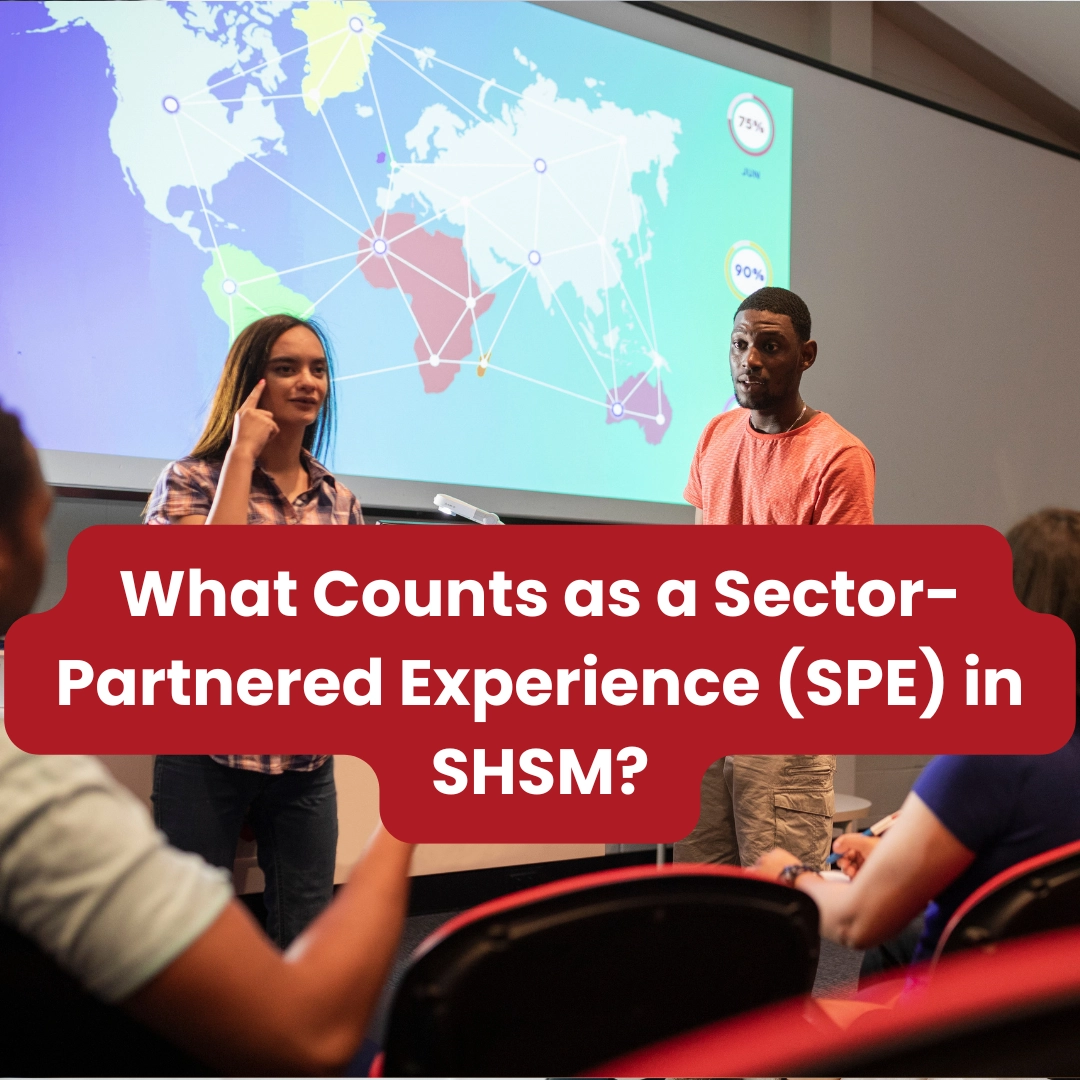
    What Counts as a Sector-Partnered Experience (SPE) in SHSM? (Teacher Guide)

    Why Understanding SPEs Matters for SHSM Teachers

    In Ontario’s Specialist High Skills Major (SHSM) program, students must complete five required components to earn the SHSM designation on their Ontario Secondary School Diploma (OSSD), and Sector-Partnered Experiences (SPEs) are one of them.[^1]

    Experiential learning and reach-ahead experiences get a lot of attention, but SPEs are often misunderstood. When done well, they deepen students’ sector knowledge and connect academic learning to innovation, technology, and real workplace problem-solving. Unlike general experiential activities (like tours or guest speakers), SPEs are designed and delivered with sector partners, involve core skills like innovation or coding, and include structured reflection.

    This guide breaks down exactly what counts as an SPE, what it is and is not, how to plan them, and how to document them so they meet SHSM policy requirements.

    What Is a Sector-Partnered Experience (SPE)?

    A Sector-Partnered Experience (SPE) is a structured learning activity that allows SHSM students to engage with an external partner (such as an employer, industry group, business or post-secondary institution) in a way that builds sector-specific skills and understanding.

    Key aspects of SPEs include:

    • Co-design and co-delivery
    The experience must be designed and delivered by both teachers and sector partners in the chosen SHSM field. This is not simply an outing or a visit; it’s a collaborative learning event developed with industry input.

    • Focused content
    All SPEs focus on at least one of the following areas:

    • Innovation, Creativity, and Entrepreneurship (ICE)
    • Coding (computer programming)
    • Mathematical literacy
      These areas are intentionally linked to future workplace needs and help students apply their learning in authentic ways.

    • Sector relevance
    The experience must connect to the student’s specific SHSM sector. For example, an SPE for Health and Wellness might focus on healthcare technology development, while an SPE for Construction could involve innovation in sustainable building processes.

    • Duration and documentation
    An SPE should be approximately 6 hours in duration (which may be split over multiple days), and, whenever possible, should include documentation that can be added to a student’s SHSM record or portfolio (like completion certificates or project artifacts).

    • Self-assessment and reflection
    Like other SHSM activities, SPEs must conclude with a structured reflection or self-assessment that helps students articulate what they learned about the skills and mindsets involved.

    How an SPE Differs From Other SHSM Experiences

    It’s helpful to compare SPEs with other SHSM components to see what makes them unique.

    SPE vs. Experiential Learning Activities

    Experiential learning (e.g., workplace tours, job shadowing, guest speakers, skill competitions) is a broader category of activities that take place outside the traditional classroom. These are focused on career exposure and exploration.[^5] What sets SPEs apart is the co-design and co-delivery with a partner, emphasis on innovation/coding/math literacy, and a more substantial learning commitment than a single visit or speaker session.

    SPE vs. Reach-Ahead Experiences

    Reach-ahead experiences help students plan for post-secondary pathways (apprenticeship, college, university or workplace). While a reach-ahead activity might be visiting a college program or attending a career fair, an SPE is intentionally linked to sector skill development using ICE, coding or math literacy within the sector context, not just exposure.

    Examples of SPEs That Count

    To be a valid SPE, the experience must meet the criteria above. Here are examples that fulfill those expectations:

    Innovation, Creativity, and Entrepreneurship (ICE) Projects

    An SPE could be a hands-on workshop where students collaborate with a sector partner to solve a real problem using innovation and entrepreneurial thinking. For example, in a Business SHSM, students could work with a local entrepreneur to design a product prototype and pitch it to a panel of local business leaders.

    Coding and Technology Integration

    For Information and Communications Technology SHSM students, an SPE could involve co-creating a small software application with a local tech company where students learn coding practices, version control, and testing processes.

    Mathematical Literacy in Context

    In a Construction SHSM, an SPE might involve working with industry engineers to apply mathematical reasoning to real on-site problems—such as calculating load factors or material estimates—and then reflecting on how math supports engineering work.

    Sector-Specific Integrated Events

    An SPE could take the form of a multi-day event where students engage with sector professionals on various tasks—such as designing a marketing plan with an industry partner for a Hospitality and Tourism SHSM—with outcomes documented in a portfolio.

    These activities go beyond simple exposure and help students learn skills that align with both their sector and broader workforce needs.

    SPE Planning Considerations for Teachers

    Because SPEs involve partnerships and design work, they require intentional planning:

    Hit required elements first:
    Make sure the activity is co-developed with partners, and intentionally connects to ICE, coding, or mathematical literacy within your SHSM sector.

    Use local partners wisely:
    Many boards can partner with local employers, industry groups, post-secondary institutions or non-profits who bring practical projects to students. Local sector context makes SPEs more relevant.

    Plan for reflection and documentation:
    Build structured reflection into the activity so students can articulate what they learned and how the skills apply to their future plans. Reflection also makes documentation easier for SHSM tracking.

    Consider flexible delivery:
    You can deliver SPEs over one full day or multiple half-days—many schools choose a mix so students can engage deeply without disrupting other learning commitments.

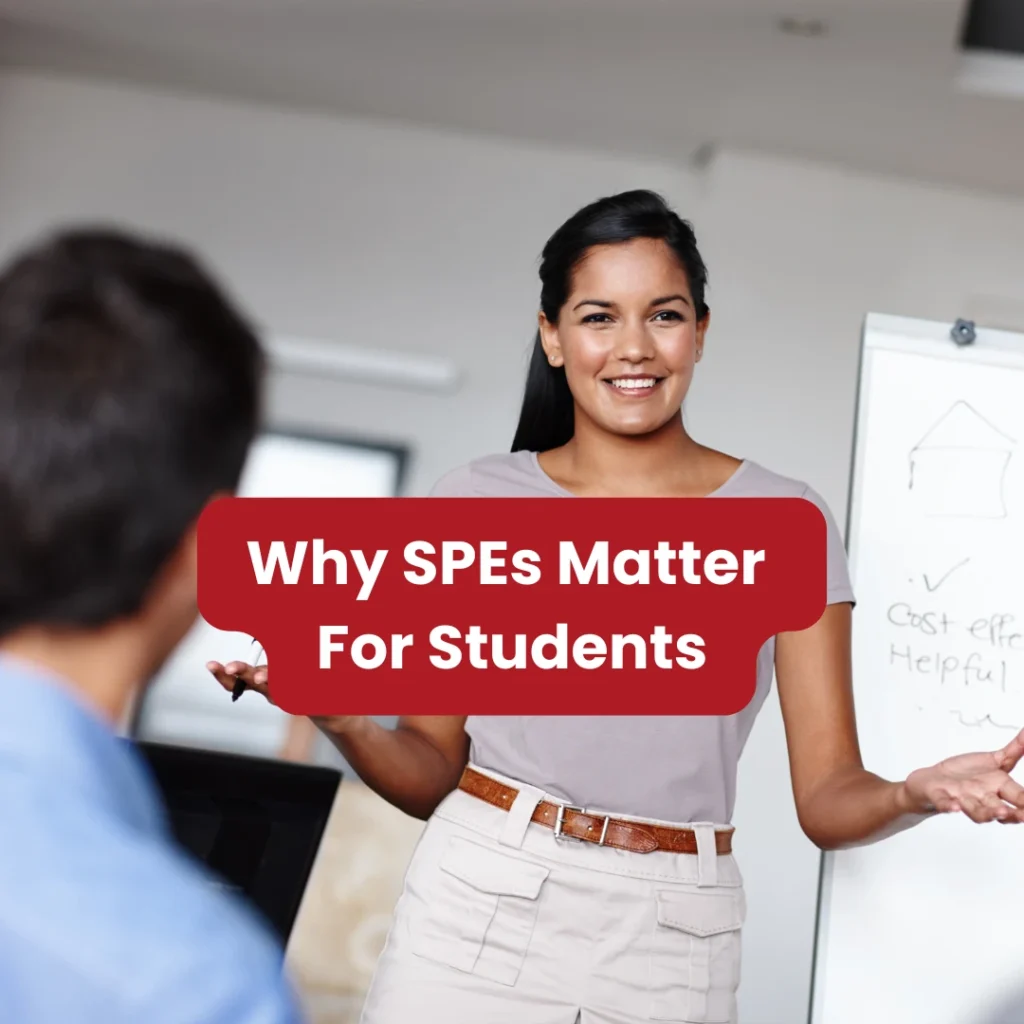
    Why SPEs Matter for Students

    An SPE isn’t just another checkbox. It’s a meaningful learning experience that helps students:

    • Build real skills
    SPEs intentionally blend academic learning with sector skills that matter in the workplace.

    • Gain confidence in problem-solving
    Students apply innovation, coding, or math literacy in practical contexts.

    • Strengthen sector knowledge
    Working directly with industry partners exposes students to current practices and expectations.

    • Document meaningful growth
    SPE artifacts and reflections help students build richer portfolios for post-secondary applications.

    In short, SPEs help students move from “observing” a sector to actively participating in it.

    Final Thoughts

    Sector-Partnered Experiences are a core part of what makes SHSM powerful. They are not just trips or guest speakers. They are deep, partner-driven learning experiences that build both sector knowledge and essential skills related to innovation, technology, and mathematical thinking.

    When planned and delivered well, SPEs bridge the gap between the classroom and real work—and that is exactly what SHSM is designed to do.

    References

    1. Ontario Ministry of Education. Sector-Partnered Experiences (SPEs) | SHSM Policy and Implementation Guide. Government of Ontario. https://www.ontario.ca/document/specialist-high-skills-major-shsm-policy-and-implementation-guide/sector-partnered
    2. Ontario Ministry of Education. Components of an SHSM | SHSM Policy and Implementation Guide. Government of Ontario. https://www.ontario.ca/document/specialist-high-skills-major-shsm-policy-and-implementation-guide/components-shsm
    3. Ontario Ministry of Education. Specialist High Skills Major (SHSM) Policy and Implementation Guide. Government of Ontario. https://www.ontario.ca/document/specialist-high-skills-major-shsm-policy-and-implementation-guide
    4. Ontario Ministry of Education. Steps for planning and delivering an SPE | SHSM Policy and Implementation Guide. Government of Ontario. https://www.ontario.ca/document/specialist-high-skills-major-shsm-policy-and-implementation-guide/steps-planning-and
    5. London District Catholic School Board SHSM overview noting SPE as part of required components. https://mts.ldcsb.ca/apps/pages/index.jsp?pREC_ID=1360202&type=d&uREC_ID=1076519
  • The Real-World Payoff: How SHSM Co-op Experience Can Boost Long-Term Employment Outcomes

    The Real-World Payoff: How SHSM Co-op Experience Can Boost Long-Term Employment Outcomes

    By Carmen Reis, CPA, MA

    Why Co-op Learning Matters

    In today’s competitive job market, students need more than a diploma — they need experience. Ontario’s Specialist High Skills Major (SHSM) program gives high school students a head start by combining classroom learning with co-operative education placements, industry certifications, and career exploration.

    But what’s the actual payoff of co-op experience? Research from colleges and universities across Canada shows that students who complete co-op or work-integrated learning (WIL) have stronger employment outcomes, higher wages, and smoother transitions into full-time careers.

    While long-term quantitative data for high school co-op students is still limited, the results from post-secondary studies paint a clear picture: structured, supervised work experience works.

    Co-op Graduates Get Better Jobs, Faster

    According to Statistics Canada, among graduates from Canadian post-secondary institutions:

    • 86 % of co-op college graduates were employed full-time within three years of graduation, compared to 79 % of non-co-op graduates.
    • 90 % of co-op university graduates secured full-time work versus 83 % of their non-co-op peers.
    • Co-op participation was directly linked to “more favourable labour-market outcomes,” including greater job stability and alignment with one’s field of study.

    In other words, co-op isn’t just a résumé booster — it can act as employment accelerator.

    Higher Earnings and Career Alignment

    A national analysis by the C.D. Howe Institute (2023) found that co-op graduates enjoyed higher average earnings and a greater likelihood of securing permanent positions compared to non-participants.

    Complementary research from Co-operative Education and Work-Integrated Learning Canada (CEWIL) confirmed that co-op graduates report:

    • Higher median salaries in the first three years after graduation.
    • Closer alignment between their job and field of study.
    • Reduced over-qualification rates (fewer grads working in jobs below their skill level).

    These are precisely the kinds of benefits SHSM aims to deliver — only earlier.

    What This Means for High School SHSM Students

    Although there is little formal statistical tracking at the high-school level, it is reasonable to extrapolate these trends. SHSM students complete co-operative placements, earn sector-specific certifications, and often build employer relationships before graduating.

    Early exposure to workplace settings gives them:

    • A better understanding of career options before committing to post-secondary education.
    • Real-world experience that strengthens college, university, and apprenticeship applications.
    • Transferable skills — communication, teamwork, punctuality, adaptability — that employers consistently rate as top hiring priorities.

    In practice, this means SHSM students with meaningful co-op placements are already developing the same competencies that predict higher employment and wage outcomes later in life.

    Why Experience Doesn’t Trump Theory but Supports It…

    Employers repeatedly say that relevant experience is one of the most important factors in hiring. A report by the U.S. National Association of Colleges and Employers (NACE, 2023) found that paid co-op or internship participants receive 44 % more job offers and start at higher salaries than peers without that experience.

    That pattern mirrors what Canadian research shows — students who work in structured, supervised placements transition to employment faster and with better job quality. SHSM co-ops provide the same foundation at the secondary level, giving students an early professional identity and resume-ready experience before graduation.

    Engaging in alternating periods of study and employment enables students to iterate between theory and practice, continuously refining their understanding of how knowledge functions in real contexts. Beginning this process early supports the development of a balanced, adaptive approach to achieving workplace goals.

    Building a Case for Tracking High School Outcomes

    Despite the strong evidence from post-secondary research, high-school co-op outcomes remain under-measured. Few provinces track the long-term employment or earnings of SHSM participants versus non-participants. This presents an opportunity for school boards and training partners to lead the way by collecting data such as:

    • Employment or post-secondary placement within 6 months of graduation.
    • Student-reported job alignment with career goals.
    • Re-employment or continuation rates with co-op host employers.

    Such tracking could confirm what educators already observe anecdotally: students who learn by doing may succeed sooner and go further.

    The Takeaway

    SHSM’s co-operative education component is more than a curriculum feature — it’s a strategy for future success. Evidence from thousands of Canadian graduates shows that structured, paid, and supervised work experiences lead to:

    • Higher full-time employment rates
    • Faster job placement
    • Higher early-career earnings
    • Better career-fit and satisfaction

    By embedding co-op opportunities directly into high school, SHSM helps students build these advantages years earlier — turning curiosity into career readiness.

    Sources

    1. Statistics Canada (2014). Labour market outcomes for co-op and non-co-op graduates, National Graduates Survey.www150.statcan.gc.ca
    2. Statistics Canada summary, “Work-integrated learning and labour market outcomes,” 2014.
    3. C.D. Howe Institute (2023). School Co-op Programs Benefit Some Students More than Others.cdhowe.org
    4. CEWIL Canada (2019). Research on Co-op Earnings and Employment Outcomes.cewilcanada.ca
    5. National Association of Colleges and Employers (2023). Internship & Co-op Survey Report.naceweb.org

  • The Future of SHSM: Top 5 Sectors and the New Electives Students Need for Tomorrow’s Careers

    The Future of SHSM: Top 5 Sectors and the New Electives Students Need for Tomorrow’s Careers

    By Carmen Reis, CPA, MA

    As Ontario’s labour market changes, students need learning that connects to real opportunity. The Specialist High Skills Major (SHSM) program helps high school students build sector-specific skills, earn industry certifications, and explore career pathways through co-ops, reach-aheads, and hands-on learning.

    But which SHSM programs will matter most over the next five years — and what new SHSM electives should schools develop to prepare students for future jobs?

    At Flashpoint Training, we analyzed Canada’s most recent labour-market data (2024-2033) from the Canadian Occupational Projection System (COPS) and Statistics Canada. The findings are clear: over 68% of job openings during this period will result from retirements and workforce exits, not new positions. That means Ontario’s next generation will step directly into roles left open by experienced professionals — if they have the right training.

    Here are the Top 5 SHSM Sectors for 2025–2030, and the innovative new electives schools should create to prepare students for the future of work.

    1. Health & Wellness

    The Outlook

    Healthcare remains one of Canada’s most stable and expanding industries. With an aging population and record demand for front-line professionals, this SHSM will continue to lead the way.

    • 25% of current healthcare roles will open due to retirements by 2033.
    • Seniors (65+) will make up 23% of Canada’s population by 2033.
    • Rapid growth in home care, diagnostics, telehealth, and allied health services.

    Recommended New SHSM Electives

    • Healthcare Technology & Diagnostics — telehealth tools, lab tech, and monitoring systems.
    • Aging Population & Geriatric Services — long-term care and dementia care fundamentals.
    • Mental Health & Wellness in the Workplace — practical mental health strategies and first response.

    Why it matters: Health & Wellness SHSM graduates enter a field with consistent demand and purpose-driven career options — from personal support work to lab and therapy pathways.

    2. Construction & Skilled Trades

    The Outlook

    Skilled trades are critical to Ontario’s infrastructure — and facing major shortages.

    • Over 28% of Canada’s construction workforce will retire by 2033.
    • 100,000 new tradespeople needed by 2029 (BuildForce Canada).
    • High demand for sustainable, low-carbon building practices.

    Recommended New SHSM Electives

    • Advanced Building Technologies & Automation — smart homes, BIM, robotics.
    • Sustainable Construction & Green Trades — eco-materials, retrofits, zero-carbon projects.
    • Trade-Pathway Exploration Lab — short modules across carpentry, HVAC, electrical, and plumbing.

    Why it matters: Modernizing construction electives ensures students gain exposure to future-ready trades — bridging practical skills with environmental innovation.

    3. Information & Communications Technology (ICT)

    The Outlook

    Digital transformation continues to drive demand for skilled ICT professionals in every industry.

    • 88,000+ ICT job openings projected between 2024–2033.
    • Top fields: cybersecurity, software development, data analytics, and AI integration.
    • Expansion demand outpaces all other sectors.

    Recommended New SHSM Electives

    • Cybersecurity Fundamentals — network protection, ethical hacking basics.
    • Data Analytics & Visualization — storytelling with data using Python and Excel.
    • Emerging Technologies Lab (AI, IoT & Automation) — hands-on exploration of tomorrow’s tech.

    Why it matters: These electives strengthen digital literacy and critical thinking — essential for future college, university, or tech-sector careers.

    4. Advanced Manufacturing

    The Outlook

    Canada’s manufacturing industry is being redefined by automation, robotics, and advanced materials.

    • 34% of manufacturing roles expected to turn over by 2033.
    • 78% of openings for industrial and manufacturing engineers due to retirements.
    • Growing focus on additive manufacturing and lean production systems.

    Recommended New SHSM Electives

    • Robotics & Mechatronics in Manufacturing — integration of machines and software.
    • Digital Manufacturing & 3D Printing — CAD/CAM design and rapid prototyping.
    • Lean Manufacturing & Supply-Chain Systems — efficiency, sustainability, and global operations.

    Why it matters: Manufacturing SHSM programs that include automation and digital tools help students stay competitive in Canada’s evolving industrial landscape.

    Transportation & Logistics

    The Outlook

    Transportation and supply-chain management are the lifeblood of a global economy — and both are facing an aging workforce.

    • 29% of transport and logistics jobs will open through 2033 due to retirements.
    • Rapid growth in e-commerce logistics, electric vehicles, and autonomous transport.
    • Rising need for fleet management, planning, and warehouse automation skills.

    Recommended New SHSM Electives

    • Logistics & Global Supply-Chain Systems — how goods move worldwide.
    • Electric & Autonomous Vehicle Technology — EV design, safety, and diagnostics.
    • Air/Sea/Rail Intermodal Operations — the future of connected freight networks.

    Why it matters: Transportation SHSM graduates will power the systems that keep Canada moving — from warehouse logistics to electric mobility.

    Why Schools Should Act Now

    These five sectors represent more than 60% of projected job openings through 2033. For Ontario educators, aligning SHSM programming and electives with this data is essential to student success.

    Implementation tips for school boards:

    • Pilot new electives within SHSM bundles as major credits.
    • Partner with industry leaders and training companies for certifications (e.g., robotics, cybersecurity).
    • Use co-op placements and field trips to reinforce experiential learning.
    • Integrate certifications such as WHMIS, First Aid, and CompTIA directly into courses.

    MyFinal Thoughts

    The next generation of SHSM students will enter one of the most dynamic job markets in Canadian history. By blending career-focused learning, real-world certifications, and forward-thinking electives, Ontario schools can equip every student to thrive.

    At Flashpoint Training, we specialize in bringing SHSM to life through field trips, certifications, hackathons, and industry partnerships — helping schools turn classroom learning into future careers.

    Your Thoughts???

    As we plan for next year, what courses would you like to see?

    Ready to design your next SHSM experience?

    Contact Flashpoint Training to explore sector-aligned certifications, immersive field trips, and future-ready SHSM programming for your students.

  • Beyond the Classroom: How SHSM Experiences Ignite Real-World Skills Students Actually Use

    Beyond the Classroom: How SHSM Experiences Ignite Real-World Skills Students Actually Use

    The Classroom is Changing

    Ontario’s classrooms are evolving — and so are the expectations placed on educators. Today’s students need more than lessons and lectures; they need experiences that prepare them for real opportunities beyond graduation. That’s where SHSM (Specialist High Skills Major) experiences step in — connecting curriculum with the real world in ways that spark passion, purpose, and possibility.

    At Flashpoint Training, we’ve seen how the right SHSM experience can transform learning. When students step out of the classroom and into a professional environment — whether it’s a live industry workshop, a hands-on certification, or a challenge-driven hackathon — something shifts. They stop memorizing content and start building the skills they’ll actually use.

    What Makes an SHSM Experience Truly “Real-World”?

    Not every field trip or workshop delivers meaningful impact. The most powerful SHSM experiences are intentionally designed to mirror real industry challenges while aligning with curriculum outcomes. Students aren’t just participants — they’re collaborators, problem-solvers, and innovators.

    A real-world experience brings three essential elements together:

    • Authentic context: Students engage directly with professionals and see how classroom concepts apply in real workplaces.
    • Active learning: Hands-on activities and scenario-based challenges turn abstract theory into practical skill.
    • Reflection and connection: Guided discussions help students connect their experience back to career pathways and SHSM learning goals.

    When these elements come together, learning sticks — and educators see stronger engagement, deeper understanding, and measurable growth in essential skills like communication, teamwork, and innovation.

    Skills That Stick: What Students Actually Learn

    Every SHSM coordinator knows the difference between a “fun trip” and a transformative one. The best experiences don’t just entertain — they build the soft and technical skills that truly prepare students for the next step.

    Here’s what we see every day when students take part in hands-on SHSM experiences:

    • Communication That Connects: Whether they’re pitching an idea to industry experts or collaborating with peers during a simulation, students learn how to communicate clearly, confidently, and professionally. The connections are so strong that they literally will wait in line for over an hour to talk to a facilitator or one of our career speakers
    • Innovation in Action: SPE/ICE and Hackathon-style programs challenge students to think critically and creatively. They’re not just solving hypothetical problems — they’re designing real solutions inspired by real workplaces. The excitement that fills the air when these students are in active competition, is a great feeling.
    • Confidence Through Experience: When students complete certifications or apply skills in an authentic setting, their self-belief grows. They begin to see themselves as capable, employable, and ready to lead. However, we put this into action. Students are REQUIRED to present, to stand in front of a group and state their ideas and defend them.

    These moments are what make SHSM so powerful. Students don’t just check boxes for a credit — they discover new strengths, explore career possibilities, and connect their classroom learning to the world around them.

    Meeting SHSM Requirements Without the Headache

    Between ICE hours, SPE components, certifications, and ministry documentation, coordinating SHSM programming can feel like a full-time job. That’s why smart planning — and the right partners — make all the difference.

    At Flashpoint, we design turnkey SHSM experiences that meet multiple deliverables at once.

    Each program is built with compliance and curriculum alignment in mind, so you can feel confident that every hour counts. Whether it’s:

    • An SPE/ICE session with a career reach ahead
    • A post-secondary opportunity aligned with a specific sector, or
    • A custom field trip tailored to your students’ goals and passions,

    our programs simplify the process and elevate the impact.

    You focus on inspiring your students — we’ll handle the logistics, alignment, and documentation

    A Glimpse Into the Future: Why Experiential Learning Matters More Than Ever

    The world your students are entering is changing faster than ever. Employers now value adaptability, creativity, and collaboration as much as technical know-how. Experiential learning bridges that gap — helping students apply what they know, test new ideas, and build confidence in real situations.

    Through SHSM experiences, students don’t just prepare for a job — they begin to see themselves as contributors to their communities and future industries. These experiences turn curiosity into confidence and help students discover career paths that truly resonate with their strengths and interests.

    When learning feels real, motivation follows. And that’s when education becomes more than preparation — it becomes transformation.

    Bring Learning to Life with Flashpoint

    At Flashpoint Training, we believe every student deserves a chance to see where their skills can take them. Our SHSM experiences are designed to inspire curiosity, strengthen essential skills, and meet every program requirement — all while keeping engagement at the heart of learning.

    Ready to design an SHSM experience your students, parents and administration will all love?

    Reach out to us at: hello@flashpointtraining.com and let us design a SHSM Experience -in class or offsite–your students will remember for years to come.

    Carmen is the CEO of Flashpoint Training and has spent a decade designing, evaluating and working with Experiential learning programs, building partnerships and growing training capacity across Ontario.

    Upcoming SPE/ICE Events:


    SOLD-OUT---$129-Argos Career Talk+ Taping Session+ Game

    SOLD-OUT—$129-Argos Career Talk+ Taping Session+ Game

    October 23, 2026 11:00 am
    BMO Field
    21 Tickets Left-$129-Argos Career Talk+ Taping Session+ Game

    21 Tickets Left-$129-Argos Career Talk+ Taping Session+ Game

    October 23, 2026 11:00 am
    BMO Field
    $89-Lego SPE-ICE-Health and Wellness & Sports SHSM's, Career Talk, Mini Job Fair and More

    $89-Lego SPE-ICE-Health and Wellness & Sports SHSM's, Career Talk, Mini Job Fair and More

    October 29, 2026 9:30 am
    North York Central Library
    $89-Lego SPE-ICE-(London) Health and Wellness & Sports SHSM's

    $89-Lego SPE-ICE-(London) Health and Wellness & Sports SHSM's

    October 30, 2026 9:30 am
    London, ON
    SOLD-OUT -NOVEMBER 2026 with Flashpoint and ORNGE

    SOLD-OUT -NOVEMBER 2026 with Flashpoint and ORNGE

    November 10, 2026 10:00 am
    TBD
    $89-SPE-ICE-The Business of Chocolate with Marc Forrat

    $89-SPE-ICE-The Business of Chocolate with Marc Forrat

    November 12, 2026 9:30 am
    London-TBD
    $89-SPE-ICE (Francais) L'enterprise du Chocolat avec Marc Forrat

    $89-SPE-ICE (Francais) L'enterprise du Chocolat avec Marc Forrat

    November 12, 2026 9:30 am
    London-TBD
    $99-SPE-ICE-Behind the Stay-The Business of Hotels-Alt Pearson -Tour, Experiential Activity, Career Talk and SPE

    $99-SPE-ICE-Behind the Stay-The Business of Hotels-Alt Pearson -Tour, Experiential Activity, Career Talk and SPE

    November 13, 2026 9:30 am
    Alt-Pearson-6080 Viscount Rd, Mississauga, ON L4V 0A1
    $99-FESTI-Firefighter and Emergency Services Training Institute

    $99-FESTI-Firefighter and Emergency Services Training Institute

    November 18, 2026 9:45 am
    Pearson Airport-2025 Courtneypark Dr E, Mississauga, ON
    SOLD OUT---$99-Ontario Power Generation and Flashpoint: SPE with OPG-Career Panel, Tour and More....

    SOLD OUT—$99-Ontario Power Generation and Flashpoint: SPE with OPG-Career Panel, Tour and More….

    November 19, 2026 9:30 am
    Darlington-OPG Darlington Nuclear Generating Station
    SOLD OUT-DECEMBER 2026 with Flashpoint and ORNGE

    SOLD OUT-DECEMBER 2026 with Flashpoint and ORNGE

    December 2, 2026 10:00 am
    TBD
    $99- FESTI-Firefighter and Emergency Services Training Institute +Tour,+ Career Talk + Single Certification

    $99- FESTI-Firefighter and Emergency Services Training Institute +Tour,+ Career Talk + Single Certification

    December 7, 2026 9:45 am
    Pearson Airport-2025 Courtneypark Dr E, Mississauga, ON
    $99-$129-SPE-ICE with Destination Toronto & Tourist Attraction (CN Tower or Ripleys Aquarium)

    $99-$129-SPE-ICE with Destination Toronto & Tourist Attraction (CN Tower or Ripleys Aquarium)

    March 31, 2027 9:30 am
    Destination Toronto-Location TBD
    $119-SPE-ICE with the Toronto Zoo

    $119-SPE-ICE with the Toronto Zoo

    April 6, 2027 10:00 am
    Toronto Zoo
    $129 April SPE/ICE with Flashpoint Training + Toronto Blue Jays Game

    $129 April SPE/ICE with Flashpoint Training + Toronto Blue Jays Game

    April 7, 2027 9:15 am
    Location-TBD
    $119 April Single Certification with Flashpoint Training + Toronto Blue Jays Game

    $119 April Single Certification with Flashpoint Training + Toronto Blue Jays Game

    April 7, 2027 9:45 am
    Location-TBD
    $99 April Experiential Learning + SHSM Cert Aviation and Aerospace (Tentative Date)

    $99 April Experiential Learning + SHSM Cert Aviation and Aerospace (Tentative Date)

    April 8, 2027 10:00 am
    Centennial College – Downsview
    $99 SHSM Certification- Experiential Learning + Motive Power Transportation Technical Program Tour and Activity

    $99 SHSM Certification- Experiential Learning + Motive Power Transportation Technical Program Tour and Activity

    April 12, 2027 10:00 am
    Centennial College – Ashtonbee
    $99 April Experiential Learning + Project Management Electrical and Heating, Refrigeration, and Air Conditioning (HRAC)

    $99 April Experiential Learning + Project Management Electrical and Heating, Refrigeration, and Air Conditioning (HRAC)

    April 27, 2027 10:00 am
    Centennial College – Progress Campus 941 Progress Ave, Scarborough
    $129 April SPE/ICE with Flashpoint Training + Toronto Blue Jays Game

    $129 April SPE/ICE with Flashpoint Training + Toronto Blue Jays Game

    April 28, 2027 9:15 am
    Location-TBD
    $129 May SPE/ICE with Flashpoint Training + Toronto Blue Jays Game

    $129 May SPE/ICE with Flashpoint Training + Toronto Blue Jays Game

    May 12, 2027 9:15 am
    Location-TBD
    $129 May SPE/ICE with Flashpoint Training + Toronto Blue Jays Game

    $129 May SPE/ICE with Flashpoint Training + Toronto Blue Jays Game

    May 26, 2027 9:15 am
    Location-TBD