Month: June 2026

  • Ontario’s New Student Privacy and Cybersecurity Expectations and What it Means for Hiring Third Party Vendors

    Ontario’s New Student Privacy and Cybersecurity Expectations and What it Means for Hiring Third Party Vendors

    Student safety has always been a top priority for Ontario schools. Traditionally, those conversations focused on physical safety, mental health, and student well-being. Increasingly, however, student safety also includes cybersecurity, digital privacy, and the responsible use of educational technology.

    As Ontario moves toward new requirements under the Enhancing Digital Security and Trust Act (EDSTA), school boards are being asked to strengthen their approach to cybersecurity governance, incident reporting, and transparency regarding student information shared with third-party technology providers.

    While many of these requirements apply directly to school boards, the impact will be felt by educators, SHSM Leads, Cooperative Education Teachers, Pathways Coordinators, and any organization working with students.

    The question is no longer simply, “Is this program valuable for students?”

    Schools are increasingly asking:

    “How does this provider protect student information?”

    What Changes Are Coming?

    Beginning in 2026, Ontario school boards will be expected to take a more structured approach to cybersecurity and digital risk management.

    Key areas of focus include:

    • Enhanced cybersecurity oversight and governance
    • Formal cybersecurity assessments
    • Incident reporting requirements
    • Increased transparency regarding educational technology vendors
    • Clear communication regarding student information shared with third-party platforms

    For educators, this means greater scrutiny of the digital tools, software platforms, online training programs, and external service providers used in schools.

    What Does This Mean for Teachers and Program Leads?

    Most teachers are not privacy experts, nor should they be expected to become cybersecurity professionals.

    However, educators increasingly play a role in selecting and recommending programs, certifications, workshops, and digital resources.

    When considering a third-party provider, schools should be prepared to ask questions about:

    • What student information is collected?
    • Why is it collected?
    • Where is it stored?
    • Who has access to it?
    • How long is it retained?
    • Is it shared with other organizations?
    • Is Artificial Intelligence involved?
    • What happens if there is a security incident?

    These questions are quickly becoming part of standard due diligence.

    Why Third-Party Providers Matter

    Many educational experiences now involve some form of digital interaction.

    Examples include:

    • Online certifications
    • Learning management systems
    • Virtual workshops
    • Registration platforms
    • Assessment tools
    • Student engagement software

    Each of these services may collect or process student information.

    As transparency expectations increase, schools will need confidence that their partners are following responsible privacy and cybersecurity practices.

    How Schools Can Prepare

    The good news is that preparation does not require major changes at the classroom level.

    Instead, schools can focus on a few practical steps:

    1. Review Existing Vendors

    Consider which organizations currently receive student information and what information is shared.

    2. Ask More Questions

    Don’t assume every provider handles information the same way.

    Request information about privacy, data storage, retention practices, and security controls.

    3. Work With Board Privacy and IT Teams

    Many boards are developing updated review processes for educational technology and third-party providers.

    Engaging privacy and IT teams early can help avoid surprises later.

    4. Look for Transparency

    The strongest providers are typically willing to discuss:

    • Data collection practices
    • Hosting locations
    • Security safeguards
    • Privacy policies
    • Data retention practices

    Transparency is often one of the best indicators of a mature privacy program.

    A New Part of Student Safety

    The education sector has spent years building strong cultures around physical safety, workplace safety, and student well-being.

    Digital safety is becoming the next important conversation.

    As schools continue to adopt innovative technologies and partner with external organizations, privacy and cybersecurity will become increasingly important considerations alongside educational quality and student engagement.

    The goal is not to create barriers to innovation.

    The goal is to ensure that students can benefit from new learning opportunities while schools maintain confidence in how student information is protected.

    Organizations that are prepared for these conversations will be better positioned to support schools in this evolving environment.

    This year, many of you noted that our online courses moved to a new password protected environment, with emails etc. This was part of our security efforts to protect student privacy.

    Below, you can find Flashpoint’s Privacy and Cybersecurity Information Sheet.

    Free Resource

    To support educators, Flashpoint Training has developed a free Checklist for Teachers to Assess Vendor Privacy & Cybersecurity with one of our sector partners Maple Open Tech that teachers can use when evaluating third-party training providers, certification organizations, and digital learning partners.

    Maple Open Tech are a partner who often speak at our events and provide career inspiration for individuals in business or ICT.
  • Could AI Roadblocks Be Preventing Your Youth from Getting Hired?

    Could AI Roadblocks Be Preventing Your Youth from Getting Hired?

    For decades, getting a job was relatively straightforward. A student graduated, submitted a résumé, interviewed with a hiring manager, and—if they were qualified—had a fair shot at landing the role.

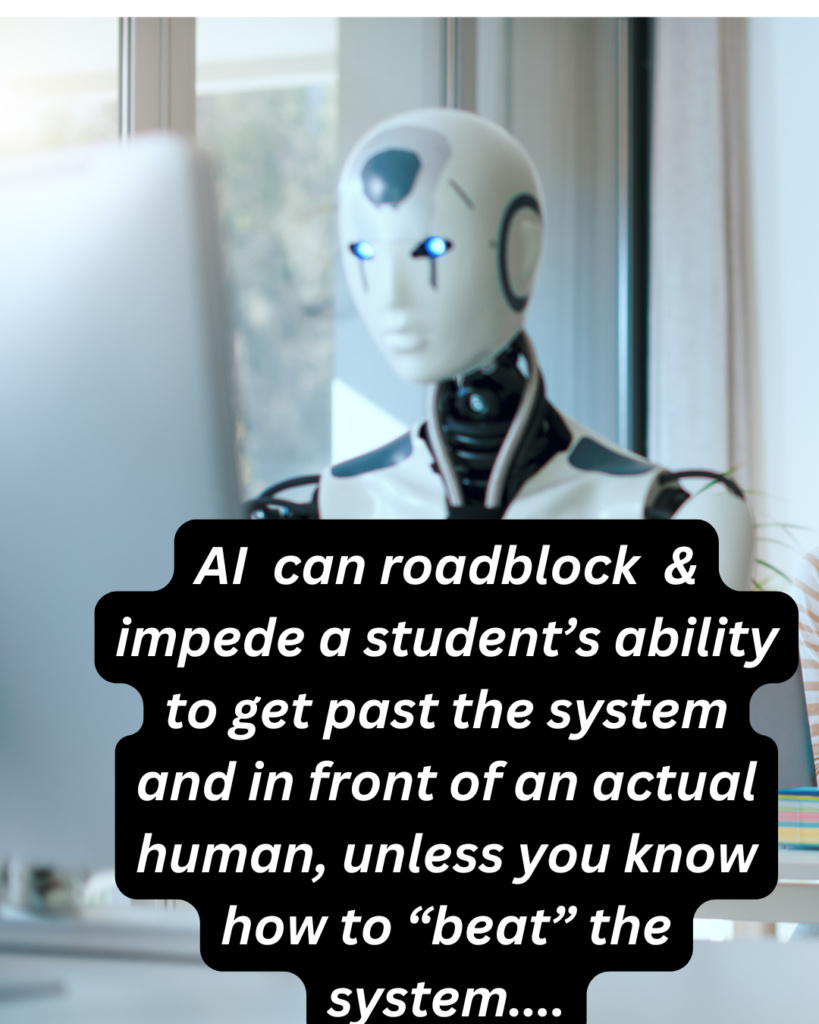
    Today, there may be several layers of artificial intelligence standing between a student and their first interview.

    The uncomfortable truth is that many graduates may be losing opportunities not because they lack skills, but because they don’t understand how to navigate an AI-driven hiring process.

    The New Hiring Funnel Is Powered by AI

    Before a recruiter ever sees a résumé, it often passes through multiple automated screening systems.

    A typical hiring process may now include:

    • AI-powered Applicant Tracking Systems (ATS)
    • Automated résumé ranking tools
    • AI keyword matching
    • Candidate scoring algorithms
    • Video interview analysis software
    • AI-driven skills assessments
    • Automated reference and background screening

    Students are no longer applying directly to employers. They’re applying to algorithms first.

    The ATS Problem

    Most students have heard of Applicant Tracking Systems (ATS), but few understand how much influence they have over hiring decisions.

    An ATS scans résumés for:

    • Keywords
    • Job titles
    • Certifications
    • Technical skills
    • Experience descriptions
    • Industry terminology

    A highly qualified candidate can be filtered out simply because their résumé isn’t optimized for the system.

    Many students spend years developing skills but only a few hours learning how to present those skills in a way that modern hiring software can understand.

    AI SEO for Your Career

    Think of your résumé as a website.

    Just as websites must be optimized for Google, résumés increasingly need to be optimized for hiring algorithms.

    This doesn’t mean gaming the system. It means communicating qualifications in a language both humans and machines can interpret.

    Students need to understand:

    • How job descriptions influence ATS rankings
    • Why keyword alignment matters
    • How formatting can affect parsing
    • Why generic résumés often perform poorly
    • How to tailor applications strategically

    Career readiness now includes résumé SEO.

    The Rise of AI Interviewers

    Many employers are introducing AI-assisted interview platforms.

    Candidates may be asked to:

    • Record video responses
    • Complete automated assessments
    • Participate in asynchronous interviews
    • Answer questions evaluated by AI systems

    For students, this creates a new challenge.

    Traditional interview coaching focused on building rapport with a person. Today’s candidates may first need to communicate effectively with software.

    Understanding pacing, clarity, structure, and confidence has become even more important.

    AI Can Create an Uneven Playing Field

    Students with access to career coaching, AI tools, and modern job-search training often gain an advantage.

    Meanwhile, equally qualified graduates may struggle because they:

    • Use outdated résumé formats
    • Fail ATS screening
    • Don’t optimize applications
    • Misunderstand AI interview platforms
    • Lack familiarity with modern hiring technology

    The result is a growing gap between being qualified and being discoverable.

    Are Schools Teaching the Wrong Job Search Skills?

    Many institutions continue to prepare students for a hiring process that no longer exists.

    Traditional career workshops often focus on:

    • Cover letters
    • Networking basics
    • Interview etiquette
    • Generic résumé writing

    While these skills still matter, students also need training on:

    • ATS optimization
    • AI-assisted job searching
    • LinkedIn profile optimization
    • Digital personal branding
    • AI interview preparation
    • Using AI responsibly during job searches

    Without these skills, graduates may never make it past the first screening stage.

    Preparing Students for an AI-Driven Hiring Market

    Employability today requires more than technical knowledge and soft skills.

    Students must understand how modern hiring systems work and how to position themselves effectively within those systems.

    The most successful graduates will not necessarily be the most qualified.

    They will be the ones who can clearly communicate their value to both people and machines.

    The Real Question

    Educational institutions spend enormous resources preparing students for careers.

    But if graduates are being filtered out by AI before a human ever reviews their application, are we truly preparing them for today’s job market?

    The future of career readiness isn’t just teaching students how to do the job. It’s teaching them how to get past the algorithms standing between them and the opportunity. How do we do that?

    How to Help Students Beat the Bots

    The good news is that AI hiring systems aren’t unbeatable. They’re simply another part of the modern hiring process that students need to understand.

    Just as previous generations learned how to write professional résumés, prepare for interviews, and network effectively, today’s graduates need to learn how to navigate ATS platforms, AI screening tools, and automated interview systems.

    With the right guidance, students can learn how to:

    • Optimize their résumés for Applicant Tracking Systems (ATS)
    • Improve their LinkedIn profiles for recruiter searches
    • Understand how AI screening tools rank candidates
    • Prepare for AI-assisted and video interviews
    • Use AI responsibly to strengthen applications
    • Avoid common mistakes that cause qualified candidates to be filtered out

    Many students are surprised to discover that small changes to a résumé or interview approach can dramatically improve their chances of moving forward in the hiring process.

    Give Your Students a Competitive Advantage

    If your institution would like additional support, we offer workshops and information sessions designed specifically for students, graduates, and job seekers navigating today’s AI-driven hiring landscape.

    These sessions provide practical, real-world strategies to help students understand how modern recruitment technology works—and how to position themselves for success.

    We’ll show them how to meet the bots, beat the bots, and ensure their skills get in front of the people making hiring decisions.

    Because in today’s job market, getting hired isn’t just about being qualified. It’s about being found.

    We will be adding this course along with Interview Prep to our roster of 2026/7 courses. So be sure to email us at hello@flashpointtraining.com to schedule your session.

    Meet the Bots, Beat the Bots
    How to Navigate ATS Systems, AI Interviews, and Modern Recruitment Technology
    ; and

    Interview Success in the Age of AI
    How to Prepare for Video, Group, Virtual, and In-Person Interviews

    Keep cool and have an amazing week!

    By Carmen Reis, CPA, MA

    Carmen is the CEO of Flashpoint Training, Inc and Flashpoint Ignite. Feel free to reach out with your questions, comments and concerns!