Author: Carmen Reis

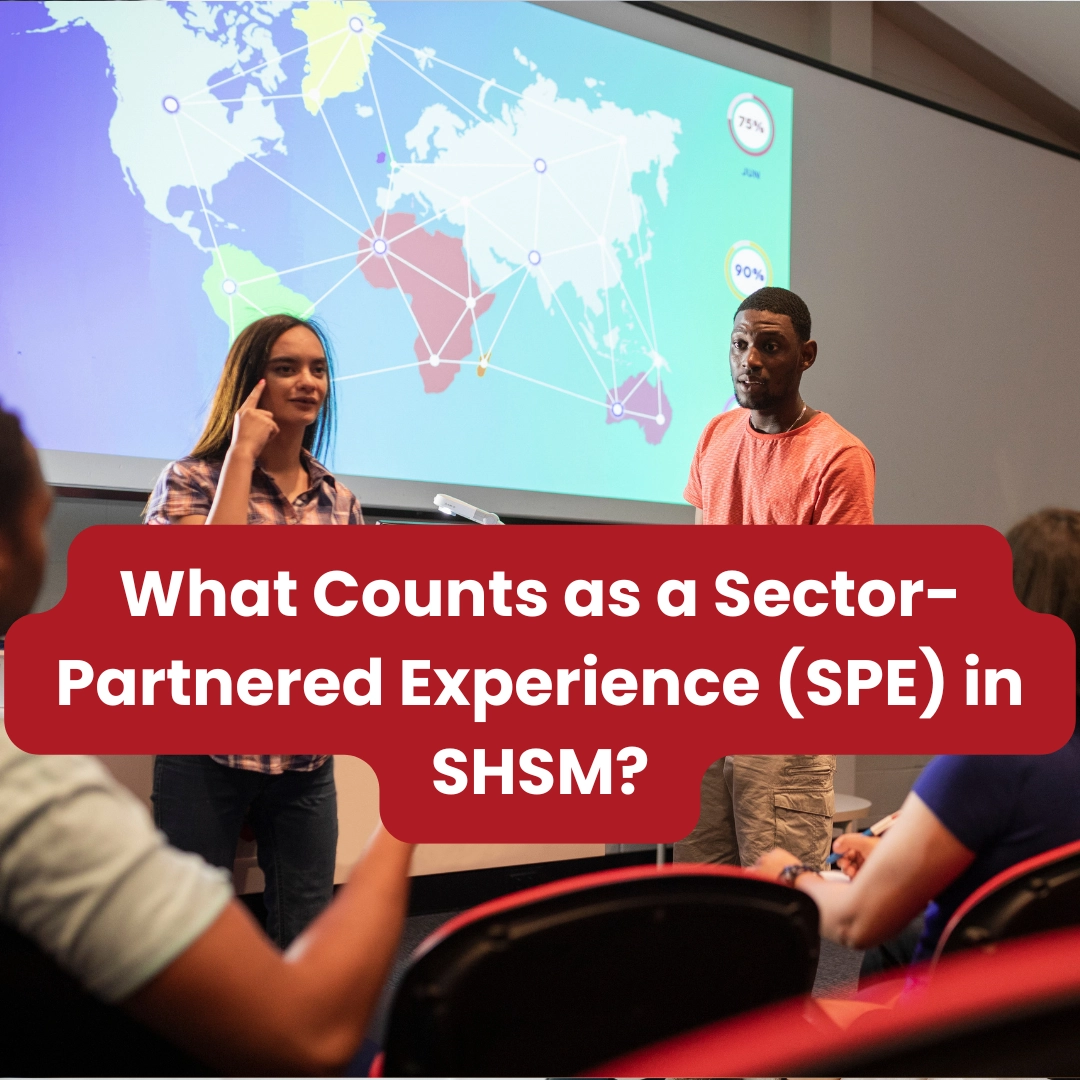
  • What Counts as a Sector-Partnered Experience (SPE) in SHSM? (Teacher Guide)

    What Counts as a Sector-Partnered Experience (SPE) in SHSM? (Teacher Guide)

    Why Understanding SPEs Matters for SHSM Teachers

    In Ontario’s Specialist High Skills Major (SHSM) program, students must complete five required components to earn the SHSM designation on their Ontario Secondary School Diploma (OSSD), and Sector-Partnered Experiences (SPEs) are one of them.[^1]

    Experiential learning and reach-ahead experiences get a lot of attention, but SPEs are often misunderstood. When done well, they deepen students’ sector knowledge and connect academic learning to innovation, technology, and real workplace problem-solving. Unlike general experiential activities (like tours or guest speakers), SPEs are designed and delivered with sector partners, involve core skills like innovation or coding, and include structured reflection.

    This guide breaks down exactly what counts as an SPE, what it is and is not, how to plan them, and how to document them so they meet SHSM policy requirements.

    What Is a Sector-Partnered Experience (SPE)?

    A Sector-Partnered Experience (SPE) is a structured learning activity that allows SHSM students to engage with an external partner (such as an employer, industry group, business or post-secondary institution) in a way that builds sector-specific skills and understanding.

    Key aspects of SPEs include:

    • Co-design and co-delivery
    The experience must be designed and delivered by both teachers and sector partners in the chosen SHSM field. This is not simply an outing or a visit; it’s a collaborative learning event developed with industry input.

    • Focused content
    All SPEs focus on at least one of the following areas:

    • Innovation, Creativity, and Entrepreneurship (ICE)
    • Coding (computer programming)
    • Mathematical literacy
      These areas are intentionally linked to future workplace needs and help students apply their learning in authentic ways.

    • Sector relevance
    The experience must connect to the student’s specific SHSM sector. For example, an SPE for Health and Wellness might focus on healthcare technology development, while an SPE for Construction could involve innovation in sustainable building processes.

    • Duration and documentation
    An SPE should be approximately 6 hours in duration (which may be split over multiple days), and, whenever possible, should include documentation that can be added to a student’s SHSM record or portfolio (like completion certificates or project artifacts).

    • Self-assessment and reflection
    Like other SHSM activities, SPEs must conclude with a structured reflection or self-assessment that helps students articulate what they learned about the skills and mindsets involved.
    How an SPE Differs From Other SHSM Experiences

    It’s helpful to compare SPEs with other SHSM components to see what makes them unique.

    SPE vs. Experiential Learning Activities

    Experiential learning (e.g., workplace tours, job shadowing, guest speakers, skill competitions) is a broader category of activities that take place outside the traditional classroom. These are focused on career exposure and exploration.[^5] What sets SPEs apart is the co-design and co-delivery with a partner, emphasis on innovation/coding/math literacy, and a more substantial learning commitment than a single visit or speaker session.

    SPE vs. Reach-Ahead Experiences

    Reach-ahead experiences help students plan for post-secondary pathways (apprenticeship, college, university or workplace). While a reach-ahead activity might be visiting a college program or attending a career fair, an SPE is intentionally linked to sector skill development using ICE, coding or math literacy within the sector context, not just exposure.

    Examples of SPEs That Count

    To be a valid SPE, the experience must meet the criteria above. Here are examples that fulfill those expectations:

    Innovation, Creativity, and Entrepreneurship (ICE) Projects

    An SPE could be a hands-on workshop where students collaborate with a sector partner to solve a real problem using innovation and entrepreneurial thinking. For example, in a Business SHSM, students could work with a local entrepreneur to design a product prototype and pitch it to a panel of local business leaders.

    Coding and Technology Integration

    For Information and Communications Technology SHSM students, an SPE could involve co-creating a small software application with a local tech company where students learn coding practices, version control, and testing processes.

    Mathematical Literacy in Context

    In a Construction SHSM, an SPE might involve working with industry engineers to apply mathematical reasoning to real on-site problems—such as calculating load factors or material estimates—and then reflecting on how math supports engineering work.

    Sector-Specific Integrated Events

    An SPE could take the form of a multi-day event where students engage with sector professionals on various tasks—such as designing a marketing plan with an industry partner for a Hospitality and Tourism SHSM—with outcomes documented in a portfolio.

    These activities go beyond simple exposure and help students learn skills that align with both their sector and broader workforce needs.

    SPE Planning Considerations for Teachers

    Because SPEs involve partnerships and design work, they require intentional planning:

    Hit required elements first:
    Make sure the activity is co-developed with partners, and intentionally connects to ICE, coding, or mathematical literacy within your SHSM sector.

    Use local partners wisely:
    Many boards can partner with local employers, industry groups, post-secondary institutions or non-profits who bring practical projects to students. Local sector context makes SPEs more relevant.

    Plan for reflection and documentation:
    Build structured reflection into the activity so students can articulate what they learned and how the skills apply to their future plans. Reflection also makes documentation easier for SHSM tracking.

    Consider flexible delivery:
    You can deliver SPEs over one full day or multiple half-days—many schools choose a mix so students can engage deeply without disrupting other learning commitments.

    Why SPEs Matter for Students
    An SPE isn’t just another checkbox. It’s a meaningful learning experience that helps students:

    • Build real skills
    SPEs intentionally blend academic learning with sector skills that matter in the workplace.

    • Gain confidence in problem-solving
    Students apply innovation, coding, or math literacy in practical contexts.

    • Strengthen sector knowledge
    Working directly with industry partners exposes students to current practices and expectations.

    • Document meaningful growth
    SPE artifacts and reflections help students build richer portfolios for post-secondary applications.

    In short, SPEs help students move from “observing” a sector to actively participating in it.

    Final Thoughts

    Sector-Partnered Experiences are a core part of what makes SHSM powerful. They are not just trips or guest speakers. They are deep, partner-driven learning experiences that build both sector knowledge and essential skills related to innovation, technology, and mathematical thinking.

    When planned and delivered well, SPEs bridge the gap between the classroom and real work—and that is exactly what SHSM is designed to do.

    References

    1. Ontario Ministry of Education. Sector-Partnered Experiences (SPEs) | SHSM Policy and Implementation Guide. Government of Ontario. https://www.ontario.ca/document/specialist-high-skills-major-shsm-policy-and-implementation-guide/sector-partnered
    2. Ontario Ministry of Education. Components of an SHSM | SHSM Policy and Implementation Guide. Government of Ontario. https://www.ontario.ca/document/specialist-high-skills-major-shsm-policy-and-implementation-guide/components-shsm
    3. Ontario Ministry of Education. Specialist High Skills Major (SHSM) Policy and Implementation Guide. Government of Ontario. https://www.ontario.ca/document/specialist-high-skills-major-shsm-policy-and-implementation-guide
    4. Ontario Ministry of Education. Steps for planning and delivering an SPE | SHSM Policy and Implementation Guide. Government of Ontario. https://www.ontario.ca/document/specialist-high-skills-major-shsm-policy-and-implementation-guide/steps-planning-and
    5. London District Catholic School Board SHSM overview noting SPE as part of required components. https://mts.ldcsb.ca/apps/pages/index.jsp?pREC_ID=1360202&type=d&uREC_ID=1076519
  • What Counts As Experiential Learning in SHSM? (Ontario Teacher Guide)

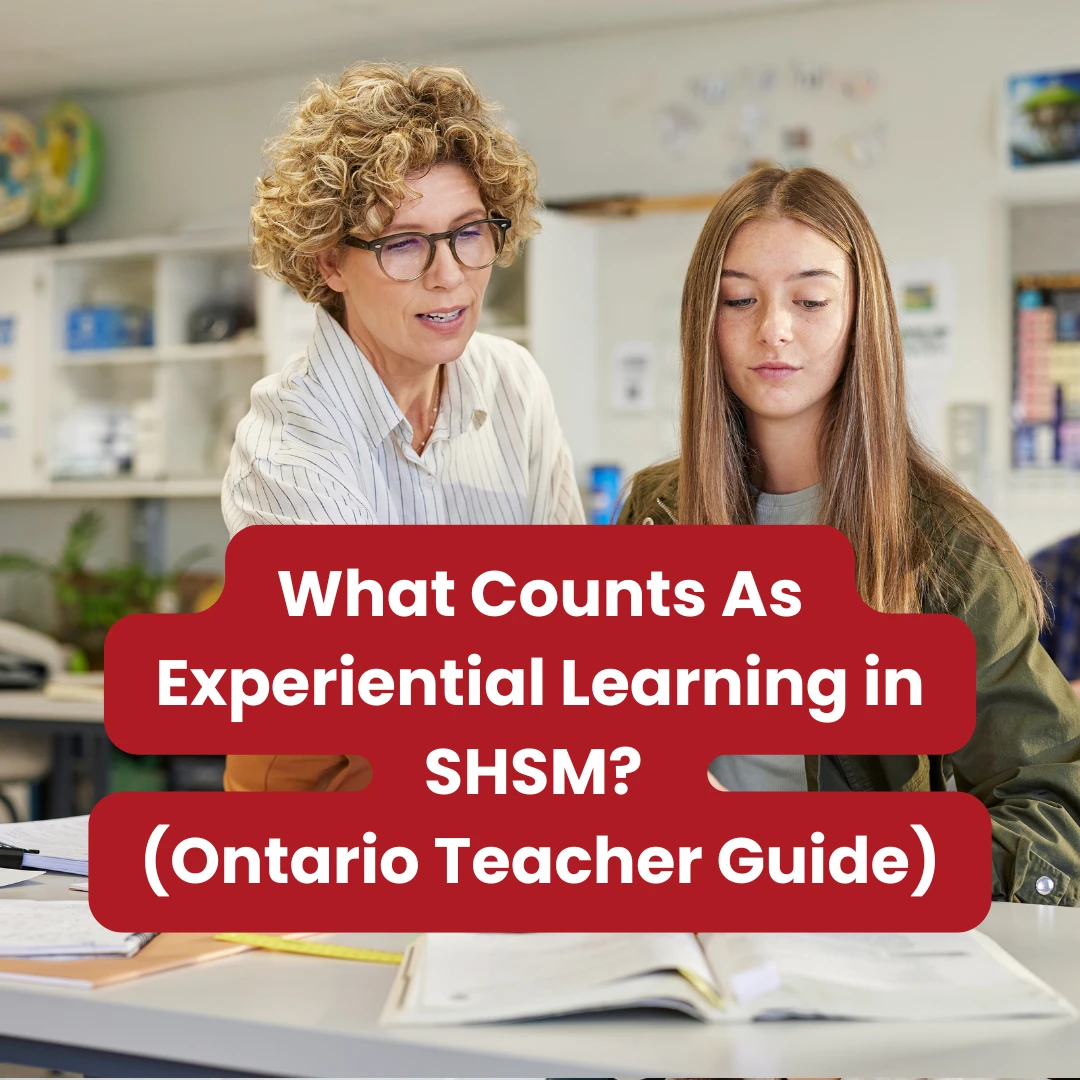
    What Counts As Experiential Learning in SHSM? (Ontario Teacher Guide)

    Why This Question Matters

    “Does this count for SHSM?” is one of the most common questions SHSM teachers ask—because experiential learning is both essential and easy to misunderstand.

    In Ontario’s Specialist High Skills Major (SHSM) program, experiential learning is not just a “nice extra.” It is a required part of how students explore careers, build confidence, and connect their learning to real workplaces. Experiential learning is also one of the biggest reasons students say SHSM feels different from regular high school—because it gives them real exposure to industries, professionals, and environments that they may not otherwise access.

    At the same time, SHSM includes other structured components like Sector-Partnered Experiences (SPEs) and reach-ahead experiences, which can look similar in practice. A college visit, a workplace tour, or a guest speaker session might be experiential learning, or it might be reach-ahead, or it might even qualify as an SPE depending on how it’s designed and delivered. This is why SHSM planning can feel confusing: the activities overlap, but the requirements and documentation expectations are not always identical.

    This week, we break down what counts as SHSM experiential learning, what common activities qualify, and how to make sure your program stays aligned with Ontario requirements—without overcomplicating your planning.

    What Experiential Learning Means in SHSM (In Plain Language)

    In Ontario, experiential learning in SHSM is described as planned learning activities that take place outside the traditional classroom setting.1

    That definition matters because it emphasizes two things:

    First, experiential learning should be planned and purposeful. A random outing or unstructured activity isn’t the goal. SHSM experiences are meant to connect students to sector learning and career exploration.

    Second, experiential learning happens outside the traditional classroom setting, which can include both in-person experiences (like workplace visits) and structured virtual experiences (like online mentoring or virtual tours), as long as the learning is authentic and connected to the sector.1

    Many SHSM teachers describe experiential learning as “the heart of the program,” and that’s accurate. It’s where students stop learning about careers and start learning through real exposure to them. It’s also where students often gain clarity about what they enjoy, what they don’t enjoy, and what skills they need to build next.

    What Counts as Experiential Learning in SHSM? (Ontario Examples)

    Ontario SHSM policy includes clear examples of experiential learning and career exploration activities.1 If you’re planning SHSM programming and want to be confident that an activity “counts,” the safest approach is to build from these recognized examples.

    Flashpoint Training - SHSM Blog - worksite tours.webp

    Work-site Tours and Industry Visits

    Work-site tours are one of the most straightforward SHSM experiential learning activities. Students visit a workplace or sector-related environment and learn directly about careers, working conditions, and expectations. These visits can be eye-opening because students see the day-to-day reality of jobs instead of relying on assumptions or stereotypes.

    A work-site tour can also help students connect classroom learning to the real world. For example, students in a construction SHSM may better understand safety procedures after seeing them in a professional environment. Students in a health and wellness SHSM may gain new appreciation for teamwork and communication after observing a clinical setting.

    Work-site tours are powerful because they make careers feel real and reachable.

    Contact With a Career Mentor

    Career mentoring counts as experiential learning when it is structured and purposeful.1 Mentoring can take many forms, including in-person meetings, virtual mentoring sessions, or scheduled career conversations.

    Mentorship experiences can be especially valuable for students who don’t have career connections in their own networks. Even a short, well-designed mentoring session can help students understand what training is required, what entry-level work looks like, and what skills matter most in the field.

    Mentoring is also a strong tool for building student confidence, especially when students can ask questions in a supportive environment.

    Career Talks, Career Fairs, and Sector Conferences

    Career talks and career fairs can count as experiential learning when they are planned as learning opportunities rather than passive listening sessions.1

    For SHSM students, the most effective guest speaker experiences include student preparation beforehand and reflection afterward. This turns the session into learning that students can remember, document, and connect to their pathway.

    Sector conferences and career fairs are also valuable because they expose students to multiple roles within a sector. Many students only know the “headline jobs” (like nurse, mechanic, chef, programmer). Events like these help them see the broader range of careers that exist.

    Skills Competitions (Example: Skills Ontario)

    Ontario’s SHSM guide includes participation in technological skills competitions as an experiential learning example.1 Competitions can be a powerful experience because they show students what high-level performance looks like in real tasks.

    Even students who don’t place highly can benefit. Competitions teach students about professional standards, time management, problem-solving under pressure, and the reality of skill development over time. They also help students build confidence by participating in a real-world challenge.

    Job Twinning

    Job twinning is described as a one-on-one observation of a cooperative education student in a sector placement.1 This is especially useful for younger students or students who are still exploring whether the sector is right for them.

    Job twinning can help students understand what a co-op placement might look like and what expectations exist in a workplace. It can also reduce anxiety for students who are nervous about workplace learning.

    Job Shadowing

    Job shadowing is described as a day-long observation of a person working in the sector.1 Job shadowing is often one of the most impactful experiences because it gives students a realistic view of the work environment.

    Students learn not only about tasks, but also about professional behaviour, communication expectations, workplace pace, and the skills that matter most. Shadowing helps students move from “I think I might like this” to “I understand what this really involves.”

    Work Experience (In-Person or Virtual)

    Ontario’s SHSM guide includes work experience as an experiential learning example and notes it can be delivered in-person or virtually.1 Work experience is typically shorter than co-op and can provide valuable exposure without requiring a full placement.

    Virtual work experience has also become more common, particularly in sectors where digital environments are realistic and relevant. When structured well, virtual experiences can still provide meaningful insight into roles and expectations.

    Does Co-op Count as Experiential Learning?

    Yes—cooperative education is a form of experiential learning, but Ontario guidance makes it clear that SHSM students should also complete additional experiential learning and career exploration activities beyond co-op.1

    This is important for teachers because it prevents the common misconception that “co-op covers everything.” Co-op is a major component, but SHSM experiential learning should include multiple exposures so students gain a broader understanding of the sector.

    Experiential Learning vs. Sector-Partnered Experiences (SPEs)

    Experiential learning is broad. SPEs are more structured.

    Ontario describes Sector-Partnered Experiences (SPEs) as experiences that are designed to help students develop sector knowledge and skills through engagement with sector partners.2 The SHSM guide also emphasizes that SPEs are typically co-designed and co-delivered with sector partners and teachers, and they include student reflection.3

    In other words, a guest speaker session might count as experiential learning, but it becomes an SPE when it is intentionally built as a structured learning experience in partnership with the sector, with clear outcomes and delivery expectations.

    This distinction matters most for tracking and planning. It helps SHSM teams ensure they’re meeting all SHSM components without double-counting activities incorrectly.


    Flashpoint training SHSM blog - what about reach ahead experiences

    Experiential Learning vs. Reach-Ahead Experiences

    Reach-ahead experiences are designed to help students prepare for their postsecondary pathway. Ontario describes reach-ahead experiences as opportunities that connect students to apprenticeship, college, university, or workplace destinations.4

    A college visit might feel like experiential learning—and it can be—but in SHSM planning, it is often tracked as a reach-ahead experience because the purpose is specifically connected to the student’s next step after graduation.4

    The key difference is the intent. Experiential learning focuses on sector exploration and workplace learning. Reach-ahead experiences focus on postsecondary planning and pathway readiness.


    A Simple “Does This Count?” Checklist for SHSM Teachers

    If you want a quick way to evaluate whether an activity counts as experiential learning in SHSM, use this checklist:

    The activity should be:

    • planned and purposeful
    • outside the traditional classroom setting
    • connected to the student’s SHSM sector
    • designed to support career exploration and skill awareness
    • paired with student reflection or evidence where possible1

    If your activity meets those criteria, you are strongly aligned with Ontario’s experiential learning expectations.


    Final Thoughts: Experiential Learning Is What Makes SHSM Real

    Experiential learning is one of the most powerful parts of SHSM because it gives students real exposure to careers and real confidence in their future options. It helps students understand workplaces, meet professionals, and discover pathways they may never have considered.

    For teachers, the key is not to overcomplicate it. If your experiential learning is planned, sector-connected, and reflective, it is doing exactly what SHSM was designed to do.

    References (Works Cited)

    1. Ontario Ministry of Education. Specialist High Skills Major (SHSM) Policy and Implementation Guide — Experiential Learning and Career Exploration Activities. Government of Ontario. https://www.ontario.ca/document/specialist-high-skills-major-shsm-policy-and-implementation-guide/experiential-learning ↩ ↩234567891011
    2. Ontario Ministry of Education. Specialist High Skills Major (SHSM) Policy and Implementation Guide — Components of the SHSM Program. Government of Ontario. https://www.ontario.ca/document/specialist-high-skills-major-shsm-policy-and-implementation-guide/components-shsm
    3. Ontario Ministry of Education. Specialist High Skills Major (SHSM) Policy and Implementation Guide — Sector-Partnered Experiences (SPEs). Government of Ontario. https://www.ontario.ca/document/specialist-high-skills-major-shsm-policy-and-implementation-guide/sector-partnered
    4. Ontario Ministry of Education. Specialist High Skills Major (SHSM) Policy and Implementation Guide — Reach-Ahead Experiences. Government of Ontario. https://www.ontario.ca/document/specialist-high-skills-major-shsm-policy-and-implementation-guide/reach-ahead-experiences ↩ ↩2
  • How Do You Help Your Students Choose the Right SHSM Sector?

    How Do You Help Your Students Choose the Right SHSM Sector?

    For many Ontario high school students, choosing an SHSM sector feels like a big decision. Even though it’s “just” a program choice, students often treat it like they’re choosing their entire future. They worry about picking the wrong option, getting stuck in something they don’t like, or choosing something that won’t help them later.

    SHSM teachers see this pressure all the time—especially around course selection season. Students ask questions like:

    • “Which SHSM is the best one?”
    • “What SHSM will help me get a job?”
    • “What SHSM looks best for university or college?”
    • “What if I pick the wrong one?”

    The truth is: choosing the right SHSM sector does matter—but it doesn’t need to be overwhelming.

    When students choose a sector that fits their interests and strengths, SHSM becomes a powerful tool for engagement. They show up more consistently, participate more actively, and gain more confidence from experiences like certifications, sector activities, and pathway planning. A strong match can help students feel motivated in school again, especially if they’ve struggled to connect classroom learning to real life.

    At the same time, SHSM isn’t about forcing students into one path. It’s about giving them structured opportunities to explore a sector while building skills that apply to almost any future direction.

    As teachers, our job isn’t to “pick for them.” Our job is to guide them toward a decision that makes sense, feels realistic, and supports their growth.

    Start With Interests, Not Job Titles

    One of the most common mistakes students make when choosing an SHSM sector is choosing based on a single job title.

    They might say:

    • “I want to be a nurse.”
    • “I want to be an engineer.”
    • “I want to own a business.”
    • “I want to be a mechanic.”

    Those goals can be great—but job titles can also be limiting, especially when students don’t fully understand what the work looks like day-to-day. Sometimes students pick a sector because they like the idea of a job, not the reality of the work.

    That’s why a stronger approach is starting with interests and preferences.

    A helpful way to guide students is to ask them what kind of work they enjoy doing—not what job they want. Encourage them to think in terms of:

    Do you enjoy working with people, or do you prefer working with tools or technology?

    Do you like creative tasks, or do you prefer structured, step-by-step work?

    Do you learn best through hands-on experiences, or do you enjoy research and theory-based learning?

    Do you prefer fast-paced environments, or quieter ones?

    When students start from interests, the sector choice becomes clearer. Instead of choosing based on pressure or trends, they choose based on who they are and how they learn.

    This also reduces anxiety because students realize they don’t need a perfect career plan—they just need a starting point that fits.

    Use These Teacher-Friendly Questions to Guide the Conversation

    Students don’t always know how to reflect on their strengths. They might say “I don’t know” because they haven’t been asked the right questions yet.

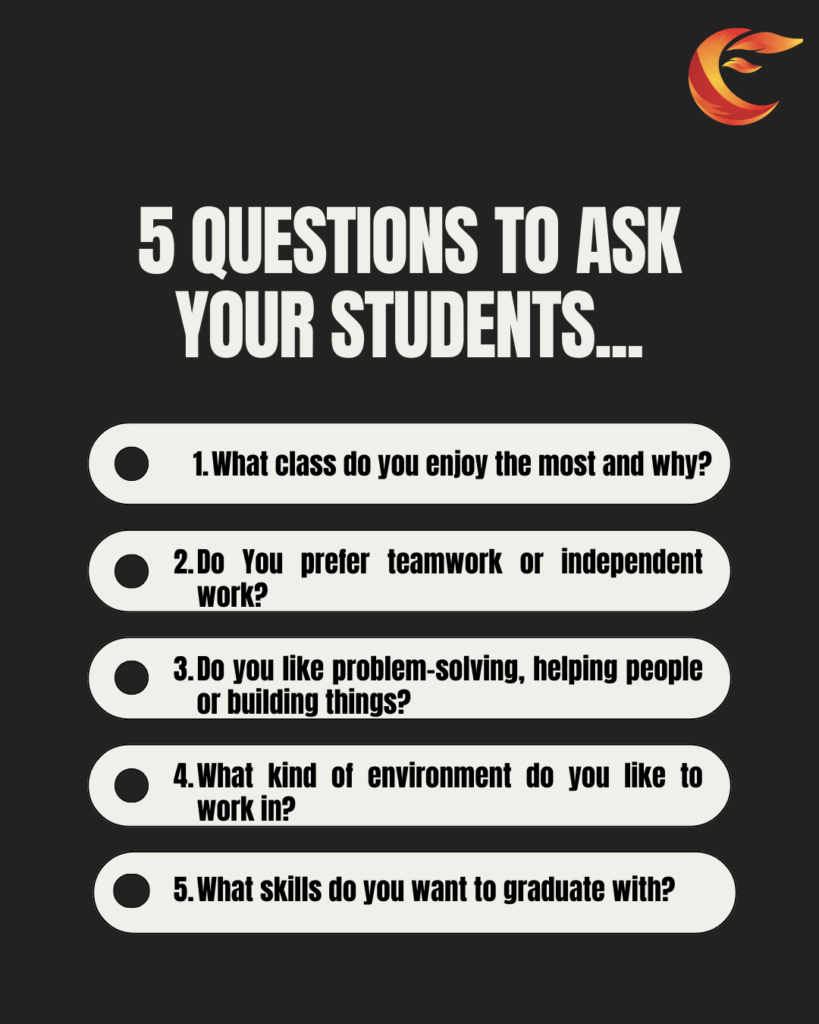
    These five questions work well in classrooms, guidance meetings, or SHSM info sessions because they help students think realistically:

    1) What class do you enjoy most — and why?

    The “why” matters more than the subject. A student might enjoy a class because they like teamwork, hands-on tasks, problem-solving, or creative thinking. Those reasons point toward a good sector fit.

    2) Do you prefer teamwork or independent work?

    Some sectors involve collaboration all day. Others involve more independent tasks. Students should choose a sector that matches their comfort level—but also pushes them in a healthy way.

    3) Do you like problem-solving, helping people, or building things?

    This question quickly reveals what motivates students. Some students love fixing and building. Others love supporting people. Others love organizing systems or solving complex problems.

    4) What kind of environment do you want?

    Students often forget to think about the environment. Ask them to imagine their ideal work setting:

    • Office
    • outdoors
    • lab
    • Shop
    • kitchen
    • hospital/clinic
    • studio

    The environment can make or break whether they enjoy the work.

    5) What skills do you want to graduate with?

    This question shifts the focus from “What job do you want?” to “What do you want to be capable of?” That’s a much healthier mindset for teens.

    Many students want to graduate with:

    • confidence speaking professionally
    • leadership skills
    • real workplace experience
    • certifications they can use immediately
    • hands-on training
    • a clearer plan for college/university/apprenticeship

    SHSM can support all of that—but students should choose a sector that matches their goals.

    Help Students Understand: SHSM Is Exploration, Not a Lifetime Commitment

    One of the most important things teachers can do is reduce the pressure students feel.

    Many students think:
    “If I choose this SHSM, I’m stuck forever.”

    That’s not true.

    SHSM is a structured way to explore a sector while still in high school. It gives students experiences they wouldn’t normally get in a traditional timetable. Even if a student changes their mind later, the skills they gain are still valuable.

    In fact, changing their mind is often a sign the program worked.

    SHSM helps students learn:

    • what they enjoy
    • what they don’t enjoy
    • what kind of workplace fits them
    • what skills they need to build next

    It’s better for a student to discover in Grade 11 that they don’t like a certain type of work than to discover it after spending time and money in post-secondary.

    That’s why SHSM should be framed as exploration, not commitment.

    Match Sectors to Pathways (Without Limiting Students)

    Another common misconception is that certain SHSM sectors only lead to one pathway.

    In reality, SHSM supports multiple pathways:

    • apprenticeship
    • college
    • university
    • workplace

    A student can choose a sector and still keep doors open.

    The best sector is the one that aligns with the student’s goals and fits their learning style. For example, a student who enjoys hands-on learning might thrive in SHSM because it includes certifications and real-world experiences—even if they plan to go to university later.

    The sector choice should support their next step, but it should also help them feel motivated now.

    Common SHSM Sector Selection Mistakes (And How Teachers Can Prevent Them)

    As teachers, we can also help students avoid the most common traps.

    • One big trap is choosing a sector because friends are doing it. That’s understandable—students want to belong. But SHSM works best when students choose what fits them, not what’s popular.
    • Another trap is choosing based on what sounds “easy.” SHSM isn’t meant to be easy. It’s meant to be meaningful. Students succeed when they choose something they care about.
    • Finally, some students avoid sectors because they think they won’t be good at it. Teachers can remind them that SHSM is where skills are built. Students don’t need to arrive confident—they gain confidence through the program.

    Final Thoughts: The “Right” SHSM Sector Fits the Student

    At the end of the day, the right SHSM sector is the one that fits the student—not their friends, not social media, and not pressure from outside voices.

    When students choose a sector based on interests, strengths, and realistic goals, SHSM becomes one of the most powerful experiences they can have in high school. It helps them build confidence, gain real-world skills, and make better post-secondary decisions.

    And as teachers, we play a major role in that process—not by choosing for them, but by guiding them toward a choice they can feel proud of.

    By Carmen Reis, CPA, MA

    If you have comments or concerns, please reach out to us at hello@flashpointtraining.com

  • SHSM Planning Got You Stressed? Try an Agile Work Model Instead….

    SHSM Planning Got You Stressed? Try an Agile Work Model Instead….


    SHSM Planning Doesn’t Have to Feel Like a Second Job

    If you’ve ever supported an SHSM program in Ontario, you’ve probably felt it: the pressure of trying to do something meaningful for students while also trying to keep everything organized behind the scenes.

    That pressure makes sense. SHSM is one of the strongest student engagement programs in Ontario because it connects learning to real careers. But it’s also one of the most complex programs to deliver, because it isn’t “one class.” SHSM includes a sector-focused credit bundle, certifications, experiential learning, reach-ahead opportunities, and documentation requirements that all have to be coordinated across a school year.

    For many SHSM leads and teachers, the challenge isn’t motivation. It’s capacity. SHSM planning can start to feel like a second full-time job—especially when you’re trying to run it on top of teaching, assessment, supervision, and daily school demands.

    The good news is that SHSM planning becomes much easier when you stop treating it like a series of emergencies and start treating it like a system.

    This blog is a solution-focused guide to doing exactly that.

    The SHSM Planning Shift That Changes Everything: Build a System, Not a To-Do List

    The most common reason SHSM implementation feels overwhelming is that teachers are trying to hold too many moving parts in their heads at once.

    You’re planning certifications. You’re trying to schedule guest speakers. You’re coordinating trips and experiences. You’re collecting reflections. You’re tracking student progress. You’re communicating with families. You’re working with guidance. You’re making sure requirements are met.

    And you’re doing all of this while teaching full time.

    When SHSM planning is managed as a giant to-do list, it becomes reactive. You spend the year responding to what’s urgent, rather than working through a plan.

    A more sustainable approach is to run SHSM like a year-long project. That means using a timeline, checkpoints, and shared responsibilities—just like you would for a major school event or department initiative.

    When SHSM is structured like a project, it becomes predictable. And predictable is what reduces stress.

    Step 1: Create a Visible SHSM Program Map (Your #1 Simplification Tool)

    If there is one tool that makes SHSM planning easier, it’s this:

    A program map you can see.

    A program map is a simple overview of what needs to happen across the year. It doesn’t need to be complicated. It can be a one-page document, a shared calendar, or a digital planning sheet. The point is not to create more paperwork—the point is to stop relying on memory.

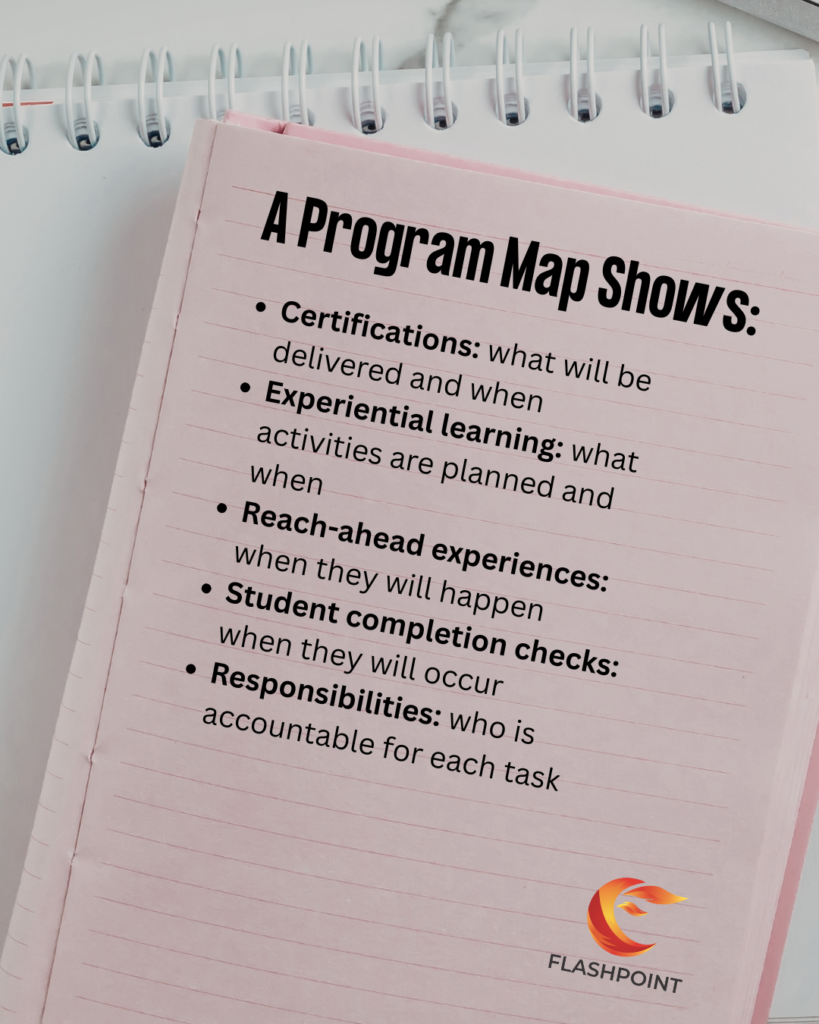
    A strong SHSM program map clearly shows:

    • what certifications will be delivered and when
      what experiential learning activities are planned and when
      when reach-ahead experiences will happen
    • when student completion checks will happen
    • who is responsible for each task

    When SHSM requirements are visible, teachers can plan proactively instead of constantly playing catch-up. It also makes SHSM easier to explain to students and staff, because the year is organized in a way people can understand.

    Most importantly, a program map reduces anxiety. When you can see that the year is accounted for, you stop worrying about what you might be missing.

    Step 2: Stop Doing Everything Yourself (Even If You’re the Lead)

    Another major reason SHSM planning becomes exhausting is that it often depends on one person.

    In many schools, one teacher becomes the organizer of everything. That teacher holds the calendar, the partner contacts, the student tracking, the event planning, and the problem-solving.

    That level of responsibility is admirable—but it’s not sustainable. If that person is away, changes roles, or simply burns out, the program becomes fragile.

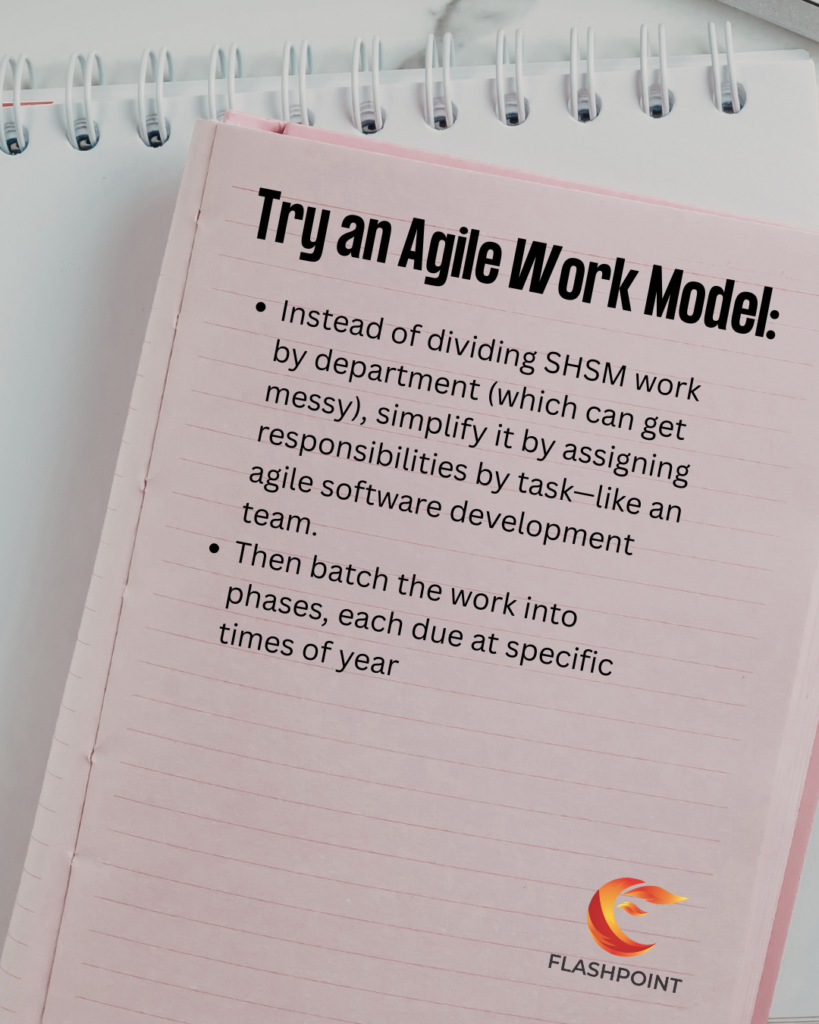
    Take a Lesson From Agile Software Development: Split SHSM by Tasks, Not by One “SHSM Super-Teacher”

    In agile software development, teams avoid building projects where one person owns everything, because it creates a “single point of failure.” If that person is away, overwhelmed, or leaves, the whole project slows down—or collapses.

    SHSM planning can accidentally work the same way.

    In many schools, one teacher becomes the SHSM organizer for everything: the calendar, the trips, the guest speakers, the certifications, the tracking, the emails, the last-minute fixes. That level of commitment is incredible—but it’s not sustainable.

    Instead of splitting SHSM work by department (which often gets messy), one of the simplest ways to make SHSM easier is to organize it like an agile team would: split responsibilities by task.

    Here are real examples of how schools can divide SHSM planning in a practical, realistic way:

    SHSM Field Trip Lead
    This person owns the big logistics pieces like booking buses, selecting dates, permission forms, and communicating trip details.

    SHSM Reach-Ahead Lead
    This person focuses on planning and confirming reach-ahead experiences (college visits, training centre sessions, industry events), and making sure they happen at the right time in the year.

    SHSM Guest Speaker Lead
    This person coordinates guest speakers, panels, and in-school visitors—booking them early and keeping a list of reliable contacts for future years.

    SHSM Certifications & Training Lead
    This person handles scheduling certifications, booking providers, organizing student lists, and ensuring completion proof is collected.

    SHSM Tracking & Completion Lead
    This person maintains the tracker, follows up on missing evidence, runs monthly check-ins, and makes sure students stay on pace to complete the SHSM requirements.

    When SHSM is divided like this, nobody has to carry the whole program alone. Each teacher owns a manageable piece, and SHSM becomes something the school can run consistently—not something one person survives.

    That’s the difference between “running SHSM” and actually sustaining SHSM year after year.

    Step 3: Batch Your SHSM Planning Into Phases (Instead of Constantly Doing Everything)

    One of the best ways to reduce SHSM stress is to stop planning everything weekly.

    SHSM planning feels overwhelming when it’s scattered across the year in random moments: a trip planned here, a certification organized there, tracking updated whenever you remember.

    Instead, SHSM becomes manageable when you plan in phases. You’re not doing less—you’re doing it in a way that fits the school year.

    A simple phased approach looks like this:

    Phase 1: Start Strong (September–October)

    Focus on onboarding, setting expectations, and scheduling early experiences.

    Phase 2: Build Momentum (November–February)

    Deliver certifications and consistent experiential learning while tracking completion regularly.

    Phase 3: Finish Cleanly (March–June)

    Focus on reach-ahead experiences, final completion audits, make-up opportunities, and celebration.

    Batching planning into phases reduces the “always behind” feeling and gives SHSM teachers a realistic rhythm.

    Step 4: Plan SHSM Activities With Evidence Built In (So Tracking Becomes Easy)

    One of the biggest SHSM teacher stressors is the fear of missing a requirement.

    That fear is valid. SHSM has formal components, and students need to complete them to earn the SHSM designation.

    The simplest way to reduce compliance stress is this:

    Plan every SHSM activity with documentation in mind.

    That means every experience should naturally create something trackable, such as:

    • a sign-in sheet
    • a student reflection prompt
    • a portfolio artifact
    • proof of participation
    • a quick exit ticket

    When evidence is built into the experience, tracking becomes easier. It also becomes more accurate, because you’re capturing learning in real time rather than trying to reconstruct it later.

    And it strengthens SHSM quality. Reflection and documentation aren’t just “compliance tasks.” They help students connect experiences to skills, pathways, and career goals.

    Step 5: Focus on the Foundations That Make SHSM Easier All Year

    When SHSM feels overwhelming, it’s tempting to add more activities, more meetings, and more tracking tools.

    But SHSM doesn’t improve through more complexity. It improves through stronger foundations.

    If you want SHSM to feel simpler, focus first on:

    • a clear program map
    • a reliable schedule of experiences
    • consistent evidence collection
    • a shared team structure
    • regular student check-ins

    Once those basics are stable, SHSM becomes easier to manage. You spend less time scrambling and more time delivering meaningful experiences.

    The strongest SHSM programs aren’t always the busiest ones. They’re the ones that are consistent, clear, and student-centered.

    Final Thoughts: SHSM Planning Can Be Structured, Sustainable, and Still High Impact

    SHSM planning and implementation is complicated—but it doesn’t have to be chaotic.

    When teachers use a visible program map, share responsibilities, plan in phases, and build evidence into activities, SHSM becomes manageable. Not only does teacher stress decrease, but the student experience improves too.

    SHSM works because it gives students real-world learning, career exploration, and confidence. When the planning system is strong, teachers can focus on what SHSM does best: creating experiences students remember and skills students carry forward.

    By Carmen Reis, CPA, MA

    Comments, questions or feedback? Drop us a line at: hello@flashpointtraining.com

  • Top 5 SHSM Compliance Risks & How to Protect Your SHSM Program

    Top 5 SHSM Compliance Risks & How to Protect Your SHSM Program

    Experiential learning is a cornerstone of the Specialist High Skills Major (SHSM) program. Through sector-specific placements, certifications, and authentic workplace experiences, SHSM connects classroom learning to real career pathways and helps students make informed postsecondary decisions.

    However, because SHSM operates at the intersection of curriculum expectations, sector standards, workplace safety, and Ministry policy, it is also one of the areas where compliance concerns most often emerge.

    The reality is this: most SHSM compliance issues are not caused by poor programming or lack of commitment. They usually stem from small gaps — incomplete documentation, weak sector alignment, or assumptions about what qualifies as acceptable SHSM evidence. Unfortunately, during reviews, even minor oversights can have significant consequences for student SHSM completion, program credibility, and staff workload.


    Why SHSM Compliance Matters More Than Ever

    The Ontario Ministry of Education is explicit that SHSM programming must meet specific policy requirements in order for students to earn their SHSM designation. Boards are required to maintain clear evidence that SHSM components are:

    • Sector-specific and intentional
    • Directly connected to curriculum expectations
    • Appropriately supervised and assessed
    • Fully documented

    This documentation feeds into:

    • Student SHSM records and transcripts
    • Board-level monitoring and reporting
    • Ministry reviews and audits

    When compliance issues arise, the impact is rarely isolated. One weak or poorly documented SHSM experience can trigger broader program scrutiny. (Ontario Ministry of Education, SHSM Policy and Implementation Guide)


    Risk #1: Incomplete or Inconsistent SHSM Documentation

    What This Looks Like

    • Missing or partially completed learning plans
    • Unsigned documentation (student, employer, or teacher)
    • Safety training or certifications not properly recorded
    • Assessment evidence stored informally or inconsistently

    Why It’s a Problem

    The Ministry requires that all SHSM experiential learning include documented learning goals, tasks, supervision, and assessment. Without clear documentation, there is no formal proof that SHSM learning occurred — even if the experience was meaningful.

    During audits, undocumented learning is treated as non-existent learning. (Ontario Ministry of Education, SHSM Policy and Implementation Guide).

    How to Avoid It

    • Use standardized SHSM templates across your school or board
    • Create a pre-placement checklist for SHSM requirements
    • Store all SHSM documentation in one consistent location
    • Conduct mid-semester file checks instead of waiting until the end

    Review-Proofing Tip:
    If it isn’t signed, dated, and retrievable, it doesn’t exist.


    Risk #2: Weak Sector Alignment

    What This Looks Like

    • SHSM experiences approved because they are convenient
    • Tasks that are generic or unrelated to sector outcomes
    • Employers unclear about SHSM expectations

    Why It’s a Problem

    SHSM requires that experiential learning directly support sector-specific knowledge and skills. Experiences that provide general work exposure but do not align with sector outcomes may not meet SHSM requirements. (Ontario Ministry of Education, SHSM Policy and Implementation Guide)

    For example:

    • A health SHSM student doing only clerical tasks
    • A construction SHSM student with no exposure to tools, processes, or safety practices
    • A business SHSM student with no engagement in planning, communication, or operations

    How to Avoid It

    • Review sector alignment before approval
    • Ask employers what skills students will practice daily
    • Explicitly link tasks to sector outcomes and curriculum expectations
    • Adjust placements early if alignment weakens

    Teacher Check:
    An experience doesn’t need to be perfect — but it must be defensible.


    Risk#3: Assuming Experiences Automatically “Count” Toward SHSM

    What This Looks Like

    • Students assuming any work experience qualifies
    • Retroactive approval of experiences
    • Learning plans created after experiences begin

    Why It’s a Problem

    SHSM experiences must be approved in advance, tied to a SHSM course, and supported by documented learning plans and assessment. Experiences that lack these elements cannot be retroactively converted into SHSM requirements. (Ontario Ministry of Education, SHSM Policy and Implementation Guide)

    How to Avoid It

    • Clarify SHSM expectations with students early
    • Require approval before experiences begin
    • Apply the same documentation and assessment standards to all SHSM experiences

    Risk #4: Weak or Missing Assessment Evidence

    What This Looks Like

    • Minimal employer feedback
    • Limited student reflection
    • Assessment focused on completion rather than learning

    Why It’s a Problem

    SHSM is not a participation badge. Teachers must be able to demonstrate skill development, reflection, and achievement aligned to curriculum and sector expectations. Hours or attendance alone do not demonstrate learning. (Ontario Ministry of Education, Growing Success)

    How to Avoid It

    • Use structured reflection prompts
    • Collect artifacts such as logs, photos, and supervisor feedback
    • Align rubrics with curriculum and sector outcomes
    • Schedule check-ins that generate evidence, not just conversation

    Risk #5: Waiting Until a Review or Audit to Fix Problems

    What This Looks Like

    • Scrambling for missing documents
    • Rewriting learning plans after completion
    • Inconsistent records across students

    Why It’s a Problem

    Reviews and audits assess existing evidence — not intentions. Late fixes often raise more concerns than they resolve.


    How to Review/Audit Proof Your SHSM Program

    • Build routine compliance checks into each semester
    • Share responsibility across SHSM teams
    • Train new teachers early on SHSM documentation expectations
    • Keep systems simple, consistent, and repeatable

    Quick SHSM Compliance Checklist

    ✔ Experience aligned to SHSM sector
    ✔ Learning plan completed before start
    ✔ Safety training documented
    ✔ Ongoing assessment evidence collected
    ✔ Employer feedback recorded
    ✔ All documents stored centrally


    Conclusion: SHSM Compliance Needs to Be Embedded into Processes

    SHSM compliance isn’t about bureaucracy — it’s about incorpating it as part of your SHSM processes.

    When SHSM experiences are well-aligned, well-documented, and well-assessed, they stand up to scrutiny and deliver meaningful value to students.

    With clear systems and shared understanding, SHSM compliance becomes manageable, defensible, and sustainable — even in the face of audits and policy change.

    ____________________________________________

    Flashpoint: Committed to Excellence & Education

    To support teachers and school boards in strengthening their understanding of SHSM roles and responsibilities, we, in collaboration with educational partners, will be launching a new professional learning course series in April 2026. This series is designed to support effective, compliant, and sustainable SHSM programming across Ontario. Courses will be available online starting at just $50 per participant. We also can provide live training sessions.

    a. SHSM 101: Understanding My Role as a SHSM Teacher

    This course provides Ontario educators with a clear and practical introduction to the Specialist High Skills Major (SHSM) program as outlined by the Ontario Ministry of Education. Participants will explore the purpose and structure of SHSM, its role within Ontario secondary education, and how it supports student pathways to apprenticeship, college, university, and the workplace. The course highlights how classroom instruction, experiential learning, and sector-specific programming work together to meet both curriculum expectations and Ministry policy requirements, positioning SHSM as an integrated component of student learning rather than an add-on program.

    Teachers will examine their specific responsibilities within SHSM delivery in Ontario schools, including collaboration with SHSM leads and guidance staff, supporting students through program requirements, and aligning instructional and assessment practices with Ministry expectations. By the end of the course, participants will have a clear understanding of how their role contributes to student success, program quality, and the integrity of SHSM implementation within the Ontario education system.

    b. Foundations of SHSM Compliance and Documentation

    This course supports Ontario educators in understanding the compliance and documentation requirements of the Specialist High Skills Major (SHSM) program as outlined by the Ontario Ministry of Education. Participants will examine Ministry expectations related to SHSM credits, experiential learning, sector alignment, assessment, and record-keeping, with a focus on the evidence required to support student SHSM completion. The course emphasizes that compliance is not simply an administrative task, but a critical component of program integrity, student protection, and Ministry accountability.

    Teachers will explore common compliance risks identified in SHSM implementation, including documentation gaps, misalignment with sector outcomes, and inconsistent assessment practices. Practical strategies will be shared to help teachers establish clear, manageable systems that support consistency, transparency, and audit readiness within Ontario school boards. By the end of the course, participants will be better equipped to maintain accurate, defensible SHSM records and to confidently

    c. Designing Effective SHSM Learning Experiences

    This course supports Ontario educators in designing Specialist High Skills Major (SHSM) learning experiences that are both meaningful for students and aligned with Ontario Ministry of Education expectations. Participants will explore what high-quality, sector-specific SHSM learning looks like in practice, with an emphasis on intentional planning, clear alignment to curriculum expectations, and authentic connections to industry sectors. The course reinforces the importance of designing SHSM experiences that support students’ pathway development while meeting program requirements.

    Teachers will examine strategies for translating SHSM policy and sector outcomes into well-designed learning experiences that are realistic, defensible, and responsive to student needs. Through practical examples and guided reflection, participants will develop tools to plan, refine, and evaluate SHSM learning experiences that demonstrate clear learning, skill development, and alignment with Ministry standards. By the end of the course, teachers will be better equipped to design SHSM learning that strengthens both student outcomes and program quality within Ontario schools.

    Comments or questions? Interested in learning more?

    Drop a line to hello@flashpointtraining.com and we will send you more information or add you to our course waiting list.

  • Micro-Credentials, Badges, and SHSM: How Do These Compare?

    Micro-Credentials, Badges, and SHSM: How Do These Compare?

    The Credential Landscape Is Changing

    In today’s rapidly evolving labour market, traditional diplomas and degrees no longer tell the whole story about a learner’s skills. While formal credentials still matter, employers and post-secondary institutions increasingly look for evidence of specific competencies, applied learning, and workforce readiness. In response, short, competency-based credentials such as micro-credentials and digital badges have gained significant traction.

    Micro-credentials are designed to recognize targeted skills in flexible, employer-responsive formats. They are particularly common in post-secondary education, workforce training, and professional development. As a result, SHSM students and teachers are encountering these credentials more frequently — through colleges, online platforms, employers, and industry organizations.

    However, the rise of micro-credentials also creates confusion. Teachers and students may assume that all credentials carry the same weight or that micro-credentials can replace required SHSM certifications. Understanding what these credentials actually are, how they differ from SHSM requirements, and what post-secondary institutions truly value is essential to protecting program integrity and supporting student transitions.

    Research from the Higher Education Quality Council of Ontario (HEQCO) confirms that while micro-credentials can play a meaningful role in skills recognition, their value depends heavily on quality assurance, employer recognition, and contextual relevance (HEQCO, 2023).

    What Are Micro-Credentials and Digital Badges?

    Micro-Credentials

    Micro-credentials are short, focused credentials that certify assessed learning in a specific skill or competency area. Unlike traditional courses or programs, they are not time-based; instead, they emphasize demonstrated mastery. Many micro-credentials are developed in collaboration with employers or industry groups to address specific workforce needs.

    According to eCampusOntario, micro-credentials are:

    • Skills-focused and outcomes-driven
    • Often completed in weeks or months rather than years
    • Designed to be stackable, meaning multiple micro-credentials may build toward a larger qualification or recognition
    • Grounded in assessment rather than participation alone (eCampusOntario, 2024)

    Digital Badges

    Digital badges are the visual and verifiable representation of learning achievement. They often accompany micro-credentials but may also represent certifications, training completion, or competency demonstrations.

    Badges typically:

    • Contain embedded metadata describing the issuing organization, criteria, and evidence
    • Can be shared on resumes, LinkedIn, portfolios, and digital wallets
    • Point to concrete proof of learning, such as projects or assessments

    In theory, badges increase transparency by allowing viewers to see what the learner actually did, not just the title of the credential (eCampusOntario, 2024).

    Important Quality Consideration

    At present, micro-credentials and badges are not governed by a single provincial regulatory body in Ontario. While frameworks such as Ontario’s Micro-Credential Quality Assurance Framework are emerging, recognition still varies widely by provider and sector (PEQAB, 2023). This means not all micro-credentials carry equal value, and teacher guidance is critical.

    How Micro-Credentials Differ from SHSM Certifications

    SHSM students already earn industry-recognized certifications and training that are mandated components of the SHSM program. These certifications are not optional enhancements — they are formal requirements outlined in Ministry policy.

    Examples include:

    • First Aid and CPR
    • WHMIS
    • Sector-specific safety or technical training
    • Workplace Essential Skills training embedded in co-op and experiential learning

    These SHSM certifications:

    • Are explicitly required by the SHSM Policy and Implementation Guide
    • Must be documented in student management systems
    • Appear on the SHSM Record and, where applicable, the Ontario Student Transcript
    • Are governed by required minimum length, duration and content
    • Are recognized by employers as foundational workplace credentials (Ontario Ministry of Education)

    By contrast, a most micro-credential:

    • Can be a SHSM course, but not necessarily
    • Are developed by post-secondary institutions or private/industry providers
    • Are not listed as required SHSM training
    • Do not automatically appear on secondary school transcripts or SHSM records
    • Serve as supplementary evidence of skill development rather than program completion

    Bottom Line Distinction

    ✔ SHSM certifications count toward SHSM completion
    ✘ Micro-credentials do not replace required SHSM certifications but can be SHSM courses if content and length meet SHSM requirements

    Micro-credentials can enhance a student’s pathway narrative when used strategically — particularly during transitions to post-secondary education or employment.

    What Postsecondary Institutions Actually Value

    When colleges and universities evaluate applicants, they do not rely on a single indicator. Instead, they assess a combination of:

    • Academic achievement
    • Evidence of relevant experiences
    • Demonstrated competencies aligned with program expectations

    Micro-credentials and badges can support applications when they clearly reinforce program fit. For example:

    • A cybersecurity micro-credential supporting an ICT or computer science pathway
    • A health-focused credential reinforcing readiness for allied health programs
    • A project-based credential demonstrating applied problem-solving or teamwork

    Post-secondary institutions value micro-credentials most when they:

    • Are issued by recognized, reputable organizations
    • Align directly with the field of study
    • Include transparent assessment criteria
    • Are supported by reflection or portfolio evidence

    Ontario colleges and universities are increasingly integrating micro-credentials into their own programming and registries, particularly through eCampusOntario’s Micro-credential Portal, which links credentials to labour market needs (eCampusOntario, 2024).

    However, institutions are cautious about generic or unverified badges that lack clear learning outcomes or employer recognition.

    Guidance for Teachers Supporting SHSM Students

    Teachers play a critical role in helping students interpret the value of micro-credentials realistically.

    Effective guidance includes:

    • Helping students articulate why a micro-credential matters for their pathway
    • Encouraging reflection pieces or portfolio artifacts alongside badges
    • Working with guidance counsellors to identify which credentials align with post-secondary expectations
    • Reinforcing that micro-credentials add depth, not replacement, to SHSM requirements

    When framed properly, micro-credentials can strengthen resumes, applications, and interviews by providing concrete talking points.

    How SHSM Teachers Can Use Micro-Credentials and Digital Badges Effectively

    1. Map credentials to sectors
      Identify which micro-credentials meaningfully align with SHSM sectors and communicate relevance clearly.
    2. Complement, don’t substitute
      Ensure required SHSM certifications are completed first. Micro-credentials should enhance, not replace, mandatory training.
    3. Support transition portfolios
      Include micro-credentials in portfolios, resumes, and application materials when they reinforce the student’s goals.
    4. Leverage employer partnerships
      Prioritize credentials recognized by employers or sector partners who can validate their relevance.

    Conclusion

    Micro-credentials and digital badges offer exciting possibilities for SHSM students — particularly as tools for demonstrating specialized skills, initiative, and self-directed learning. However, their value depends on quality, relevance, and alignment.

    It is essential to maintain a clear distinction between structured SHSM certifications required by Ministry policy and supplementary credentials that enhance a student’s pathway story (Ontario Ministry of Education). When used strategically — and grounded in student goals — micro-credentials can be a powerful complement to SHSM programming and post-secondary transition planning.

    The key is balance: embrace innovation without overclaiming its impact, and ensure every credential serves a clear, defensible purpose in the student’s journey.

    Sources

    • Higher Education Quality Council of Ontario (HEQCO), Micro-credentials in Ontario
    • eCampusOntario, Micro-credentials Portal and Framework
    • Postsecondary Education Quality Assessment Board (PEQAB), Ontario Micro-Credential Quality Assurance Framework
    • Ontario Ministry of Education, SHSM Policy and Implementation Guide
  • What’s New in Dual Credit & How It Impacts SHSM Students in 2026?

    What’s New in Dual Credit & How It Impacts SHSM Students in 2026?

    Dual credit programs have become an increasingly powerful option for high school students — especially those in Specialist High Skills Major (SHSM) pathways. But for many teachers, the evolving requirements and practical realities of dual credits can feel confusing:

    Who qualifies? How do they count? And how can we best leverage them to support SHSM students’ transitions to college, apprenticeships, or other post-secondary pathways?

    This blog breaks down what dual credit is, why it matters for SHSM learners, how eligibility works, and actions teachers can take now to ensure students benefit from these opportunities.

    What Is a Dual Credit Program?

    In Ontario, dual credit programs are Ministry of Education-approved opportunities that allow high school students to take college courses or Level 1 apprenticeship training while still enrolled in secondary school. The key benefit is that these courses count for both the Ontario Secondary School Diploma (OSSD) and can also count toward a post-secondary certificate, diploma, degree, or apprenticeship certification. Ontario

    Here’s what that looks like in practice:

    • Students take college-delivered or team-taught courses.
    • Successfully completing the course earns them a secondary school creditand a college credit simultaneously.
    • Students may earn up to four optional credits toward their OSSD this way.

    Dual credits are usually offered in partnership between public school boards and local colleges. They can be delivered directly at the college campus or through team-taught models at the secondary school.

    Why Dual Credit Matters for SHSM Students

    For SHSM students — who are already navigating sector-focused learning, experiential placements, certifications, and pathway planning — dual credit offers several strategic advantages:

    1. Reinforces Sector Pathways with Post-Secondary Exposure

    Dual credits allow students to explore college or apprenticeship coursework that aligns with their SHSM sector while still in high school. This means SHSM students can experience the next step of training before graduation, helping them make informed decisions about whether they want to pursue that pathway after high school. Ontario

    2. Helps Students Complete Their OSSD

    Many dual credit participants are students who may benefit from alternative pathways to graduation — including those who might be at risk of not completing their OSSD. But SHSM students also qualify and are frequently encouraged to participate because the experience supports both graduation and post-secondary planning goals. Upper Grand District School Board

    3. Smooths the Transition to College or Apprenticeship

    By earning real college or Level 1 apprenticeship credits early and accessing college support services (like tutoring and career advising), students can enter post-secondary settings with less anxiety and a clearer sense of expectation. Dual credits help students build confidence, familiarity, and academic momentum. Ontario

    Who Is Eligible for Dual Credit?

    Eligibility isn’t automatic — it’s typically determined by the Student Success Team, guidance counsellors, and school administrators in collaboration with college partners. But broadly:

    • Students in Grade 11 or 12 can participate.
    • The program is aimed at students with the potential to succeed but who may need additional supports — this includes disengaged learners and those at risk of not graduating.
    • SHSM students are specifically included in the group of students who may benefit from dual credit programs.
    • Students in Ontario Youth Apprenticeship Program (OYAP) pathways can also participate in apprenticeship-focused dual credits. Upper Grand District School Board

    Teachers and guidance staff are key to identifying which students may be a good fit — not just those struggling academically, but also those who could gain confidence, clarity, and skills through a reach-ahead experience.

    What’s Changed (or Worth Noting) This Year?

    While the core policy framework hasn’t undergone a radical overhaul, there are a few practical shifts and renewals worth knowing:

    1. Updated Dual Credit Program Guidelines

    The Ontario Ministry of Education recently released updated Dual Credit Program Guidelines (2025–26), which clarify expectations around student selection, regional planning team operations, and reporting compliance for school boards and colleges. These guidelines reaffirm that SHSM students are a target group and outline how programs should be designed to meet local needs. Ontario

    Teacher takeaway: Understanding the updated guidelines helps you advocate for dual credit spaces that align with your students’ goals rather than relying on outdated assumptions about eligibility or delivery.

    2. Continued Emphasis on Supporting Diverse Learners

    Dual credit programs today continue to emphasize inclusion across learner profiles — including those who may benefit from alternative learning environments while still meeting academic requirements. This aligns very well with SHSM’s focus on experiential and contextualized learning. Ontario

    Practical Tips for Teachers (and Guidance Teams)

    Here are actionable approaches you can take right now to make dual credit a meaningful tool for SHSM students:

    1. Start Early — Identify Potential Candidates in Grade 10–11

    Many teachers only think about dual credit in Grade 12 — but early identification lets students plan their schedules more intentionally. Discuss dual credit options when students choose their Grade 11 and 12 courses, especially if the offerings align with their SHSM sector.

    2. Coordinate With Guidance and Student Success Teams

    These teams are central to tracking eligibility and securing seats, especially when dual credits are limited. Work collaboratively rather than in isolation to ensure students are on the radar early.

    3. Connect Dual Credit to SHSM Pathway Planning

    Show students and parents how the credits literally count twice: once toward the OSSD and once on their post-secondary transcript. Tie dual credit participation to other SHSM components (like co-op or sector partner experiences) so students can articulate their pathway story clearly.

    4. Communicate the Benefits (and Limitations)

    Dual credits are not mandatory and won’t count in the same way as required SHSM credits — but their value lies in transition, exploration, and reduced duplication of coursework once a student enters college or apprenticeship programs.

    Conclusion: A Strategic Tool for SHSM Success

    Dual credit programs aren’t just an add-on — they’re a strategic mechanism to support SHSM learners in finishing strong and starting next steps confidently. By earning up to four optional credits toward graduation and college or apprenticeship credentials, students can get a head start on post-secondary success while still in a familiar learning environment.

    Teachers who proactively understand eligibility, communicate options to students early, and align dual credit experiences with SHSM pathway goals give students an inside edge — academically, professionally, and personally.

  • Can Students Be Paid for Placements — and Why Does It Matter?

    Can Students Be Paid for Placements — and Why Does It Matter?

    One of the questions that we always get, both from students and teachers, is can co-op students be paid for placements?

    Work placements are one of the most valuable components of both Co-operative Education (Co-op) and Specialist High Skills Major (SHSM) programs. They give students a chance to apply classroom learning in real workplaces, explore career options, and build skills that matter — regardless of whether they’re headed to apprenticeship, college, university, or the workplace. 

    But one question keeps coming up among teachers, students, and parents alike: Should a placement be paid or unpaid? The answer isn’t as simple as “paid is better.” What matters most — and what teachers need to communicate clearly — is how a work experience fits educationally and legally into SHSM and co-op requirements.

    The answer is that it depends. There is not a straightforward answer. It can change board to board with significant variance across the province.

    Understanding the Basics: What Co-op Is and Isn’t

    Co-operative Education (or “co-op”) in Ontario is a ministry-approved program that allows students to earn high school credits through workplace placements tied to their curriculum. These placements are arranged by the school and are designed to relate directly to classroom learning and career exploration. Ontario

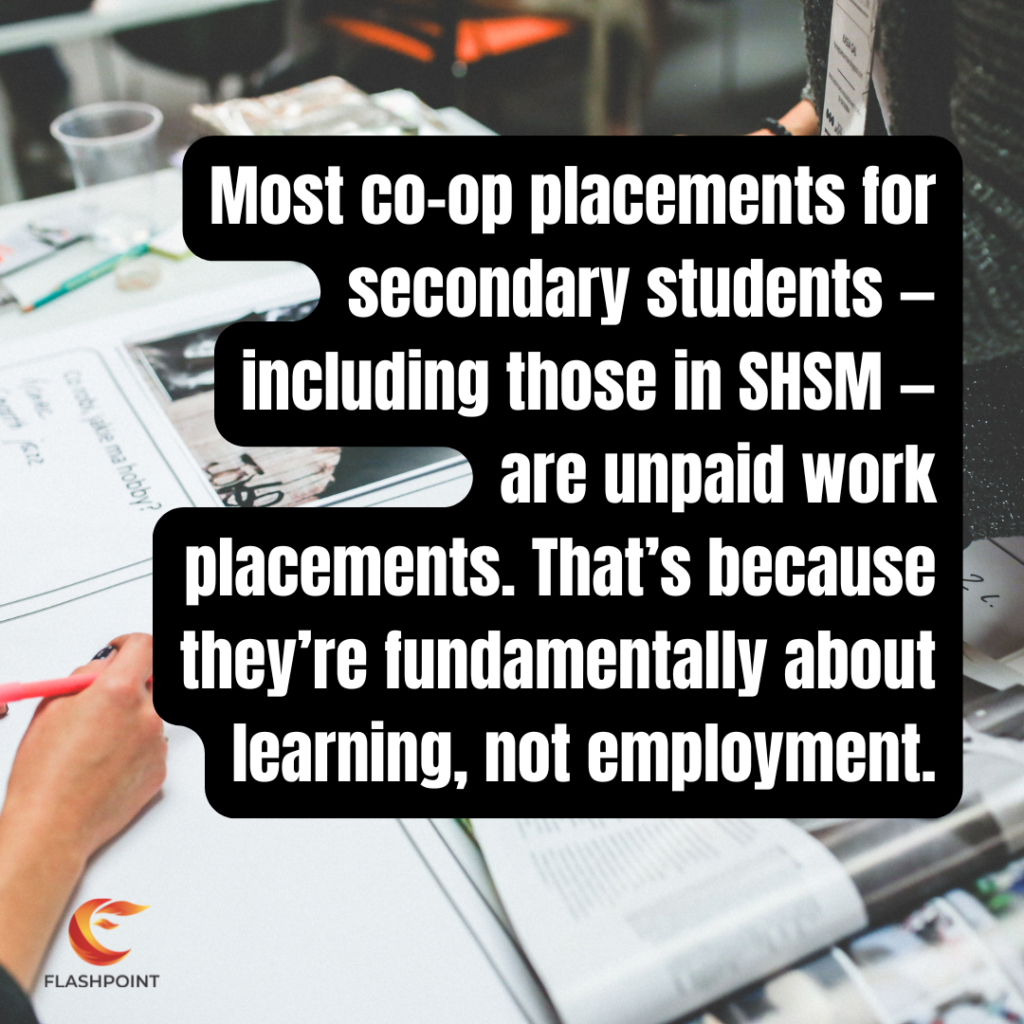
    Most co-op placements for secondary students — including those in SHSM — are unpaid work placements. That’s because they’re fundamentally about learning, not employment. These unpaid placements earn students credits, help them explore careers, and build their portfolio of skills and experience. Ontario

    Paid vs. Unpaid: What’s the Difference (Legally & Practically)

    Unpaid Placements

    • Educationally Required: Unpaid placements are embedded within a curriculum course, especially co-op tied to SHSM. The priority is on learning outcomes, not compensation. Ontario
    • Legal Framework: In Ontario, unpaid placements are permitted only when they are part of a formal educational program — such as high school co-op, college co-ops, or professional practicums. Outside this framework, unpaid placements can violate employment standards. LaunchKO+1
    • Outcome-Focused: The goal isn’t income but skill acquisition, reflection, and documentation that aligns with curriculum expectations. Ontario

    Because SHSM requires students to complete two co-op credits directly connected to their sector, these unpaid placements are standard — and they count toward graduation and SHSM requirements. Upper Grand District School Board

    Paid Placements

    A paid placement means the student is treated as an employee under the Ontario Employment Standards Act (ESA). This has significant legal and logistical implications:

    • Minimum Wage & Employment Standards: If a student is paid, they must receive at least minimum wage and all other ESA protections (vacation pay, statutory benefits, etc.). LaunchKO
    • WSIB and Insurance: Paid students must be covered under workplace insurance appropriate to paid employees — which differs from how unpaid student placements are covered (often by the board or educational insurer). LaunchKO
    • Education vs. Employment: Paid work may not meet the Ministry of Education’s co-op criteria for curriculum-linked learning unless it is structured as a formal co-op program approved by the school. Ontario

    For SHSM students, this matters because only learning-focused placements can be counted toward co-op credits — they must include planned learning experiences, supervision, reflection, and assessment designed by the school. Ontario

    When Paid Work Can Be Compatible With SHSM Goals

    It is possible for a student to undertake paid work that supports their SHSM pathway — but not all paid jobs qualify as co-op or educational placements. Here’s how teachers can distinguish them:

    ✔ Approved Co-op Employers Offering Paid Co-op Roles

    Some employer partners are willing to pay students but structure the work as an approved co-op placement with a learning plan, supervision, and curriculum linkages. In these cases:

    • The student stays in the educational co-op framework.
    • The work still earns a co-op credit because it meets the Ministry and board criteria.
      Teachers must confirm ahead of time that the role will be treated as co-op with the school’s approval.

    ✔ Paid Work That Doesn’t Count as Co-op

    A student’s part-time job or casual paid work — even if it’s in a relevant sector — is not automatically a co-op placement. Unless the school structured it as part of a co-op course with learning objectives and assessment, it cannot be used toward SHSM requirements.

    Highlight this distinction to students: earning money is valuable, but it doesn’t substitute for co-op credit unless it’s formally recognized as such.

    Key Risks Teachers Should Help Students Avoid

    ❗ Misclassifying Work as a Co-op Placement

    A common pitfall is assuming that any job in a related sector counts as co-op. It does not — unless the school has integrated it into the co-op curriculum plan with learning, assessment, and supervision. Ontario

    ❗ Skipping Learning Plans

    Even with paid placements, students must have a Student Cooperative Education Learning Plan that identifies goals, activities, and assessment criteria before placement starts. Without it, the experience may be disallowed in SHSM audits.

    ❗ Ignoring Insurance and Legal Coverage

    Paid roles must be treated as employment; boards and employers need to establish correct insurance and safety coverage. Missteps here can put both students and schools at risk. LaunchKO

    What Teachers Should Tell Students (And Parents)

    Here are concise messages you can use with students — either in classroom presentations, individual planning, or parent communications:

    • “Paid work is great — but it only counts toward your SHSM co-op if we’ve approved it through the co-op program.”
    • “Unpaid co-op placements are educational first; they are designed to help you reflect on your learning, not just work.”
    • “Before you accept any job as part of SHSM co-op, let’s check if we can build a learning plan and link it to your curriculum.”

    Bottom Line: Protecting Students and Program Integrity

    Paid employment has real benefits — especially for students needing income — but it is not interchangeable with co-op placement unless properly structured. Unpaid co-op placements remain the core way that SHSM students earn credits, develop sector-specific skills, and demonstrate readiness for post-secondary pathways. Ontario

    Some school boards permit paid placements during summer,while others only after school. 

    Regardless of the school board position, it is important to set expectations and ensure that  students, parents and employers all understand the rules, responsibilities and expectations of the work placement.

    Your role as a teacher is to help students navigate the difference, make choices that align with both their learning and legal requirements, and ensure that every work experience counts toward their success — academically, professionally, and developmentally.

  • How can SHSM Strengthen Student Post-Secondary Applications in 2025?: Scholarships, Credit Recognition & Competitive Advantages

    How can SHSM Strengthen Student Post-Secondary Applications in 2025?: Scholarships, Credit Recognition & Competitive Advantages

    As SHSM educators and guidance counsellors, we already understand the power of experiential, sector-focused learning. But what often goes under-recognized is how significantly SHSM can shape and strengthen a student’s post-secondary trajectory. Colleges and universities across Ontario are not only acknowledging SHSM — many are now rewarding it through dedicated scholarships, advanced credit, and documented preference in admissions.

    This shift reflects a broader trend: post-secondary institutions want learners who arrive prepared, focused, and experienced. SHSM students check all of those boxes.

    Let’s explore some of the ways in which a SHSM educational experience can help students with their post secondary school choices:

    1. SHSM Experience Signals Readiness, Commitment, and Program Alignment

    Post-secondary programs increasingly value applicants who demonstrate a clear sense of direction and readiness for academic and practical expectations. SHSM provides this through:

    • Sector-focused major credits that align directly with first-year program expectations.
    • Co-op placements that expose students to workplace culture, timelines, safety standards, and sector-specific skills.
    • Industry certifications (e.g., WHMIS, First Aid/CPR, equipment training) that reduce onboarding requirements for labs, shops, or clinical placements.
    • Experiential learning and Reach Ahead activities that give students direct exposure to post-secondary environments — including program visits, workshops, and campus tours.

    In competitive programs—such as health sciences, business, ICT, engineering technologies, early childhood education, and trades-related fields—SHSM acts as a “pre-program experience base.” Admissions officers recognize that students who complete SHSM often transition more smoothly, succeed earlier, and demonstrate higher engagement in their studies.

    When reviewing applications, many post-secondary evaluators note that SHSM documentation provides a clearer picture of a student’s interests and capabilities than traditional transcripts alone.

    2. Verified Scholarships & Awards Available Specifically for SHSM Graduates

    One of the most concrete advantages of SHSM is financial: numerous Ontario institutions offer scholarships awarded only to SHSM graduates. These awards provide significant incentive for students to not only enter SHSM, but complete it fully.

    University of Guelph-Humber — $1,000 Entrance Award

    Eligible SHSM graduates entering specific programs can receive a dedicated $1,000 award.

    St. Clair College — $1,000 High Skills Scholarship

    Awarded to incoming SHSM graduates who meet required averages.

    Algoma University — $500 SHSM Award

    For first-year, full-time students entering after completing SHSM.

    Trent University — Up to $2,000 SHSM Scholarship

    One of the largest SHSM-specific entrance awards in Ontario.

    Additional Awards from Colleges & Universities Across Ontario

    An Ontario-wide summary highlights dozens of institutions recognizing SHSM through bursaries, entrance scholarships, and incentives.

    For students who may face financial barriers, these awards can make a measurable difference. For educators, they serve as persuasive evidence during SHSM recruitment and family information sessions.

    3. Advanced Credit: A Growing Form of SHSM Recognition

    Although scholarships are common, advanced credit is emerging as a powerful form of SHSM recognition.

    McMaster University — First-Year Credit for SHSM Graduates

    Eligible SHSM graduates entering McMaster’s Faculty of Social Sciences may receive one free first-year credit, reducing both course load and tuition cost.

    This example demonstrates that SHSM can do more than strengthen applications — it can directly affect academic progression. As more institutions look for ways to acknowledge experiential learning, educators should anticipate further growth in this area.

    Advanced credit also aligns well with OYAP-connected SHSM sectors, where apprenticeship pathways use documented hours and certifications to accelerate progress.

    4. SHSM Documentation Provides Tangible Proof of Skills and Experience

    Students graduating with SHSM receive:

    • An OSSD embossed with the red SHSM seal,
    • A detailed SHSM Record documenting certifications, Reach Ahead experiences, co-op placements, and sector-partnered experiences.

    This documentation is especially valuable for:

    • Competitive program admissions, where practical experience can differentiate applicants.
    • Supplementary applications, portfolios, and interviews.
    • Apprenticeship registrations, where safety training and work experience reduce onboarding time.
    • Early employment, where certifications like CPR, WHMIS, or equipment training signal immediate workplace readiness.

    For guidance counsellors, these documents are key advising tools. For admissions teams, they provide concrete evidence of the skills behind the application.

    5. How SHSM Educators Can Use This Information in Recruitment, Advising, and Pathway Planning

    During Course Selection and SHSM Recruitment

    • Highlight real, verifiable post-secondary benefits — especially scholarships and credit recognition.
    • Showcase sector-specific examples to demonstrate direct alignment with student goals.
    • Use the McMaster and Guelph-Humber examples to reinforce credibility.

    During Postsecondary Application Season

    • Ensure students indicate SHSM completion on OUAC/OCAS.
    • Encourage students to submit documentation with supplementary applications.
    • Assist students in applying to scholarships tied directly to SHSM.

    In Parent-Night Presentations or Staff PD

    • Present a concise overview of the financial and academic impact of SHSM completion.
    • Demonstrate that SHSM is not just experiential — it’s strategic preparation for post-secondary success.

    Conclusion: SHSM Is Evolving into a Recognized Postsecondary Asset

    The trend is clear: Ontario post-secondary institutions are increasingly rewarding the skills, experience, and preparation that SHSM provides. From scholarships, to advanced credit, to stronger admission profiles, SHSM is emerging as one of the most strategic pathways for students who want a competitive edge after high school.

    For educators, these verified examples provide powerful, credible messaging for recruitment, advising, and student support — reinforcing that SHSM is far more than a high school program. It is a launchpad.