Category: SHSM Certifications

  • How SHSM Supports Student Success

    How SHSM Supports Student Success

    SHSM Helps Students See the “Why” In Career Preparation…

    From a teacher’s perspective, SHSM is one of the most effective tools we have for increasing student engagement. Not because it makes school easier—but because it makes school feel meaningful.

    A lot of students struggle with motivation in high school for a simple reason: they don’t see the point. They show up, complete assignments, earn credits, and move on, but they don’t understand how any of it connects to the real world. For some students, school starts to feel like something they have to survive rather than something that’s helping them build a future.

    SHSM changes that.

    When students join a Specialist High Skills Major program, they’re no longer just earning credits—they’re building a pathway. They’re gaining certifications, participating in hands-on experiences, meeting professionals, and learning about real careers. That shift helps students connect learning to real outcomes, and once that connection is made, the change in student mindset can be dramatic.

    SHSM gives students a reason to care. And when students care, everything improves.

    SHSM Improves Attendance Because Students Want to Be There

    One of the first changes many teachers notice in SHSM students is improved attendance.

    It’s not that SHSM magically fixes every barrier students face. But it does something powerful: it creates days students don’t want to miss.

    When a student knows they have a workshop, a sector event, a trip, or a guest speaker coming up, school stops feeling repetitive. It becomes something they’re actively participating in. It is a day away from the ordinary. For students who have struggled with consistency, that matters.

    Even students who aren’t “school people” often show up for SHSM experiences because they feel different. They feel real. They feel like opportunities.

    Over time, those moments of engagement can strengthen routines and improve overall attendance—not just on event days, but in regular classes too.

    SHSM Builds Motivation Through Real-World Purpose

    Motivation isn’t something we can force. Students don’t become motivated because we tell them to. They become motivated when they feel a connection to a speaker, a career panelist or a campus visit.

    SHSM builds that value by connecting learning to careers and future goals.

    Instead of asking students to complete work “because it’s on the test,” SHSM allows teachers to frame learning in a more meaningful way:

    “This is the kind of skill employers expect.”
    “This is what people in this field actually do.”
    “This certification can help you get hired.”
    “This experience can help you choose the right program after graduation.”

    When students understand that what they’re doing matters, they’re more willing to try. They ask better questions. They participate more. They care about the quality of their work because they see it as practice for their future—not just schoolwork for marks.

    That’s one of the biggest reasons SHSM supports student success: it turns learning into something students can use.

    SHSM Strengthens Communication Skills

    SHSM naturally builds communication skills because students are placed into situations where communication is required.

    When students attend a workplace tour, participate in a workshop, or listen to a guest speaker, they have to practice skills that many students struggle with at first, such as:

    • introducing themselves professionally
    • making eye contact and listening actively
    • asking thoughtful questions
    • speaking respectfully to adults they don’t know
    • working with peers in a structured environment
    • reflecting on what they learned

    These are employability skills, but they’re also life skills.

    In many classrooms, students can stay quiet and still “get through” the course. In SHSM experiences, students are gently pushed to show up differently. They’re not just passive learners—they’re participants.

    And what’s interesting is that students often become more confident communicators in SHSM before they become more confident academically. Once they can speak up in a real-world setting, it becomes easier for them to speak up in class too.

    SHSM Helps Students Create Clearer Post-Secondary Plans

    A major challenge for many students is that they don’t know what comes next after high school.

    Some students feel pressure to choose a pathway too early. Others avoid thinking about it because it feels overwhelming. Some students think they only have one option, when in reality they have many.

    SHSM helps students plan because it provides structured exposure to pathways like:

    • apprenticeship
    • college
    • university
    • workplace

    Through reach-ahead experiences, sector exploration, and discussions with professionals, students start to understand what different pathways look like and what they require.

    Instead of making decisions based on guesses or social media opinions, students begin making decisions based on real information.

    They learn things like:

    • what prerequisites they need
    • what programs exist beyond the ones they’ve heard of
    • what training paths are available in their sector
    • what the daily reality of certain careers looks like

    This is one of the most valuable outcomes of SHSM. Even if students change their minds later, they are making decisions with more clarity and less anxiety.

    SHSM Builds Confidence Through Small Wins and Real Experiences

    Confidence is one of the most important predictors of student success—and SHSM builds it in a way that many students genuinely need.

    Some students have spent years feeling like they’re “not good at school.” They may have struggled with grades, focus, behaviour, or motivation. Over time, they can start to believe they aren’t capable of success.

    SHSM gives students a different way to succeed.

    When students earn certifications, complete hands-on tasks, or participate in sector experiences, they start collecting proof that they can do hard things. They see themselves learning skills that adults value. They experience success outside of tests and essays.

    For many students, SHSM provides their first real “I can do this” moment in high school.

    And once students believe they can succeed, they begin acting like it. They take more risks. They try harder. They set goals. They take themselves seriously.

    That’s what SHSM does best—it helps students see themselves differently.

    SHSM Supports Success for Different Types of Learners

    One of the reasons SHSM works so well is that it supports students who learn in different ways.

    Some students thrive in academic settings. Others thrive when learning is hands-on, interactive, and connected to real outcomes. SHSM creates space for students who may not shine in traditional classrooms to show their strengths.

    It also supports students who need structure and clarity. SHSM has clear components and completion goals, which can help students stay focused.

    For many learners, SHSM is where school finally starts to make sense.

    Final Thoughts: SHSM Doesn’t Just Support Student Success — It Changes Student Direction

    SHSM is not just a program. It’s a turning point for many students.

    From a teacher’s perspective, SHSM supports student success because it makes learning real. It improves attendance because students want to be there. It increases motivation because students understand the purpose. It strengthens communication skills because students practice them in authentic settings. It supports clearer post-secondary plans because students gain real exposure. And it builds confidence because students collect real evidence of growth.

    Most importantly, SHSM helps students feel like they have a future they can step into.

    And when students believe that, they start showing up differently—not just in SHSM, but in school and in life.

    By Carmen Reis, CPA

    CEO, Flashpoint Training, Inc.

    Reach out to Carmen with your comments, questions or feedback by email at Carmen@flashpointtraining.com

  • SHSM Tracking Made Simple — 5 Systems That Reduce Teacher Workload (Ontario)

    SHSM Tracking Made Simple — 5 Systems That Reduce Teacher Workload (Ontario)

    SHSM Documentation Doesn’t Have to Drain Teachers

    If SHSM documentation feels like a second job, you’re not alone. Most SHSM teachers don’t just teach — they track. And that tracking can quietly become one of the most stressful parts of running the program.

    The good news is that SHSM tracking can become manageable, and it doesn’t require fancy tools, complicated spreadsheets, or extra meetings. What it requires is a system that is simple enough to use consistently and easy enough for multiple staff members to follow.

    The goal is not to build a perfect tracker that no one touches after September. The goal is to build a tracking routine that makes SHSM easier as the year goes on, especially during the busiest times of the school year. Here are five strategies that work in real schools and reduce the pressure on SHSM leads.

    1) Create One Master SHSM Tracker

    This is the number one fix for SHSM tracking stress because it eliminates confusion immediately. A “single source of truth” means one place where SHSM completion is tracked. One tracker. One official record. One version.

    It could be:

    • one shared Google Sheet
    • one spreadsheet stored in a shared drive
    • one LMS-based tracker
    • one board-approved tracking tool

    The format matters less than the consistency. What matters is that every staff member involved in SHSM knows: this is the official tracker.

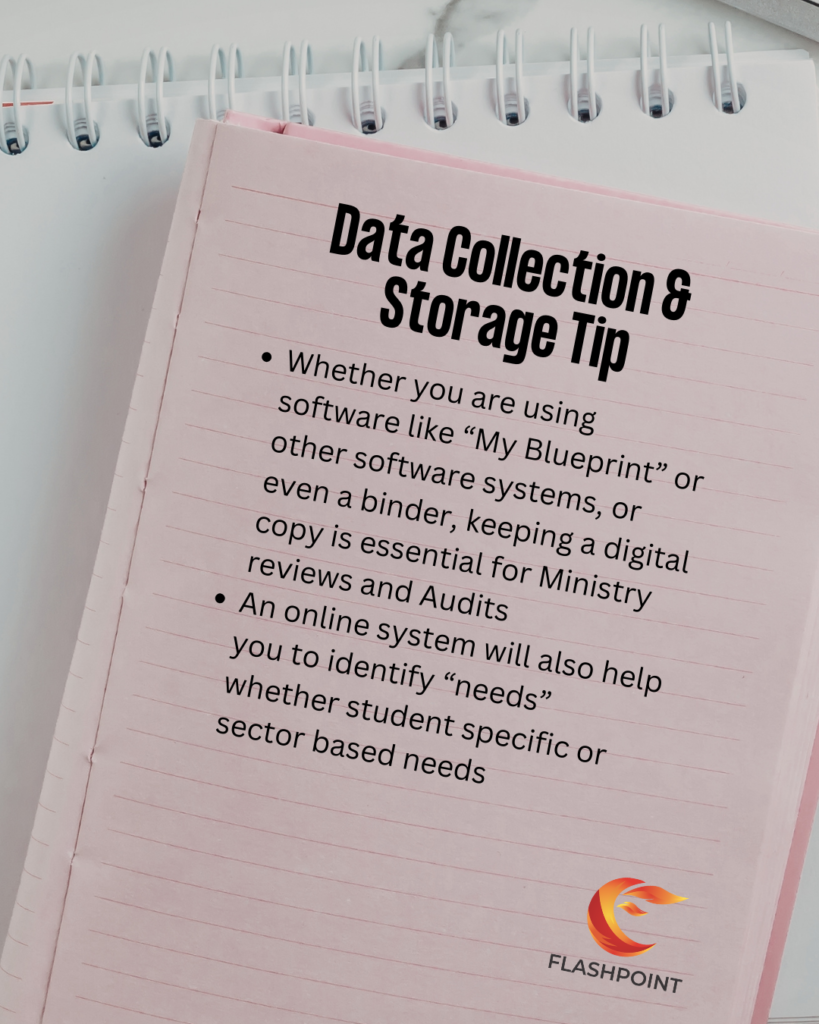
    When you establish one master tracker, you reduce the risk of missing students, duplicating records, or scrambling at the end of the year to figure out who has done what. It also makes it easier to support students who are behind, because you can see gaps early instead of discovering them in June.

    A master tracker also protects your SHSM program long-term. If a staff member changes roles, goes on leave, or transfers, the program doesn’t lose its structure because the system is shared and visible.

    2) Track in Real Time (Not at the End)

    SHSM tracking becomes overwhelming when it is delayed. Most of the “tracking panic” teachers feel comes from having to reconstruct what happened months ago.

    When teachers try to document everything at the end of the semester, it turns into:

    • guessing who attended what
    • searching for proof
    • chasing students for reflections
    • rebuilding records from memory

    Instead, strong SHSM programs update tracking immediately after each event. This doesn’t need to be a big task. Even five minutes after an experience can prevent hours of work later.

    Real-time tracking also helps you catch problems early. If a student missed something, you can plan a make-up option right away while there is still time. You can also communicate sooner with students who are falling behind, rather than waiting until it becomes a crisis.

    A helpful habit is to build tracking into the event routine. For example, the day after a trip or guest speaker, the SHSM lead updates attendance and uploads any evidence. When you do this consistently, tracking becomes routine instead of stressful.


    3) Make Evidence Collection Automatic

    One of the best ways to reduce teacher workload is to stop treating evidence like something you collect later. If evidence collection depends on memory, it becomes inconsistent and frustrating.

    Instead, build evidence into the experience itself so proof is created automatically while students are still engaged.

    Here are simple methods that work well:

    QR Code Sign-Ins

    Students scan a QR code when they arrive. Attendance is instantly recorded and stored digitally, which is faster and more reliable than paper sheets that can go missing.

    Simple Exit Tickets

    A one-question exit ticket can be enough:
    “What did you learn today that connects to your SHSM sector?”
    It’s quick, it’s easy, and it creates documentation immediately.

    Photo Proof (Where Allowed)

    If your board or school policy allows it, photos can provide evidence. Even photos of student work, equipment, or learning stations (without faces) can support documentation and show the learning that took place.

    Digital Reflections

    Google Forms or Microsoft Forms make reflection evidence easy because they:

    • collect responses automatically
    • timestamp submissions
    • store everything in one place
    • reduce missing paperwork

    When evidence is automatic, tracking becomes simpler and less stressful. It also makes the learning more meaningful because reflection becomes part of the experience, not something tacked on later.


    4) Build Student Responsibility Into the System

    SHSM works best when students understand that completion is a shared responsibility. Teachers should not be the only ones tracking progress, especially when students are capable of managing simple checklists and expectations.

    Students should not find out in June that they’re missing requirements. They should know where they stand throughout the year, and they should be able to see what they still need to complete.

    A simple solution is giving students a visible checklist or progress tracker. It can be:

    • a one-page checklist
    • a shared digital tracker
    • a monthly “completion check-in” form

    When students can see their progress, they become more accountable. They also become more motivated because completion feels real and achievable instead of vague.

    Student responsibility reduces teacher workload because it decreases follow-up. When students understand what they need, they are more likely to submit reflections on time and show up prepared for experiences.

    5) Schedule SHSM Completion Checkpoints

    Many programs treat tracking as something you do at the end. That’s what creates the June panic. When tracking is delayed, missing requirements pile up and teachers are forced into last-minute problem solving.

    Instead, schedule checkpoints throughout the year so you can solve small issues early. For example:

    • November check-in
    • February check-in
    • April check-in
    • May final audit

    Checkpoints make tracking manageable because you’re reviewing progress in smaller pieces rather than trying to fix everything at once. They also improve student success because students who fall behind can be supported while there’s still time to catch up.

    These checkpoints don’t need to be long meetings. They can be quick tracker reviews, short student check-ins, or simple reminders sent to students who need make-up opportunities. The key is consistency.


    Final Thoughts: SHSM Tracking Can Be Simple, Consistent, and Sustainable

    SHSM documentation can feel exhausting, but it doesn’t have to stay that way. Most tracking stress comes from systems that are unclear, inconsistent, or delayed until the end of the year.

    When SHSM teams commit to one tracker, real-time updates, automatic evidence collection, student accountability, and scheduled checkpoints, the workload becomes lighter and the program becomes smoother.

    And the biggest win is this: when tracking is organized, teachers get to focus on what SHSM is actually meant to be — meaningful experiences that help students build confidence, explore careers, and feel excited about their future.

  • What Counts As Reach-Ahead Experiences in SHSM?

    What Counts As Reach-Ahead Experiences in SHSM?

    Why Reach-Ahead Experiences Matter…

    Reach-ahead experiences are one of the five required components of Ontario’s Specialist High Skills Major (SHSM) program. Together with certifications, experiential learning, sector-partnered experiences (SPEs), and co-op (if applicable), reach-ahead activities help students connect high school learning to future pathways—whether that’s apprenticeship, college, university, or direct entry to the workplace.1

    In a strong SHSM program, reach-ahead experiences are not just “another checkbox.” They help students:

    • clarify their post-secondary goals
    • build confidence for life after high school
    • compare options before they commit
    • make informed decisions about apprenticeship, college, university, and careers

    But the term “reach-ahead experience” is often misunderstood. People may struggle to distinguish it from experiential learning or Sector-Partnered Experiences (SPEs). So, what qualifies as a reach-ahead experience, and how can you plan them in ways that are easy to implement and document?

    What Is a Reach-Ahead Experience in SHSM?

    According to the Ontario SHSM policy, a reach-ahead experience is a learning opportunity that helps students prepare for their next step after high school—whether that’s apprenticeship, college, university, or the workplace. It’s designed to give students information, exposure, and confidence about pathways they might pursue. The experience should be connected to the student’s own post-secondary goals, not just their SHSM sector.1

    Reach-ahead experiences differ from general classroom instruction because they push students to explore beyond the school environment and think critically about future transition points in their careers and education.

    How Reach-Aheads Are Different From Other SHSM Components

    To plan reach-ahead experiences effectively, it helps to understand what they are not:

    Reach-Ahead vs Experiential Learning

    Experiential learning focuses on connecting students with careers and workplaces in their SHSM sector (e.g., tours, job shadowing, guest speakers).[^^2] These are about sector exposure.

    Reach-ahead experiences focus on future pathways — what comes next after high school. They help students explore post-secondary options and develop real clarity on their direction.

    For example:

    • A tour of a hospital (experiential learning) helps students understand the sector.
    • A visit to a university health sciences program (reach ahead) helps students understand post-secondary education requirements and options.

    Reach-Ahead vs Sector-Partnered Experiences (SPEs)

    SPEs are structured learning events co-designed with industry partners that build sector skills through innovation, coding, or math literacy and have a practice/skills focus.2
    Reach-ahead experiences are about pathways planning and post-secondary exploration, not necessarily skills application.


    What Qualifies as a Reach-Ahead Experience

    Flashpoint Training - SHSM Blog - What Qualifies as a Reach-Ahead Experience (Supported by Policy)

    The SHSM policy guide describes reach-ahead experiences as activities that help students explore and prepare for their next steps after secondary school, such as post-secondary education or workplace entry.1 The policy emphasizes that these experiences should assist with confidence, skill refinement, and informed decision-making about future plans.

    Here are common, valid examples of reach-ahead experiences:

    Reach-Ahead Experience Examples That Count

    1) College and University Visits

    Visiting a college or university program is a classic reach-ahead experience because it exposes students to real post-secondary expectations, facilities, course structure, and requirements. Students can ask questions about:

    • admissions criteria
    • program content
    • campus resources
    • pathways and prerequisites

    A visit to a technology drafting lab or health sciences wing can provide clarity about what students want — or don’t want — to pursue.

    2) Apprenticeship Pathway Exploration

    Apprenticeship reach-aheads might include:

    • visiting an apprenticeship training centre
    • meeting with a journeyperson or trades representative
    • attending a municipal apprenticeship information session

    These experiences help students understand how apprenticeship works (levels, on-the-job hours, in-class training) and decide if it matches their goals.

    3) Workplace Pathway Preview Activities

    Some students plan to go directly into the workforce after graduation. But for other students, seeing a. “job in action” can give them insight into whether that career might be for them”. A reach-ahead experience might include:

    • work readiness workshops
    • resume/interview skill sessions
    • employer panels focused on hiring expectations for entry-level roles

    This type of reach-ahead helps students who aren’t planning post-secondary studies prepare for real jobs and careers.

    4) Postsecondary Presentations or Panels

    Events such as:

    • university/college fairs
    • apprenticeship info nights
    • employer-hosted pathway presentations

    can qualify. The key is that students understand what comes next — not just what a job is, but how to get into training for that job.

    .

    Planning Your Reach-Ahead Experiences So They Count

    Ontario’s SHSM policy doesn’t require a specific number of reach-aheads, but it does expect that students have opportunities to explore future pathways in meaningful ways. The quality matters more than quantity.

    Here’s how to plan reach-aheads effectively:

    1) Connect It to Each Student’s Future Plans

    Student interest should guide the choice of reach-ahead. A one-size-fits-all trip isn’t as effective as targeted experiences that address students’ ambitions.

    Example: Students applying to college health programs visit a college health sciences open house.

    2) Prepare Students Before the Experience

    Reach-ahead experiences are more impactful when students arrive with context:

    • Know what questions to ask
    • Understand the purpose of the experience
    • Have a clear goal for the visit

    Preparation helps students focus on what matters most for them.

    3) Follow Up With Reflection

    Reflection is not optional. If students can’t articulate what they learned, the experience loses value.

    Effective reflections include questions like:

    • What did I learn about this pathway?
    • What skills or training are required?
    • How did this experience change my thinking about my future?

    Reflections should be documented in student portfolios.

    A Quick Teacher Checklist: Does This Count as a Reach-Ahead?

    Use this simple checklist to confirm that an activity counts as a reach-ahead experience:

    • ✔ Does it help students explore post-secondary pathways?
    • ✔ Does it go beyond general sector knowledge to focus on future plans?
    • ✔ Did students prepare before and reflect after?
    • ✔ Is it connected to students’ intended career or education goals?
    • ✔ Can you document it for SHSM tracking (attendance + reflection)?

    If you can answer yes to all of these, you are aligned with SHSM policy expectations.

    Final Thoughts: Reach-Aheads Bridge Today and Tomorrow

    Reach-ahead experiences are one of the most impactful parts of SHSM because they help students connect what they are doing now with where they are going next.

    Whether a student is planning apprenticeship, college, university, or workforce entry, well-designed reach-ahead experiences give them clarity, confidence, and a sense of direction. They also support stronger pathway decisions — so students are less likely to change programs after graduation because they didn’t fully understand their options.

    For SHSM teachers, reach-ahead experiences can feel like another planning piece — but when done well, they provide some of the richest student learning and outcomes in the whole program.

    References (Works Cited)

    1. Ontario Ministry of Education. Specialist High Skills Major (SHSM) Policy and Implementation Guide — Reach-Ahead Experiences. Government of Ontario. https://www.ontario.ca/document/specialist-high-skills-major-shsm-policy-and-implementation-guide/reach-ahead-experiences?utm_source=chatgpt.com ↩ ↩23
    2. Ontario Ministry of Education. Specialist High Skills Major (SHSM) Policy and Implementation Guide — Sector-Partnered Experiences. Government of Ontario. https://www.ontario.ca/document/specialist-high-skills-major-shsm-policy-and-implementation-guide/sector-partnered?utm_source=chatgpt.com
  • What Counts as a Sector-Partnered Experience (SPE) in SHSM? (Teacher Guide)

    What Counts as a Sector-Partnered Experience (SPE) in SHSM? (Teacher Guide)

    Why Understanding SPEs Matters for SHSM Teachers

    In Ontario’s Specialist High Skills Major (SHSM) program, students must complete five required components to earn the SHSM designation on their Ontario Secondary School Diploma (OSSD), and Sector-Partnered Experiences (SPEs) are one of them.[^1]

    Experiential learning and reach-ahead experiences get a lot of attention, but SPEs are often misunderstood. When done well, they deepen students’ sector knowledge and connect academic learning to innovation, technology, and real workplace problem-solving. Unlike general experiential activities (like tours or guest speakers), SPEs are designed and delivered with sector partners, involve core skills like innovation or coding, and include structured reflection.

    This guide breaks down exactly what counts as an SPE, what it is and is not, how to plan them, and how to document them so they meet SHSM policy requirements.

    What Is a Sector-Partnered Experience (SPE)?

    A Sector-Partnered Experience (SPE) is a structured learning activity that allows SHSM students to engage with an external partner (such as an employer, industry group, business or post-secondary institution) in a way that builds sector-specific skills and understanding.

    Key aspects of SPEs include:

    • Co-design and co-delivery
    The experience must be designed and delivered by both teachers and sector partners in the chosen SHSM field. This is not simply an outing or a visit; it’s a collaborative learning event developed with industry input.

    • Focused content
    All SPEs focus on at least one of the following areas:

    • Innovation, Creativity, and Entrepreneurship (ICE)
    • Coding (computer programming)
    • Mathematical literacy
      These areas are intentionally linked to future workplace needs and help students apply their learning in authentic ways.

    • Sector relevance
    The experience must connect to the student’s specific SHSM sector. For example, an SPE for Health and Wellness might focus on healthcare technology development, while an SPE for Construction could involve innovation in sustainable building processes.

    • Duration and documentation
    An SPE should be approximately 6 hours in duration (which may be split over multiple days), and, whenever possible, should include documentation that can be added to a student’s SHSM record or portfolio (like completion certificates or project artifacts).

    • Self-assessment and reflection
    Like other SHSM activities, SPEs must conclude with a structured reflection or self-assessment that helps students articulate what they learned about the skills and mindsets involved.

    How an SPE Differs From Other SHSM Experiences

    It’s helpful to compare SPEs with other SHSM components to see what makes them unique.

    SPE vs. Experiential Learning Activities

    Experiential learning (e.g., workplace tours, job shadowing, guest speakers, skill competitions) is a broader category of activities that take place outside the traditional classroom. These are focused on career exposure and exploration.[^5] What sets SPEs apart is the co-design and co-delivery with a partner, emphasis on innovation/coding/math literacy, and a more substantial learning commitment than a single visit or speaker session.

    SPE vs. Reach-Ahead Experiences

    Reach-ahead experiences help students plan for post-secondary pathways (apprenticeship, college, university or workplace). While a reach-ahead activity might be visiting a college program or attending a career fair, an SPE is intentionally linked to sector skill development using ICE, coding or math literacy within the sector context, not just exposure.

    Examples of SPEs That Count

    To be a valid SPE, the experience must meet the criteria above. Here are examples that fulfill those expectations:

    Innovation, Creativity, and Entrepreneurship (ICE) Projects

    An SPE could be a hands-on workshop where students collaborate with a sector partner to solve a real problem using innovation and entrepreneurial thinking. For example, in a Business SHSM, students could work with a local entrepreneur to design a product prototype and pitch it to a panel of local business leaders.

    Coding and Technology Integration

    For Information and Communications Technology SHSM students, an SPE could involve co-creating a small software application with a local tech company where students learn coding practices, version control, and testing processes.

    Mathematical Literacy in Context

    In a Construction SHSM, an SPE might involve working with industry engineers to apply mathematical reasoning to real on-site problems—such as calculating load factors or material estimates—and then reflecting on how math supports engineering work.

    Sector-Specific Integrated Events

    An SPE could take the form of a multi-day event where students engage with sector professionals on various tasks—such as designing a marketing plan with an industry partner for a Hospitality and Tourism SHSM—with outcomes documented in a portfolio.

    These activities go beyond simple exposure and help students learn skills that align with both their sector and broader workforce needs.

    SPE Planning Considerations for Teachers

    Because SPEs involve partnerships and design work, they require intentional planning:

    Hit required elements first:
    Make sure the activity is co-developed with partners, and intentionally connects to ICE, coding, or mathematical literacy within your SHSM sector.

    Use local partners wisely:
    Many boards can partner with local employers, industry groups, post-secondary institutions or non-profits who bring practical projects to students. Local sector context makes SPEs more relevant.

    Plan for reflection and documentation:
    Build structured reflection into the activity so students can articulate what they learned and how the skills apply to their future plans. Reflection also makes documentation easier for SHSM tracking.

    Consider flexible delivery:
    You can deliver SPEs over one full day or multiple half-days—many schools choose a mix so students can engage deeply without disrupting other learning commitments.

    Why SPEs Matter for Students

    An SPE isn’t just another checkbox. It’s a meaningful learning experience that helps students:

    • Build real skills
    SPEs intentionally blend academic learning with sector skills that matter in the workplace.

    • Gain confidence in problem-solving
    Students apply innovation, coding, or math literacy in practical contexts.

    • Strengthen sector knowledge
    Working directly with industry partners exposes students to current practices and expectations.

    • Document meaningful growth
    SPE artifacts and reflections help students build richer portfolios for post-secondary applications.

    In short, SPEs help students move from “observing” a sector to actively participating in it.

    Final Thoughts

    Sector-Partnered Experiences are a core part of what makes SHSM powerful. They are not just trips or guest speakers. They are deep, partner-driven learning experiences that build both sector knowledge and essential skills related to innovation, technology, and mathematical thinking.

    When planned and delivered well, SPEs bridge the gap between the classroom and real work—and that is exactly what SHSM is designed to do.

    References

    1. Ontario Ministry of Education. Sector-Partnered Experiences (SPEs) | SHSM Policy and Implementation Guide. Government of Ontario. https://www.ontario.ca/document/specialist-high-skills-major-shsm-policy-and-implementation-guide/sector-partnered
    2. Ontario Ministry of Education. Components of an SHSM | SHSM Policy and Implementation Guide. Government of Ontario. https://www.ontario.ca/document/specialist-high-skills-major-shsm-policy-and-implementation-guide/components-shsm
    3. Ontario Ministry of Education. Specialist High Skills Major (SHSM) Policy and Implementation Guide. Government of Ontario. https://www.ontario.ca/document/specialist-high-skills-major-shsm-policy-and-implementation-guide
    4. Ontario Ministry of Education. Steps for planning and delivering an SPE | SHSM Policy and Implementation Guide. Government of Ontario. https://www.ontario.ca/document/specialist-high-skills-major-shsm-policy-and-implementation-guide/steps-planning-and
    5. London District Catholic School Board SHSM overview noting SPE as part of required components. https://mts.ldcsb.ca/apps/pages/index.jsp?pREC_ID=1360202&type=d&uREC_ID=1076519
  • SHSM Planning Got You Stressed? Try an Agile Work Model Instead….

    SHSM Planning Got You Stressed? Try an Agile Work Model Instead….


    SHSM Planning Doesn’t Have to Feel Like a Second Job

    If you’ve ever supported an SHSM program in Ontario, you’ve probably felt it: the pressure of trying to do something meaningful for students while also trying to keep everything organized behind the scenes.

    That pressure makes sense. SHSM is one of the strongest student engagement programs in Ontario because it connects learning to real careers. But it’s also one of the most complex programs to deliver, because it isn’t “one class.” SHSM includes a sector-focused credit bundle, certifications, experiential learning, reach-ahead opportunities, and documentation requirements that all have to be coordinated across a school year.

    For many SHSM leads and teachers, the challenge isn’t motivation. It’s capacity. SHSM planning can start to feel like a second full-time job—especially when you’re trying to run it on top of teaching, assessment, supervision, and daily school demands.

    The good news is that SHSM planning becomes much easier when you stop treating it like a series of emergencies and start treating it like a system.

    This blog is a solution-focused guide to doing exactly that.

    The SHSM Planning Shift That Changes Everything: Build a System, Not a To-Do List

    The most common reason SHSM implementation feels overwhelming is that teachers are trying to hold too many moving parts in their heads at once.

    You’re planning certifications. You’re trying to schedule guest speakers. You’re coordinating trips and experiences. You’re collecting reflections. You’re tracking student progress. You’re communicating with families. You’re working with guidance. You’re making sure requirements are met.

    And you’re doing all of this while teaching full time.

    When SHSM planning is managed as a giant to-do list, it becomes reactive. You spend the year responding to what’s urgent, rather than working through a plan.

    A more sustainable approach is to run SHSM like a year-long project. That means using a timeline, checkpoints, and shared responsibilities—just like you would for a major school event or department initiative.

    When SHSM is structured like a project, it becomes predictable. And predictable is what reduces stress.

    Step 1: Create a Visible SHSM Program Map (Your #1 Simplification Tool)

    If there is one tool that makes SHSM planning easier, it’s this:

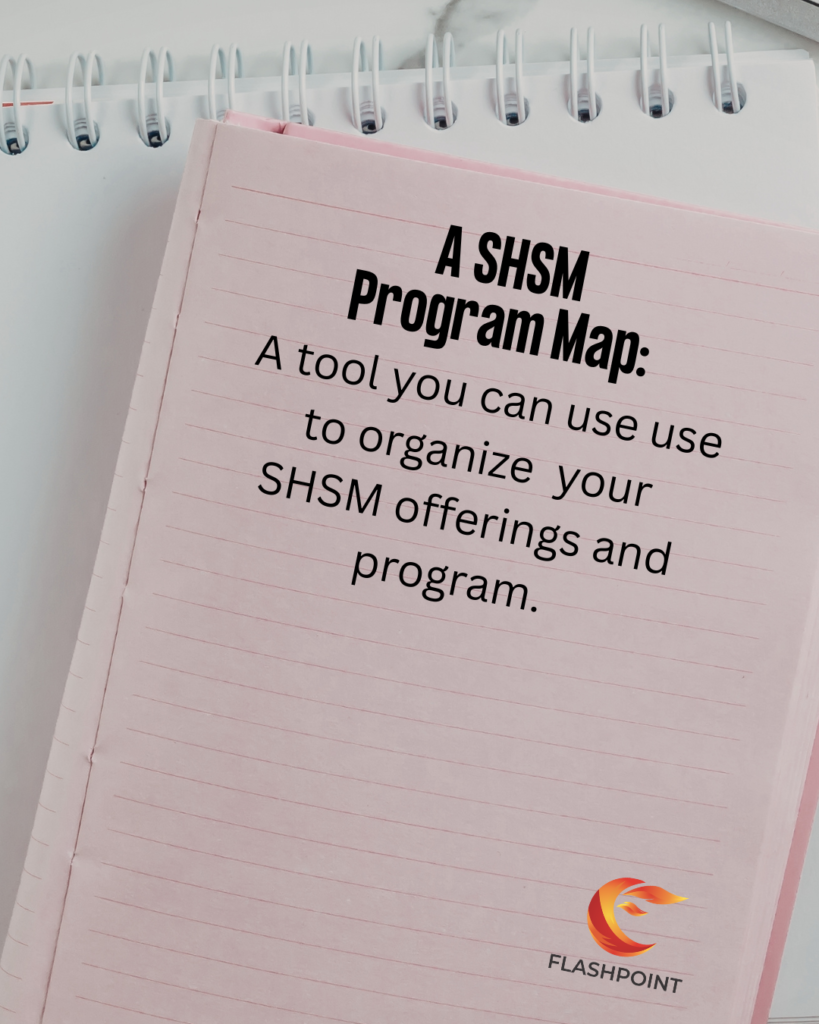
    A program map you can see.

    A program map is a simple overview of what needs to happen across the year. It doesn’t need to be complicated. It can be a one-page document, a shared calendar, or a digital planning sheet. The point is not to create more paperwork—the point is to stop relying on memory.

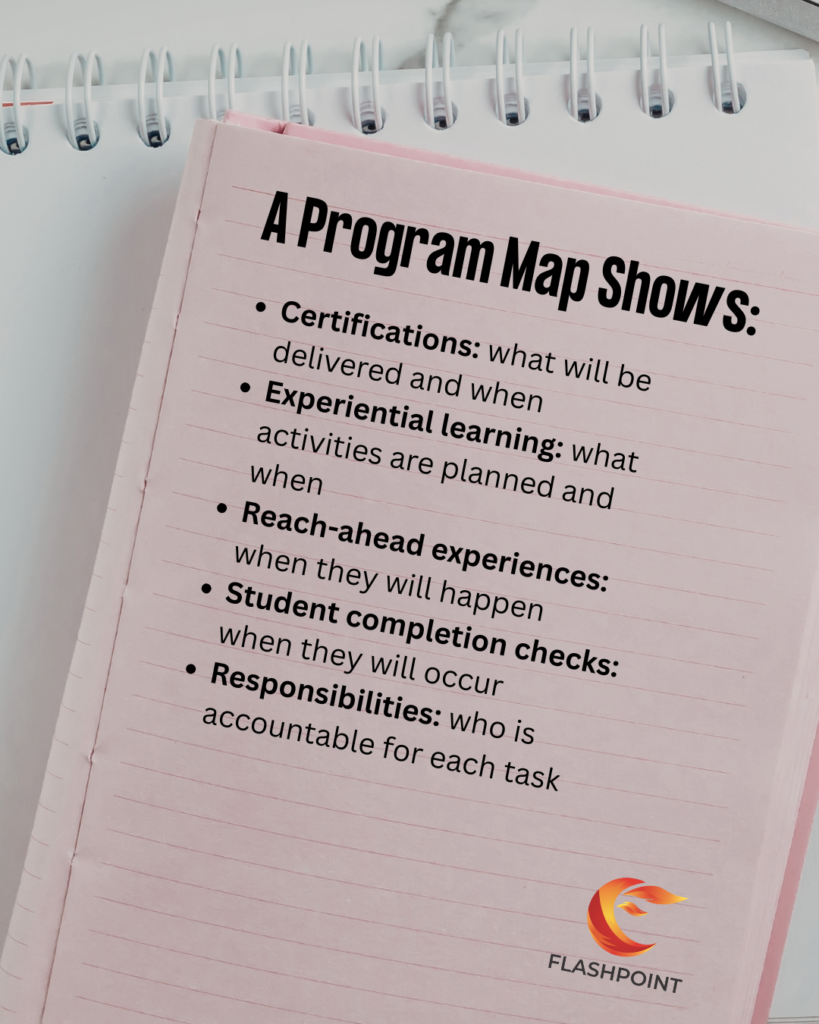
    A strong SHSM program map clearly shows:

    • what certifications will be delivered and when
      what experiential learning activities are planned and when
      when reach-ahead experiences will happen
    • when student completion checks will happen
    • who is responsible for each task

    When SHSM requirements are visible, teachers can plan proactively instead of constantly playing catch-up. It also makes SHSM easier to explain to students and staff, because the year is organized in a way people can understand.

    Most importantly, a program map reduces anxiety. When you can see that the year is accounted for, you stop worrying about what you might be missing.

    Step 2: Stop Doing Everything Yourself (Even If You’re the Lead)

    Another major reason SHSM planning becomes exhausting is that it often depends on one person.

    In many schools, one teacher becomes the organizer of everything. That teacher holds the calendar, the partner contacts, the student tracking, the event planning, and the problem-solving.

    That level of responsibility is admirable—but it’s not sustainable. If that person is away, changes roles, or simply burns out, the program becomes fragile.

    Take a Lesson From Agile Software Development: Split SHSM by Tasks, Not by One “SHSM Super-Teacher”

    In agile software development, teams avoid building projects where one person owns everything, because it creates a “single point of failure.” If that person is away, overwhelmed, or leaves, the whole project slows down—or collapses.

    SHSM planning can accidentally work the same way.

    In many schools, one teacher becomes the SHSM organizer for everything: the calendar, the trips, the guest speakers, the certifications, the tracking, the emails, the last-minute fixes. That level of commitment is incredible—but it’s not sustainable.

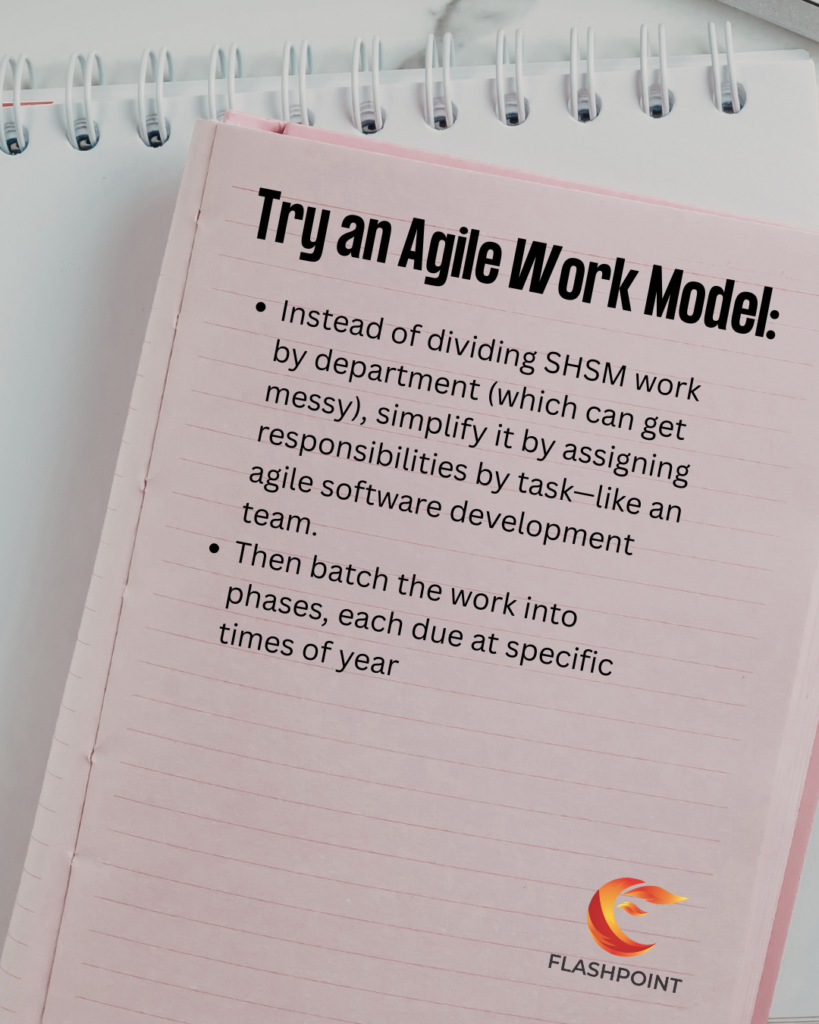
    Instead of splitting SHSM work by department (which often gets messy), one of the simplest ways to make SHSM easier is to organize it like an agile team would: split responsibilities by task.

    Here are real examples of how schools can divide SHSM planning in a practical, realistic way:

    SHSM Field Trip Lead
    This person owns the big logistics pieces like booking buses, selecting dates, permission forms, and communicating trip details.

    SHSM Reach-Ahead Lead
    This person focuses on planning and confirming reach-ahead experiences (college visits, training centre sessions, industry events), and making sure they happen at the right time in the year.

    SHSM Guest Speaker Lead
    This person coordinates guest speakers, panels, and in-school visitors—booking them early and keeping a list of reliable contacts for future years.

    SHSM Certifications & Training Lead
    This person handles scheduling certifications, booking providers, organizing student lists, and ensuring completion proof is collected.

    SHSM Tracking & Completion Lead
    This person maintains the tracker, follows up on missing evidence, runs monthly check-ins, and makes sure students stay on pace to complete the SHSM requirements.

    When SHSM is divided like this, nobody has to carry the whole program alone. Each teacher owns a manageable piece, and SHSM becomes something the school can run consistently—not something one person survives.

    That’s the difference between “running SHSM” and actually sustaining SHSM year after year.

    Step 3: Batch Your SHSM Planning Into Phases (Instead of Constantly Doing Everything)

    One of the best ways to reduce SHSM stress is to stop planning everything weekly.

    SHSM planning feels overwhelming when it’s scattered across the year in random moments: a trip planned here, a certification organized there, tracking updated whenever you remember.

    Instead, SHSM becomes manageable when you plan in phases. You’re not doing less—you’re doing it in a way that fits the school year.

    A simple phased approach looks like this:

    Phase 1: Start Strong (September–October)

    Focus on onboarding, setting expectations, and scheduling early experiences.

    Phase 2: Build Momentum (November–February)

    Deliver certifications and consistent experiential learning while tracking completion regularly.

    Phase 3: Finish Cleanly (March–June)

    Focus on reach-ahead experiences, final completion audits, make-up opportunities, and celebration.

    Batching planning into phases reduces the “always behind” feeling and gives SHSM teachers a realistic rhythm.

    Step 4: Plan SHSM Activities With Evidence Built In (So Tracking Becomes Easy)

    One of the biggest SHSM teacher stressors is the fear of missing a requirement.

    That fear is valid. SHSM has formal components, and students need to complete them to earn the SHSM designation.

    The simplest way to reduce compliance stress is this:

    Plan every SHSM activity with documentation in mind.

    That means every experience should naturally create something trackable, such as:

    • a sign-in sheet
    • a student reflection prompt
    • a portfolio artifact
    • proof of participation
    • a quick exit ticket

    When evidence is built into the experience, tracking becomes easier. It also becomes more accurate, because you’re capturing learning in real time rather than trying to reconstruct it later.

    And it strengthens SHSM quality. Reflection and documentation aren’t just “compliance tasks.” They help students connect experiences to skills, pathways, and career goals.

    Step 5: Focus on the Foundations That Make SHSM Easier All Year

    When SHSM feels overwhelming, it’s tempting to add more activities, more meetings, and more tracking tools.

    But SHSM doesn’t improve through more complexity. It improves through stronger foundations.

    If you want SHSM to feel simpler, focus first on:

    • a clear program map
    • a reliable schedule of experiences
    • consistent evidence collection
    • a shared team structure
    • regular student check-ins

    Once those basics are stable, SHSM becomes easier to manage. You spend less time scrambling and more time delivering meaningful experiences.

    The strongest SHSM programs aren’t always the busiest ones. They’re the ones that are consistent, clear, and student-centered.

    Final Thoughts: SHSM Planning Can Be Structured, Sustainable, and Still High Impact

    SHSM planning and implementation is complicated—but it doesn’t have to be chaotic.

    When teachers use a visible program map, share responsibilities, plan in phases, and build evidence into activities, SHSM becomes manageable. Not only does teacher stress decrease, but the student experience improves too.

    SHSM works because it gives students real-world learning, career exploration, and confidence. When the planning system is strong, teachers can focus on what SHSM does best: creating experiences students remember and skills students carry forward.

    By Carmen Reis, CPA, MA

    Comments, questions or feedback? Drop us a line at: hello@flashpointtraining.com

  • How can SHSM Strengthen Student Post-Secondary Applications in 2025?: Scholarships, Credit Recognition & Competitive Advantages

    How can SHSM Strengthen Student Post-Secondary Applications in 2025?: Scholarships, Credit Recognition & Competitive Advantages

    As SHSM educators and guidance counsellors, we already understand the power of experiential, sector-focused learning. But what often goes under-recognized is how significantly SHSM can shape and strengthen a student’s post-secondary trajectory. Colleges and universities across Ontario are not only acknowledging SHSM — many are now rewarding it through dedicated scholarships, advanced credit, and documented preference in admissions.

    This shift reflects a broader trend: post-secondary institutions want learners who arrive prepared, focused, and experienced. SHSM students check all of those boxes.

    Let’s explore some of the ways in which a SHSM educational experience can help students with their post secondary school choices:

    1. SHSM Experience Signals Readiness, Commitment, and Program Alignment

    Post-secondary programs increasingly value applicants who demonstrate a clear sense of direction and readiness for academic and practical expectations. SHSM provides this through:

    • Sector-focused major credits that align directly with first-year program expectations.
    • Co-op placements that expose students to workplace culture, timelines, safety standards, and sector-specific skills.
    • Industry certifications (e.g., WHMIS, First Aid/CPR, equipment training) that reduce onboarding requirements for labs, shops, or clinical placements.
    • Experiential learning and Reach Ahead activities that give students direct exposure to post-secondary environments — including program visits, workshops, and campus tours.

    In competitive programs—such as health sciences, business, ICT, engineering technologies, early childhood education, and trades-related fields—SHSM acts as a “pre-program experience base.” Admissions officers recognize that students who complete SHSM often transition more smoothly, succeed earlier, and demonstrate higher engagement in their studies.

    When reviewing applications, many post-secondary evaluators note that SHSM documentation provides a clearer picture of a student’s interests and capabilities than traditional transcripts alone.

    2. Verified Scholarships & Awards Available Specifically for SHSM Graduates

    One of the most concrete advantages of SHSM is financial: numerous Ontario institutions offer scholarships awarded only to SHSM graduates. These awards provide significant incentive for students to not only enter SHSM, but complete it fully.

    University of Guelph-Humber — $1,000 Entrance Award

    Eligible SHSM graduates entering specific programs can receive a dedicated $1,000 award.

    St. Clair College — $1,000 High Skills Scholarship

    Awarded to incoming SHSM graduates who meet required averages.

    Algoma University — $500 SHSM Award

    For first-year, full-time students entering after completing SHSM.

    Trent University — Up to $2,000 SHSM Scholarship

    One of the largest SHSM-specific entrance awards in Ontario.

    Additional Awards from Colleges & Universities Across Ontario

    An Ontario-wide summary highlights dozens of institutions recognizing SHSM through bursaries, entrance scholarships, and incentives.

    For students who may face financial barriers, these awards can make a measurable difference. For educators, they serve as persuasive evidence during SHSM recruitment and family information sessions.

    3. Advanced Credit: A Growing Form of SHSM Recognition

    Although scholarships are common, advanced credit is emerging as a powerful form of SHSM recognition.

    McMaster University — First-Year Credit for SHSM Graduates

    Eligible SHSM graduates entering McMaster’s Faculty of Social Sciences may receive one free first-year credit, reducing both course load and tuition cost.

    This example demonstrates that SHSM can do more than strengthen applications — it can directly affect academic progression. As more institutions look for ways to acknowledge experiential learning, educators should anticipate further growth in this area.

    Advanced credit also aligns well with OYAP-connected SHSM sectors, where apprenticeship pathways use documented hours and certifications to accelerate progress.

    4. SHSM Documentation Provides Tangible Proof of Skills and Experience

    Students graduating with SHSM receive:

    • An OSSD embossed with the red SHSM seal,
    • A detailed SHSM Record documenting certifications, Reach Ahead experiences, co-op placements, and sector-partnered experiences.

    This documentation is especially valuable for:

    • Competitive program admissions, where practical experience can differentiate applicants.
    • Supplementary applications, portfolios, and interviews.
    • Apprenticeship registrations, where safety training and work experience reduce onboarding time.
    • Early employment, where certifications like CPR, WHMIS, or equipment training signal immediate workplace readiness.

    For guidance counsellors, these documents are key advising tools. For admissions teams, they provide concrete evidence of the skills behind the application.

    5. How SHSM Educators Can Use This Information in Recruitment, Advising, and Pathway Planning

    During Course Selection and SHSM Recruitment

    • Highlight real, verifiable post-secondary benefits — especially scholarships and credit recognition.
    • Showcase sector-specific examples to demonstrate direct alignment with student goals.
    • Use the McMaster and Guelph-Humber examples to reinforce credibility.

    During Postsecondary Application Season

    • Ensure students indicate SHSM completion on OUAC/OCAS.
    • Encourage students to submit documentation with supplementary applications.
    • Assist students in applying to scholarships tied directly to SHSM.

    In Parent-Night Presentations or Staff PD

    • Present a concise overview of the financial and academic impact of SHSM completion.
    • Demonstrate that SHSM is not just experiential — it’s strategic preparation for post-secondary success.

    Conclusion: SHSM Is Evolving into a Recognized Postsecondary Asset

    The trend is clear: Ontario post-secondary institutions are increasingly rewarding the skills, experience, and preparation that SHSM provides. From scholarships, to advanced credit, to stronger admission profiles, SHSM is emerging as one of the most strategic pathways for students who want a competitive edge after high school.

    For educators, these verified examples provide powerful, credible messaging for recruitment, advising, and student support — reinforcing that SHSM is far more than a high school program. It is a launchpad.

  • The Power of Failing: Why Perseverance, Grit and Discipline Are Skills Our Students Need More Than Ever

    I was having a conversation today with my son’s guidance counsellor and we ended up chatting about discipline and perseverance. Both she and I were raised by immigrant parents and we laughed about how “hard” we felt we had it, particularly compared to youth today. Certainly, I can imagine, if her experience was anything like mine, it was certainly a stricter environment than my kids have.

    This conversation led me to think about how we define “hard”. Did we really have it harder in generations gone by, or do kids today, with all of the multiple inputs and outputs, media and responsibilities, have it harder than we did?

    I think this question may not have a simple answer, but one thing I would argue, is that the tolerance and endurance youth today face for what is hard, may be less than in past generations. Parents are more involved today. Where we can, we try to facilitate things for our children. Perhaps in doing so, we undermine our children’s ability to develop discipline, perseverance and grit.

    Learning to Celebrate Attempts, Failures and the Process Itself

    In SHSM, we celebrate certifications, co-op successes, and the big milestones—but there’s an equally important part of the journey that often goes unnoticed: failure, and the discipline it takes to keep going afterward.

    We highlight the polished final product, but the real learning—the kind that shapes students for their futures—happens in the messy middle. Over time, we’ve all seen it: the students who rise the highest aren’t always the most naturally gifted; they’re the ones who keep showing up, even when it’s hard.

    I think it is really important to celebrate the attempts, the failures and the process/journey itself.

    Failure Builds Real-World Readiness

    Today’s world demands constant adaptability. Students will face evolving workplaces, new technologies, competitive pathways, and unexpected setbacks. Teaching them that failure is not a dead end but a data point can build resilience and reframe struggle as a natural part of growth.

    When a SHSM student pushes through a difficult task—whether it’s a challenging co-op placement, a certification attempt that doesn’t go as planned, or a project that needs a complete redo—they are developing:

    • Adaptability
    • Grit
    • Problem-solving
    • Confidence in their ability to improve
    • The discipline to keep going

    These skills appear in every employer’s “must-have” list, regardless of sector.

    Discipline and Grit: The Quiet Skills Behind Lifelong Success

    If perseverance is the act of trying again, discipline and grit are the habit of showing up in the first place. It’s the real power source behind improvement.

    Whether students build discipline through school, sports, music, part-time jobs, or extra-curriculars, they are learning one of the greatest predictors of lifelong success: the ability to be consistent even when motivation fades.

    Discipline teaches students to:

    • Commit to something larger than the moment they’re in
    • Do the hard things even when they don’t feel like it
    • Trust the process, not just the results
    • Build momentum through small, steady steps

    This is where the magic happens. Students who learn disciplined habits early on develop the mindset and routines that carry them through postsecondary pathways, workplaces, and life’s inevitable challenges.

    Perseverance: Turning Setbacks Into Strength

    Every career pathway is full of people who failed forward. Innovators, entrepreneurs, tradespeople, athletes, and world-class professionals share one truth: mastery comes from repetition, reflection, and resilience—not perfection.

    When students learn to persevere, they start to see challenges differently:

    • From “I can’t do this” to “I can’t do this yet.”
    • From avoiding difficult tasks to embracing them.
    • From feeling defeated to adjusting their approach and trying again.

    That shift in mindset can carry a student further than any single success story.

    How SHSM Helps Build Discipline and Grit and Normalize Productive Failure

    One of the strengths of SHSM is how naturally it builds these skills. Through experiential learning, community partnerships, certifications, and sector-focused challenges, students learn that:

    • Mistakes are expected and useful
    • Professionals rarely get it right the first time
    • Discipline—showing up, trying again, seeking feedback—is what leads to breakthroughs
    • Skills develop through repetition and reflection

    Again and again, students discover that the real growth happens just past the point where they want to quit.

    A Call to Celebrate the Attempts and the Process, Not Just the Achievements

    As educators and trainers, we can make a powerful impact by celebrating effort, progress, and discipline, not just the end results. When we acknowledge the setbacks and the persistence that follows, students begin to understand that success is rarely linear—and that they have what it takes to navigate the twists and turns.

    SHSM students are building futures full of potential. Our role is to remind them that failure is feedback, discipline and grit are their superpower, and perseverance is the bridge between where they are and where they want to go.

    Because when students develop these habits early, they don’t just prepare for a job—they prepare for life.

    By Carmen Reis, CPA, MA

    Carmen is the CEO of Flashpoint Training and dedicated to building opportunities for youth to ignite their passion and find their spark.

    You can email carmen at: Carmen@Flashpointtraining.com

  • How to Turn Interview Anxiety into Interview Confidence

    How to Turn Interview Anxiety into Interview Confidence

    Over the past several weeks, we’ve noticed a consistent and encouraging theme across our sessions: students are genuinely eager for guidance on how to succeed in their interviews. Whether it’s for a co-op placement, a part-time job, or a summer opportunity, many are navigating the interview process for the very first time. It’s common to see students approach our facilitators before or after a session with the same pressing question: “How do I ace my interview?”

    And it’s no wonder they’re asking. A quick search online reveals an avalanche of tips, tricks, lists, and contradicting opinions. Should they memorize answers—or avoid sounding rehearsed? Should they focus on selling themselves—or keep things humble? Should they ask lots of questions—or only a few? The sheer volume of mixed messages can leave students feeling more confused than prepared.

    That’s why, this week, we’re taking a step back and grounding the conversation in what we’ve learned from years of real-world interviewing, coaching, and working directly with youth.

    Our goal: to cut through the noise and explore the practical, evidence-informed strategies that genuinely help students.

    Most importantly, we’ll look at how to support them in transforming that very normal interview anxiety into clarity, calm, and authentic confidence.

    The Reality: It is Tough Out There Right Now and Competitive

    Gone are the days of more jobs than kids. It is tough to get a placement. It is tough to get your first job. But it is not impossible. Simplifying the interview process is key .

    1. Explain What Co-op Interviews Are Actually Like

    A major source of stress for students is imagining an interview as something stiff, formal, and intimidating—something out of a job-hunting movie scene. Teachers can remove a great deal of anxiety just by clarifying what co-op interviews typically look like. Most of the time, they are:

    • Short and relaxed, usually lasting around 10–20 minutes.
    • Conversational rather than formal, focused on getting to know the student as a person.
    • Centered around attitude and reliability, not a list of past experiences.

    When students understand that the interviewer isn’t expecting a polished professional, but simply a curious and responsible young person, their nerves begin to settle. Sometimes the simplest reassurance—“this is a conversation, not a test”—makes all the difference.

    2. Help Students Build a Strong Introduction

    Almost every interview starts with a version of “Tell me about yourself,” and it’s one of the questions that students fear most. Without structure, they feel unsure of where to start or what an adult wants to hear. Giving them a simple framework makes this so much easier.

    A reliable method teachers can use is the Present → Past → Future structure:

    • Present: Who they are now and what they’re interested in.
    • Past: Something from school or life connected to that interest.
    • Future: What they hope to gain from the co-op experience and identify what Value you bring to a prospective employer and workplace.

    This simple flow allows students to speak naturally and confidently. Once they rehearse it a few times, the introduction becomes a grounding moment instead of a stressful one, and it sets a positive tone for the rest of the interview.

    3. Identify Their Strengths—Even Without Job Experience

    Many students walk into interview prep convinced they have “nothing to offer.” Teachers can help them recognize that their day-to-day school life already reveals strengths that matter in the workplace. You can guide them to pull from:

    • School-based experiences, such as group projects, class presentations, or volunteer hours.
    • Personal strengths, like organization, creativity, attention to detail, or tech comfort.
    • Workplace-ready behaviours, such as reliability, punctuality, and willingness to learn.

    Once students see these strengths clearly, help them turn them into polished statements. Saying “I’m dependable and I always finish what I start” or “I learn quickly and ask good questions” helps students articulate their value with confidence—no job history required.

    4. Teach the “Core Four” Interview Questions

    While every interview is different, most co-op supervisors ask variations of the same four topics. When students can answer these confidently, they’re prepared for almost anything. Focus on:

    • Why they want the placement — helps employers understand interest and motivation.
    • What strengths they bring — showcases their readiness and mindset. Focus on examples that demonstrate growth
    • What they hope to learn — signals openness and curiosity.
    • How they handle challenges — shows maturity and problem-solving. This is the basis of scenario questions. Showcase examples that highlight maturity. Preparing students to handle scenario based questions will help them to respond.

    By practicing these Core Four, students learn to respond thoughtfully without memorizing anything. It’s about understanding the message they want to convey, not perfect wording.

    5. Conduct Low-Pressure Mock Interviews

    Nothing builds comfort like practice, but that practice doesn’t need to feel formal or intimidating. Teachers can create simple, low-stakes scenarios that help students build familiarity with interview flow. Try:

    • Quick paired interviews using basic question prompts.
    • Short mock interviews led by the teacher, focusing more on tone than perfection.
    • Mini “speed interview” stations, letting students practice multiple questions in a row.

    These activities help students see interviews as conversations rather than performances. The goal is comfort, not memorizing answers—helping students feel steady when it’s time for the real thing.

    6. Teach Simple Professional Behaviour

    Before the interview day arrives, students should understand a few foundational professional behaviours that make a strong first impression. Focus on three essentials:

    • Arrive prepared and a little early, showing reliability and respect for the interviewer’s time.
    • Communicate confidently, using eye contact, clear speech, and attentive body language.
    • Demonstrate professionalism, such as keeping phones away and saying thank you.

    These small actions don’t require experience—they simply show a student is ready to participate thoughtfully in a workplace environment.

    7. Prepare a Small Set of Questions Students Can Ask

    Students are often caught off guard when the interviewer flips the conversation and asks, “Do you have any questions for us?” Helping them plan ahead avoids that uncomfortable silence and shows genuine interest. Encourage them to choose one or two simple questions, such as:

    • “What does a typical day look like for a co-op student here?”
    • “What skills are most helpful in this role?”
    • “What would success look like for me in this placement?”

    These questions show maturity, curiosity, and readiness to learn—three qualities every employer values.

    8. Build a Calm, Encouraging Debrief After the Interview

    Reflection is where real growth happens. After their interview, give students a chance to think about the experience with a supportive lens. Guide them through three prompts:

    • What went well? (confidence-building)
    • What was challenging or unexpected? (awareness-building)
    • What would you adjust next time? (skill-building)
    • Remember your post interview follow up-extending thanks via a simple email or thank you card. It will help you stand out.
    • Remember to follow up-Follow up with the interviewer/contact a few days later if you have not heard anything

    This reframes interviews not as “pass or fail” moments but as stepping stones toward confidence and competence.

    Final Thought: First Interviews Aren’t About Perfection—They’re About Potential

    The purpose of a student’s first interview isn’t to display years of experience—it’s to show attitude, curiosity, and readiness to learn. With supportive preparation, clear structure, and small practice moments, teachers can help every student walk into their interview with confidence. When students understand that employers are looking for potential, not perfection, the entire experience becomes far less intimidating and far more empowering.

    By Carmen Reis, CEO – Flashpoint Training, Inc.

  • Students Struggling to Find Co-op Placements? Use these 5 Creative Strategies To Help Them….

    Students Struggling to Find Co-op Placements? Use these 5 Creative Strategies To Help Them….

    Schools around the province are finding it harder than ever for their co-op students to obtain placements. We often hear stories of students forced to leave SHSM programs simply because they are not able to secure a co-op role in a timely manner.

    The good news is that schools hold powerful tools that don’t depend on the economy or hiring cycles. By activating networks and removing barriers for overwhelmed organizations, schools can create consistent co-op pipelines even when market conditions are tough. Below are five practical strategies schools can use to support SHSM students in finding co-op jobs regardless of economic condition.

    1. Build a Formal Co-op Alumni Employment Network

    Co-op alumni understand firsthand how challenging it can be to enter the workforce during uncertain economic conditions. Having once relied on a placement themselves, they often feel motivated to give back and support the next group of students. By organizing these graduates into a structured co-op alumni network, schools create a renewable source of placement opportunities from people who already trust the program and understand its value.

    Schools can strengthen this network by:

    • Creating an SHSM co-op alumni LinkedIn group or email list
    • Sending a quarterly “Are you hiring?” outreach message to past co-op students
    • Highlighting alumni success stories to inspire engagement and participation

    A strong co-op alumni pipeline works because it taps into long-standing school pride, personal connection, and authentic relationships. Alumni want to help the next generation succeed, and that shared sense of school community becomes a powerful driver for consistent, reliable co-op opportunities.

    2. Create a Parent & Guardian Employer Registry

    Parents and guardians work across a wide range of sectors and can advocate internally in ways that cold outreach simply cannot. During tight job markets, employers are far more likely to approve placements when the request comes from a trusted employee who understands both the workplace and the value of co-op. A parent registry ensures schools are tapping into this reliable, high-trust employer base to open doors that might otherwise remain closed.

    To build this registry, schools can:

    • Collect employer data at parent-teacher nights, community days, and through newsletters
    • Invite parents to opt into a simple “SHSM Employer List”
    • Share anonymous student profiles or sector summaries to spark employer interest

    This approach builds a dependable stream of placement opportunities even when local businesses feel strained. Parents also have a vested interest in helping students succeed—whether it’s their own child or someone else’s—and are naturally more inclined to support youth from their school community. That shared commitment often leads to faster approvals, stronger engagement, and more consistent co-op placements.

    3. Create a Digital Co-op Hub With Student Profiles

    Busy employers often don’t respond because the co-op placement process feels time-consuming or unclear. A digital co-op hub removes these barriers by giving employers a simple, self-serve space to explore student talent and post opportunities on their own schedule. This flexibility is especially valuable during fluctuating staffing levels, when organizations may gain or lose capacity with little notice.

    A useful co-op hub includes:

    • Anonymous student talent profiles organized by SHSM sector
    • A quick “Offer a Placement” form for employers to post needs in under two minutes
    • Clear FAQs outlining supervision, duties, safety expectations, and time commitments

    This centralized, low-barrier system allows for two-way matching: employers can browse skills while students can express interest in sectors without disclosing personal details upfront. By simplifying how both sides connect, schools make it easier for employers with limited administrative capacity to participate and create more timely co-op opportunities for students.

    4.Organize a Student Pitch or Meet-the-Student Night

    Many employers hesitate to take on high school co-op students simply because they don’t yet see how a student could fit into their workflow—especially when their teams are stretched thin. A pitch or meet-the-student night flips this dynamic by giving students the chance to clearly demonstrate their strengths, interests, and potential contributions. When employers see students’ capabilities firsthand, uncertainty drops and confidence rises.

    A strong pitch night includes:

    • Short student presentations showcasing potential projects, skills, or past accomplishments
    • Employers rotating through stations or tables to meet students in a relaxed, low-pressure format
    • A follow-up matching process based on shared interests, SHSM sector alignment, and employer needs

    Schools often see placements secured immediately after these events because employers leave with a tangible understanding of what students can do. The personal connection, combined with clear demonstrations of ability, helps employers say “yes” even in busy or economically tight conditions.

    5. Partner With Incubators, Innovation Hubs & Co-Working Spaces

    Co-working spaces, incubators, and innovation hubs bring together dozens of small businesses, startups, freelancers, and nonprofits—many of which need project-based help but don’t have the time or infrastructure to run traditional hiring processes. Approaching these spaces as a cluster creates access to multiple potential co-op hosts through a single partnership. These environments thrive on creativity, collaboration, and agility, making them ideal for SHSM students who can support marketing, social media, design, research, customer service, early-stage product testing, and more.

    Schools can activate these partnerships by:

    • Hosting meet-the-student pop-up events directly inside the co-working space
    • Sharing talent profiles with hub or community managers who can broadcast opportunities widely
    • Encouraging startups to offer micro-projects, flexible hours, or short placements that match their dynamic workflows

    This approach connects students to emerging industries and modern workplaces that traditional outreach often overlooks. It also exposes students to real entrepreneurial environments, offering hands-on experience that can shape future career interests and pathways.

    Conclusion: Schools Can Help Open Doors—Even When the Job Market Feels Tight

    A challenging labour market can make co-op placements feel harder to secure, but it doesn’t have to limit student opportunity. Employers may hesitate for understandable reasons, yet the strategies schools choose can transform that hesitation into confidence, clarity, and willingness to engage. By activating alumni and parent networks, aligning outreach to seasonal business cycles, simplifying the process through digital hubs, and building community partnerships, schools can create strong and reliable co-op pathways in any economic environment.

    Events like pitch nights and employer recognition celebrations also shift the tone from “asking for help” to building genuine community partnerships where everyone benefits. When schools take the lead in removing barriers and showcasing student talent, employers see the value more clearly—and students gain access to the meaningful, hands-on experiences they need to explore careers, build skills, and plan their futures.

    In tight markets or stable ones, the message remains the same: there is always a way to help students connect with opportunity. With the right systems, relationships, and creativity, schools can ensure every SHSM student finds a placement that ignites their passion and sets them on a strong path forward.

    By Carmen Reis, CPA,MA

    PS- One More Thing


    Internally, we’re taking a closer look at idea #3. The possibility of creating a low-cost hub that helps match students with employers is particularly compelling to me. With a wide professional network to draw from, I’m confident we can use it to support students in finding meaningful co-op placements.

    After spending more than 15 years working with community-based organizations, I’m deeply committed to solutions that build community and strengthen networks.

    If this interests you and you’d like to explore the hub concept as part of a free pilot program, feel free to contact me at Carmen@flashpointtraining.com. I’d be happy to add you to our distribution list as our concept matures.

  • The Real-World Payoff: How SHSM Co-op Experience Can Boost Long-Term Employment Outcomes

    The Real-World Payoff: How SHSM Co-op Experience Can Boost Long-Term Employment Outcomes

    By Carmen Reis, CPA, MA

    Why Co-op Learning Matters

    In today’s competitive job market, students need more than a diploma — they need experience. Ontario’s Specialist High Skills Major (SHSM) program gives high school students a head start by combining classroom learning with co-operative education placements, industry certifications, and career exploration.

    But what’s the actual payoff of co-op experience? Research from colleges and universities across Canada shows that students who complete co-op or work-integrated learning (WIL) have stronger employment outcomes, higher wages, and smoother transitions into full-time careers.

    While long-term quantitative data for high school co-op students is still limited, the results from post-secondary studies paint a clear picture: structured, supervised work experience works.

    Co-op Graduates Get Better Jobs, Faster

    According to Statistics Canada, among graduates from Canadian post-secondary institutions:

    • 86 % of co-op college graduates were employed full-time within three years of graduation, compared to 79 % of non-co-op graduates.
    • 90 % of co-op university graduates secured full-time work versus 83 % of their non-co-op peers.
    • Co-op participation was directly linked to “more favourable labour-market outcomes,” including greater job stability and alignment with one’s field of study.

    In other words, co-op isn’t just a résumé booster — it can act as employment accelerator.

    Higher Earnings and Career Alignment

    A national analysis by the C.D. Howe Institute (2023) found that co-op graduates enjoyed higher average earnings and a greater likelihood of securing permanent positions compared to non-participants.

    Complementary research from Co-operative Education and Work-Integrated Learning Canada (CEWIL) confirmed that co-op graduates report:

    • Higher median salaries in the first three years after graduation.
    • Closer alignment between their job and field of study.
    • Reduced over-qualification rates (fewer grads working in jobs below their skill level).

    These are precisely the kinds of benefits SHSM aims to deliver — only earlier.

    What This Means for High School SHSM Students

    Although there is little formal statistical tracking at the high-school level, it is reasonable to extrapolate these trends. SHSM students complete co-operative placements, earn sector-specific certifications, and often build employer relationships before graduating.

    Early exposure to workplace settings gives them:

    • A better understanding of career options before committing to post-secondary education.
    • Real-world experience that strengthens college, university, and apprenticeship applications.
    • Transferable skills — communication, teamwork, punctuality, adaptability — that employers consistently rate as top hiring priorities.

    In practice, this means SHSM students with meaningful co-op placements are already developing the same competencies that predict higher employment and wage outcomes later in life.

    Why Experience Doesn’t Trump Theory but Supports It…

    Employers repeatedly say that relevant experience is one of the most important factors in hiring. A report by the U.S. National Association of Colleges and Employers (NACE, 2023) found that paid co-op or internship participants receive 44 % more job offers and start at higher salaries than peers without that experience.

    That pattern mirrors what Canadian research shows — students who work in structured, supervised placements transition to employment faster and with better job quality. SHSM co-ops provide the same foundation at the secondary level, giving students an early professional identity and resume-ready experience before graduation.

    Engaging in alternating periods of study and employment enables students to iterate between theory and practice, continuously refining their understanding of how knowledge functions in real contexts. Beginning this process early supports the development of a balanced, adaptive approach to achieving workplace goals.

    Building a Case for Tracking High School Outcomes

    Despite the strong evidence from post-secondary research, high-school co-op outcomes remain under-measured. Few provinces track the long-term employment or earnings of SHSM participants versus non-participants. This presents an opportunity for school boards and training partners to lead the way by collecting data such as:

    • Employment or post-secondary placement within 6 months of graduation.
    • Student-reported job alignment with career goals.
    • Re-employment or continuation rates with co-op host employers.

    Such tracking could confirm what educators already observe anecdotally: students who learn by doing may succeed sooner and go further.

    The Takeaway

    SHSM’s co-operative education component is more than a curriculum feature — it’s a strategy for future success. Evidence from thousands of Canadian graduates shows that structured, paid, and supervised work experiences lead to:

    • Higher full-time employment rates
    • Faster job placement
    • Higher early-career earnings
    • Better career-fit and satisfaction

    By embedding co-op opportunities directly into high school, SHSM helps students build these advantages years earlier — turning curiosity into career readiness.

    Sources

    1. Statistics Canada (2014). Labour market outcomes for co-op and non-co-op graduates, National Graduates Survey.www150.statcan.gc.ca
    2. Statistics Canada summary, “Work-integrated learning and labour market outcomes,” 2014.
    3. C.D. Howe Institute (2023). School Co-op Programs Benefit Some Students More than Others.cdhowe.org
    4. CEWIL Canada (2019). Research on Co-op Earnings and Employment Outcomes.cewilcanada.ca
    5. National Association of Colleges and Employers (2023). Internship & Co-op Survey Report.naceweb.org