
SHSM Planning Doesn’t Have to Feel Like a Second Job
If you’ve ever supported an SHSM program in Ontario, you’ve probably felt it: the pressure of trying to do something meaningful for students while also trying to keep everything organized behind the scenes.
That pressure makes sense. SHSM is one of the strongest student engagement programs in Ontario because it connects learning to real careers. But it’s also one of the most complex programs to deliver, because it isn’t “one class.” SHSM includes a sector-focused credit bundle, certifications, experiential learning, reach-ahead opportunities, and documentation requirements that all have to be coordinated across a school year.
For many SHSM leads and teachers, the challenge isn’t motivation. It’s capacity. SHSM planning can start to feel like a second full-time job—especially when you’re trying to run it on top of teaching, assessment, supervision, and daily school demands.
The good news is that SHSM planning becomes much easier when you stop treating it like a series of emergencies and start treating it like a system.
This blog is a solution-focused guide to doing exactly that.
The SHSM Planning Shift That Changes Everything: Build a System, Not a To-Do List
The most common reason SHSM implementation feels overwhelming is that teachers are trying to hold too many moving parts in their heads at once.
You’re planning certifications. You’re trying to schedule guest speakers. You’re coordinating trips and experiences. You’re collecting reflections. You’re tracking student progress. You’re communicating with families. You’re working with guidance. You’re making sure requirements are met.
And you’re doing all of this while teaching full time.
When SHSM planning is managed as a giant to-do list, it becomes reactive. You spend the year responding to what’s urgent, rather than working through a plan.
A more sustainable approach is to run SHSM like a year-long project. That means using a timeline, checkpoints, and shared responsibilities—just like you would for a major school event or department initiative.
When SHSM is structured like a project, it becomes predictable. And predictable is what reduces stress.
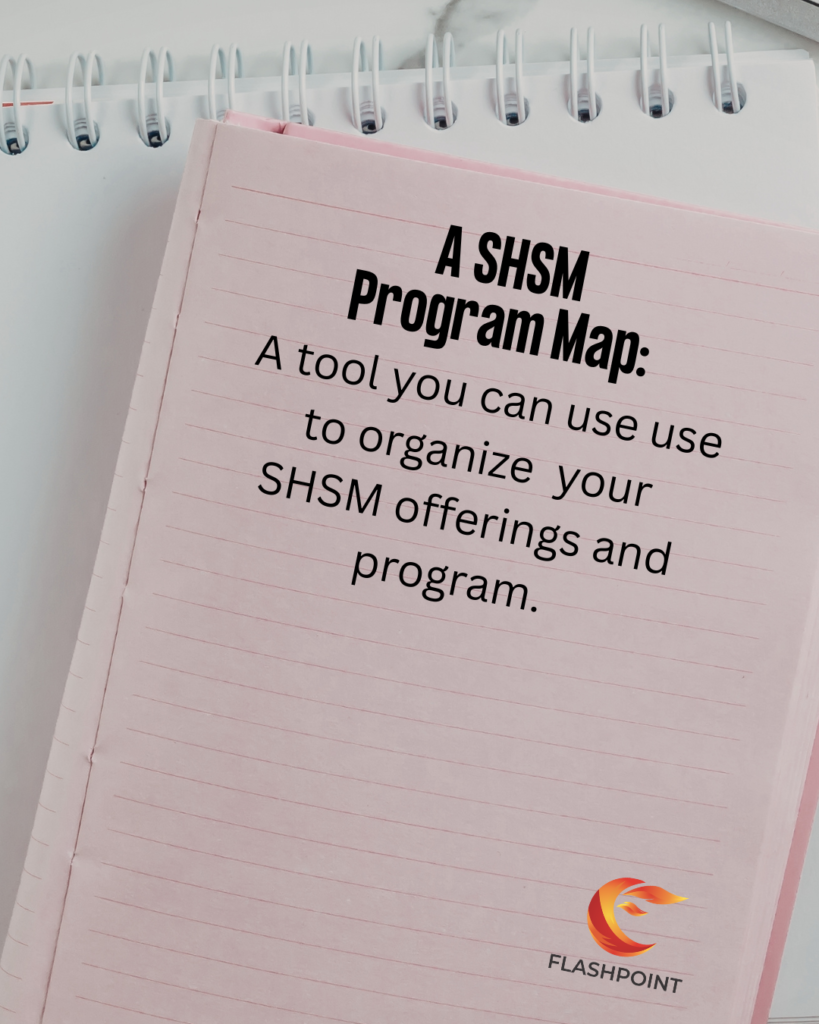
Step 1: Create a Visible SHSM Program Map (Your #1 Simplification Tool)
If there is one tool that makes SHSM planning easier, it’s this:
A program map you can see.
A program map is a simple overview of what needs to happen across the year. It doesn’t need to be complicated. It can be a one-page document, a shared calendar, or a digital planning sheet. The point is not to create more paperwork—the point is to stop relying on memory.
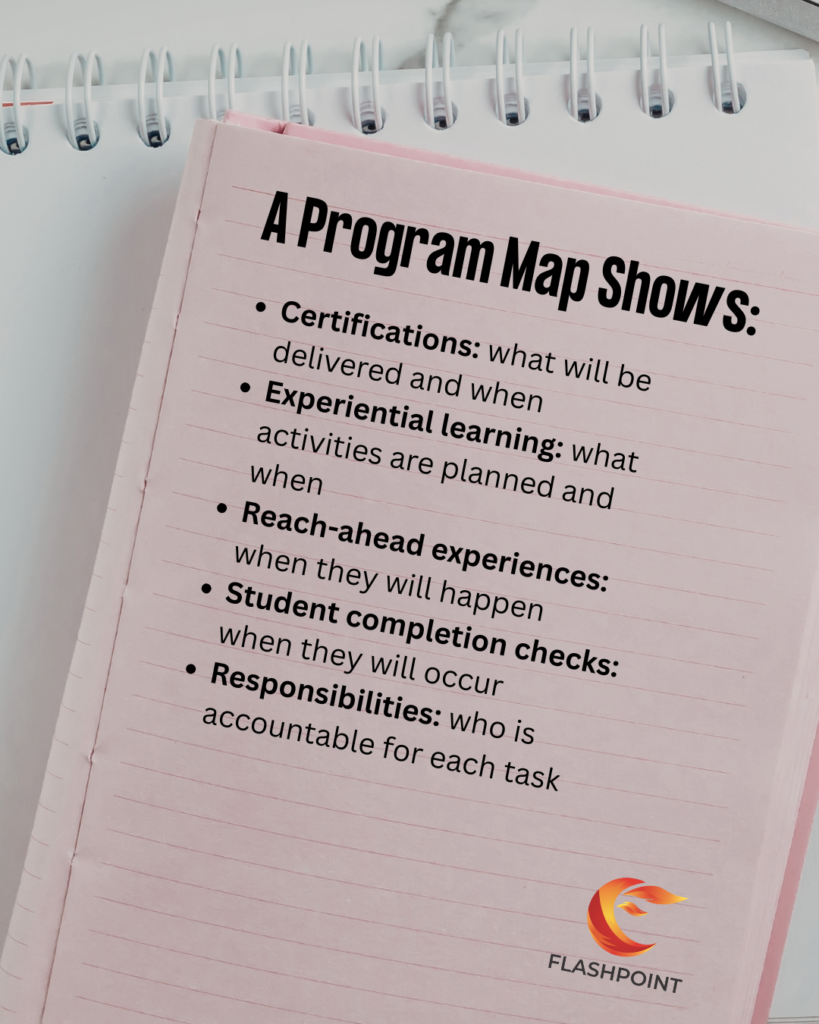
A strong SHSM program map clearly shows:
- what certifications will be delivered and when
what experiential learning activities are planned and when
when reach-ahead experiences will happen - when student completion checks will happen
- who is responsible for each task
When SHSM requirements are visible, teachers can plan proactively instead of constantly playing catch-up. It also makes SHSM easier to explain to students and staff, because the year is organized in a way people can understand.
Most importantly, a program map reduces anxiety. When you can see that the year is accounted for, you stop worrying about what you might be missing.
Step 2: Stop Doing Everything Yourself (Even If You’re the Lead)
Another major reason SHSM planning becomes exhausting is that it often depends on one person.
In many schools, one teacher becomes the organizer of everything. That teacher holds the calendar, the partner contacts, the student tracking, the event planning, and the problem-solving.
That level of responsibility is admirable—but it’s not sustainable. If that person is away, changes roles, or simply burns out, the program becomes fragile.
Take a Lesson From Agile Software Development: Split SHSM by Tasks, Not by One “SHSM Super-Teacher”
In agile software development, teams avoid building projects where one person owns everything, because it creates a “single point of failure.” If that person is away, overwhelmed, or leaves, the whole project slows down—or collapses.
SHSM planning can accidentally work the same way.
In many schools, one teacher becomes the SHSM organizer for everything: the calendar, the trips, the guest speakers, the certifications, the tracking, the emails, the last-minute fixes. That level of commitment is incredible—but it’s not sustainable.
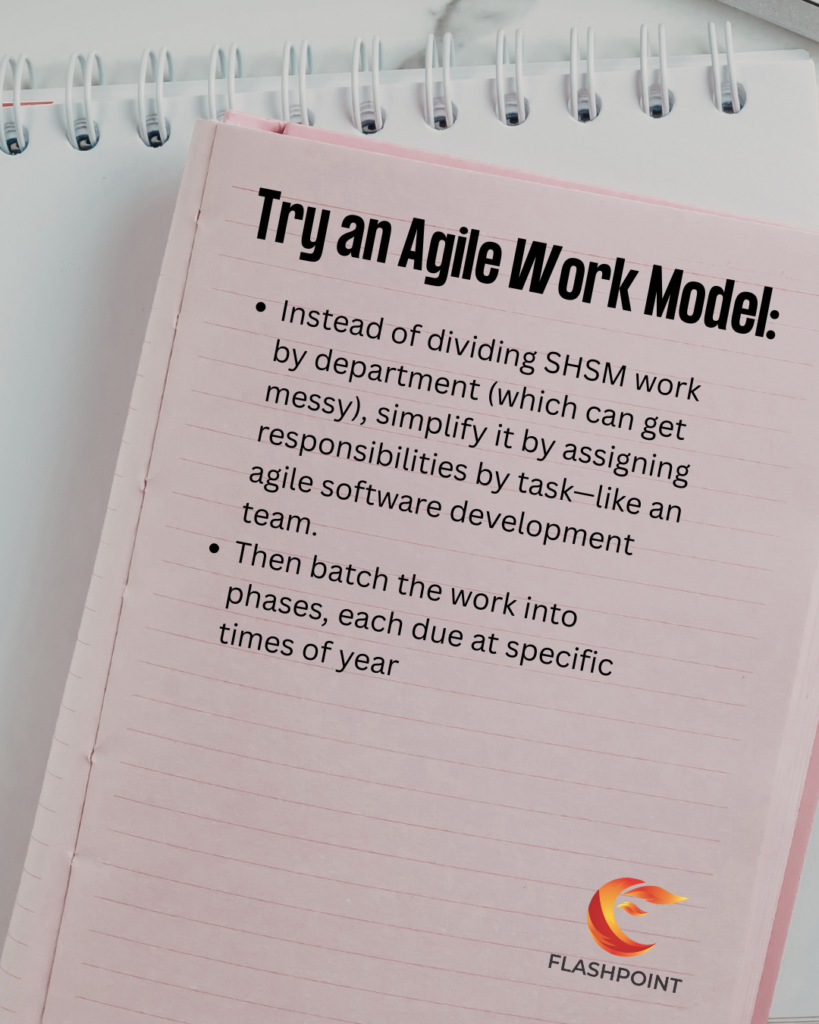
Instead of splitting SHSM work by department (which often gets messy), one of the simplest ways to make SHSM easier is to organize it like an agile team would: split responsibilities by task.
Here are real examples of how schools can divide SHSM planning in a practical, realistic way:
SHSM Field Trip Lead
This person owns the big logistics pieces like booking buses, selecting dates, permission forms, and communicating trip details.
SHSM Reach-Ahead Lead
This person focuses on planning and confirming reach-ahead experiences (college visits, training centre sessions, industry events), and making sure they happen at the right time in the year.
SHSM Guest Speaker Lead
This person coordinates guest speakers, panels, and in-school visitors—booking them early and keeping a list of reliable contacts for future years.
SHSM Certifications & Training Lead
This person handles scheduling certifications, booking providers, organizing student lists, and ensuring completion proof is collected.
SHSM Tracking & Completion Lead
This person maintains the tracker, follows up on missing evidence, runs monthly check-ins, and makes sure students stay on pace to complete the SHSM requirements.
When SHSM is divided like this, nobody has to carry the whole program alone. Each teacher owns a manageable piece, and SHSM becomes something the school can run consistently—not something one person survives.
That’s the difference between “running SHSM” and actually sustaining SHSM year after year.
Step 3: Batch Your SHSM Planning Into Phases (Instead of Constantly Doing Everything)
One of the best ways to reduce SHSM stress is to stop planning everything weekly.
SHSM planning feels overwhelming when it’s scattered across the year in random moments: a trip planned here, a certification organized there, tracking updated whenever you remember.
Instead, SHSM becomes manageable when you plan in phases. You’re not doing less—you’re doing it in a way that fits the school year.
A simple phased approach looks like this:
Phase 1: Start Strong (September–October)
Focus on onboarding, setting expectations, and scheduling early experiences.
Phase 2: Build Momentum (November–February)
Deliver certifications and consistent experiential learning while tracking completion regularly.
Phase 3: Finish Cleanly (March–June)
Focus on reach-ahead experiences, final completion audits, make-up opportunities, and celebration.
Batching planning into phases reduces the “always behind” feeling and gives SHSM teachers a realistic rhythm.
Step 4: Plan SHSM Activities With Evidence Built In (So Tracking Becomes Easy)
One of the biggest SHSM teacher stressors is the fear of missing a requirement.
That fear is valid. SHSM has formal components, and students need to complete them to earn the SHSM designation.
The simplest way to reduce compliance stress is this:
Plan every SHSM activity with documentation in mind.
That means every experience should naturally create something trackable, such as:
- a sign-in sheet
- a student reflection prompt
- a portfolio artifact
- proof of participation
- a quick exit ticket
When evidence is built into the experience, tracking becomes easier. It also becomes more accurate, because you’re capturing learning in real time rather than trying to reconstruct it later.

And it strengthens SHSM quality. Reflection and documentation aren’t just “compliance tasks.” They help students connect experiences to skills, pathways, and career goals.
Step 5: Focus on the Foundations That Make SHSM Easier All Year
When SHSM feels overwhelming, it’s tempting to add more activities, more meetings, and more tracking tools.
But SHSM doesn’t improve through more complexity. It improves through stronger foundations.
If you want SHSM to feel simpler, focus first on:
- a clear program map
- a reliable schedule of experiences
- consistent evidence collection
- a shared team structure
- regular student check-ins
Once those basics are stable, SHSM becomes easier to manage. You spend less time scrambling and more time delivering meaningful experiences.
The strongest SHSM programs aren’t always the busiest ones. They’re the ones that are consistent, clear, and student-centered.
Final Thoughts: SHSM Planning Can Be Structured, Sustainable, and Still High Impact
SHSM planning and implementation is complicated—but it doesn’t have to be chaotic.
When teachers use a visible program map, share responsibilities, plan in phases, and build evidence into activities, SHSM becomes manageable. Not only does teacher stress decrease, but the student experience improves too.
SHSM works because it gives students real-world learning, career exploration, and confidence. When the planning system is strong, teachers can focus on what SHSM does best: creating experiences students remember and skills students carry forward.
By Carmen Reis, CPA, MA
Comments, questions or feedback? Drop us a line at: hello@flashpointtraining.com